How Many Quarts Do You Need for a Family of 4? An Air Fryer Sizing Answer
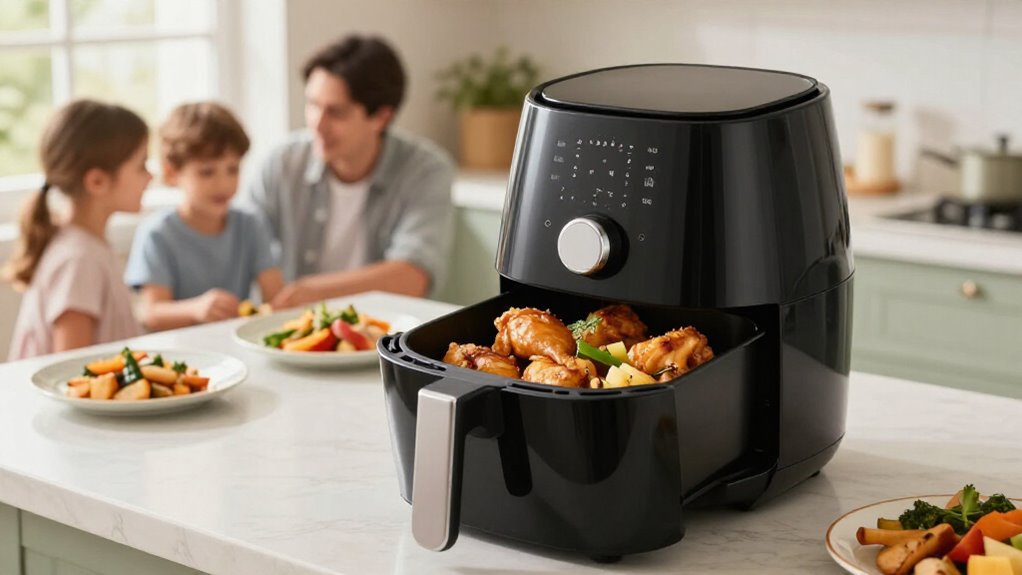
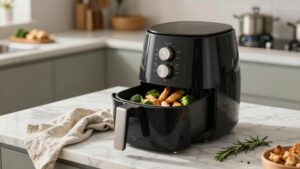
For a family of four, a 5–6-quart air fryer usually handles everyday dinners, including a main and modest side. A 5-quart model may need another batch for generous portions, while 6 quarts gives you more room.
Check basket floor area, not just quart rating, and keep food in a single layer for crisping.
Measure counter space and clearance, too. Large servings may need more space. The details below can help you choose wisely.
5–6 Quarts for Four
A 5–6-quart air fryer is a practical choice for a family of four, balancing cooking capacity with counter space. A 5-quart model can handle many family meals, but you may need extra batches when you cook larger portions. If you want more flexibility, consider a 5.8- or 6-quart basket. Its added room lets you spread food out, which can support more even cooking and crisping.
Choose 6 quarts if you often prepare generous amounts or want the option to fit a whole chicken. Before buying, check the appliance’s footprint and the space you have available; a larger basket can take up more counter room. A 4-quart fryer may feel cramped for regular family dinners and could make you cook in multiple batches. For most households, 5–6 quarts offers a useful everyday balance.
Typical Four-Person Meal Portions
For typical dinners for four, a 5–6-quart air fryer usually offers enough room for everyday portions. A 5.8-quart model can cook a family meal in one batch, while a 5-quart unit may require an extra round for dishes with larger servings. It suits a main and modest side for weeknight dinners.
A 4-quart basket may feel limiting when you’re serving four; you could need two or three batches for a main course, delaying dinner. Choose 6 quarts if your household prefers generous portions or you want more flexibility for larger meals. If you regularly cook large servings or plan to prepare a whole chicken, consider a 6–7-quart model. Match the capacity to what you actually serve, not just the number of people at your table.
Basket Surface Area
Because quarts measure volume, they don’t tell you how much food can fit in a single layer. Compare basket floor dimensions, not just the capacity label: square or rectangular corners often give you more usable space than a round basket. For even crisping, keep pieces in one layer; stacking can block airflow.
| Rating | Approx. floor area | Practical fit |
|---|---|---|
| 2–3 qt | 55–75 sq in | 2 servings |
| 3–4 qt | 75–90 sq in | Small mains |
| 5–6 qt | Varies by shape | Four portions, tight |
Measure the floor (length × width) and compare models; dimensions help you avoid guessing. A 5–6-quart unit may suit four, but its footprint determines whether four pieces fit. If you’re choosing between sizes, prioritize a broader surface when you want fewer batches.
Single vs. Dual Baskets
A single 5–6-quart basket usually handles dinner for four when foods cook together, though large portions may need another batch. Choose dual baskets if you want to cook a main and side separately, with different settings or timing. Before deciding, compare each basket’s usable area and total capacity with the counter space you have.
Single-Basket Capacity
A 5–6-quart single-basket air fryer is a practical everyday choice for a family of four; around 6 quarts offers more room and can reduce batch cooking. A 5-quart basket can handle many family meals, especially when you cook a main or side in a single layer. But larger portions may call for another batch, and a 4-quart basket can feel tight for a full dinner.
A single basket suits foods that need similar temperatures and cooking times, so plan meals around that shared schedule. Check the cooking surface, not just the quart label: basket shape affects how much food fits without crowding. Leave room for airflow to keep food crisp and cooking times predictable. Choose larger capacity for big meals, if counter space allows.
Dual-Basket Flexibility
When you want to cook a main and a side at once, a dual-basket air fryer lets you prepare them separately, even if they need different cooking times. A 5–6-quart single-basket model is often enough for everyday meals for four, though a larger dinner may require batches. With two baskets, you can keep foods separate and use each compartment for a different dish.
Before buying, check both the combined capacity and the size of each basket. The total quart figure doesn’t tell you whether either basket can hold a large item, and the divided space may not suit a whole chicken or one big batch. Choose dual baskets for flexibility; choose one large basket for whole chickens and large batches at home. Check counter space.
Cooking Portions and Timing
For everyday meals for four, a 5-6-quart single basket usually handles a full batch, though a 5-quart model may need extra cycles for larger portions. With a 5.8-6-quart basket, you can often cook a family meal in one round, provided you spread food in a single layer.
Overcrowding blocks airflow, so portions may brown unevenly and take longer. Shake or flip food halfway through, and split larger servings into batches when needed.
Choose a dual-basket model when you want to cook a main and side separately. You can set different temperatures or times, then coordinate their finish according to the controls. Check each basket’s capacity, not just the combined figure, to confirm both portions will fit without crowding during the same dinner service tonight.
Counter Space Considerations
How much counter space can you spare? A 5–6-quart single-basket air fryer makes a practical starting point for feeding four, but check its measurements before you buy. Many 4–5-quart models are about 12–14 inches wide and deep and 12–13 inches tall, taking roughly 1.5 square feet of counter space.
A dual-basket model lets you cook a main and side separately, often at different settings, but its side-by-side drawers may need more width than a single basket with similar capacity. If your workspace is tight, a compact single basket may fit more easily; if you regularly cook two foods together, compare dual-basket dimensions with your available space. Measure the intended spot, then check the manufacturer’s required ventilation clearances. The appliance needs room around it, not just space for its footprint.
Weeknight Energy Use
For a 5–6-quart air fryer, check the wattage and estimate your daily cooking minutes to gauge weekly running costs. Your air fryer may use less energy than an oven on weeknights, especially for smaller meals, thanks in part to its shorter preheat. A larger model draws more power, but it can finish a family meal in one batch, so compare total cooking time, not wattage alone.
Typical Wattage by Size
A typical 5–6-quart air fryer draws about 1,400–1,800 watts while running, but that’s its maximum draw—not a constant rate.
For a 5–6-quart family model, this provides enough context to compare labels. A higher wattage can provide more heating power, but it doesn’t automatically mean higher energy use. Energy depends on how long the element runs and how often it cycles on and off.
A 1,500-watt model uses about 1.5 kWh in an hour of operation; a 1,750-watt model uses about 0.58 kWh for a 20-minute cooking session. A compact air fryer may also use less energy than a full-size oven for smaller meals because it heats less space quickly. Check the appliance label, but treat wattage as a ceiling rather than your exact consumption.
Minutes of Daily Use
On a typical weeknight, a 5–6-quart air fryer can cook a family of four’s meal in one batch, often with less energy than a full-size oven uses for a smaller meal. That capacity helps you avoid extra cycles when the food fits in a single layer, which also supports even airflow and crisping.
Most models preheat in about 2–3 minutes, compared with roughly 10–15 minutes for a traditional oven. Their compact cooking space reaches temperature quickly, so you spend less time heating an empty appliance. A typical air fryer draws around 1,400–1,800 watts while running, but total electricity use depends on your model and cooking time. For practical weeknight use, choose a basket with enough flat area for your usual portions; advertised quart capacity alone doesn’t guarantee a single-batch meal.
Estimated Weekly Running Cost
To estimate your weekly air-fryer cost, multiply the cost of one cooking session by how many times you use it.
A typical 5–6-quart model draws about 1,400–1,800 watts, depending on its design. If it runs at full power for 30 minutes, it uses roughly 0.7–0.9 kilowatt-hours (kWh). At an electricity rate of $0.15 per kWh, that session costs about 11–14 cents.
For three weeknight sessions, budget about 33–42 cents; five sessions cost 55–70 cents. Use your electricity rate and cooking time for a closer estimate. A shorter or lower-power cycle costs less. Because the fryer may not draw full power continuously, treat these figures as estimates, not exact bills.
Check the appliance label for wattage, and adjust the estimate to fit your routine.
Savings Versus Oven Cooking
For smaller weeknight meals, a 5–6-quart air fryer can use less energy than heating a full-size oven.
An air fryer typically preheats in 2–3 minutes, while a traditional oven may need 10–15 minutes. That shorter warm-up can matter when you cook a modest dinner for four, such as a main and side. A 5.8–6-quart model gives you practical room for many meals without heating the oven’s larger cavity.
Your actual savings depend on the appliance, food, and cooking time, so don’t expect a fixed reduction for every recipe. Keep food in a single layer when possible; overcrowding slows cooking and weakens crisping. If dinner needs several batches, extra run time may narrow the energy advantage. That makes it useful for quick dinners.
Countertop Clearance and Ventilation
Before choosing a size, measure your counter space, including the area beneath cabinets. Check the air fryer’s width, depth, and height against that space, and account for room to load the basket. A typical 4–5-quart model measures about 12–14 inches wide and deep, and 12–13 inches tall, using 1.5 square feet of counter space.
Larger models may need more room, so compare actual dimensions rather than judging by quart capacity alone.
Leave adequate open space around the appliance for ventilation on all sides. Follow the manufacturer’s manual for required clearances, since guidance can vary by model. Make sure vents aren’t blocked by a wall, cabinet, or nearby item. Don’t push the fryer into a tight corner or store things beside its vents while it’s running.
Replacement Basket Costs
If your air fryer’s basket is damaged, check the manufacturer’s parts listings with your exact model number; replacement prices vary by brand, model, basket size, and whether the crisper plate is included.
Don’t assume a basket from another fryer will fit, even if both appliances have the same quart capacity. Check the part description, listed model compatibility, and whether you need the basket alone or the crisper plate too. If the listing isn’t clear, contact the manufacturer before ordering; a near-match may not seat securely or work as intended.
Compare the replacement’s total cost, including shipping, with the price of a new air fryer. If other parts are damaged, replacement may make less sense than replacing the appliance. The available information doesn’t establish a typical basket price or repair cost, so use current, model-specific listings rather than a general estimate. Save your model number and receipt to simplify ordering and warranty questions when you need help.
Misleading Usable-Capacity Claims
A 5–7-quart air fryer may suit a family of four, but the advertised capacity includes empty space above the food, not just usable cooking area. For crisp results, you need a single layer and room for air to circulate, so basket-floor area often matters more than quart count. A 5-quart basket may force extra batches; a 5.8- to 6-quart model is more likely to cover everyday meals in one run.
Before buying, check interior dimensions and compare them with foods you cook regularly. Don’t trust serving claims without checking their assumptions: portions, appetites, and cooking styles change what fits.
- Measure basket floor, not exterior size.
- Check width and depth for portions.
- Leave gaps; crowding slows cooking and crisping.
- Treat serving counts as estimates, not guarantees.
Whole Chicken Fit Test
Will a whole chicken fit? A 6-quart air fryer is a practical choice for your family of four if you want to roast a bird. But quart capacity alone won’t confirm the fit: check the manufacturer’s stated chicken-weight limit and measure the basket’s usable dimensions. Some 5–7-quart models hold a whole chicken, while a 4-quart basket may feel cramped for a family-sized meal.
- A 6–8-quart model may fit a 5–6-pound bird; verify its limit before buying.
- Some 4–5-quart baskets suit only smaller, 3–4-pound chickens.
- Leave room around the bird so hot air can circulate.
- If it crowds the basket, choose a larger fryer or cook sides separately; don’t stack food to force a fit for airflow and even browning.
Conclusion
For a family of four, choose a 5–6-quart air fryer as a practical starting point. Check the basket’s usable surface area, not just its stated capacity, and consider dual baskets if you cook different foods at once. Before buying, verify that a whole chicken fits if you plan to roast one, compare replacement basket costs, and leave room for ventilation. Match the fryer’s energy use and countertop footprint to your weeknight routine and available kitchen space.