Cleaning an Indoor Electric Grill After Use: A 6-Step Routine
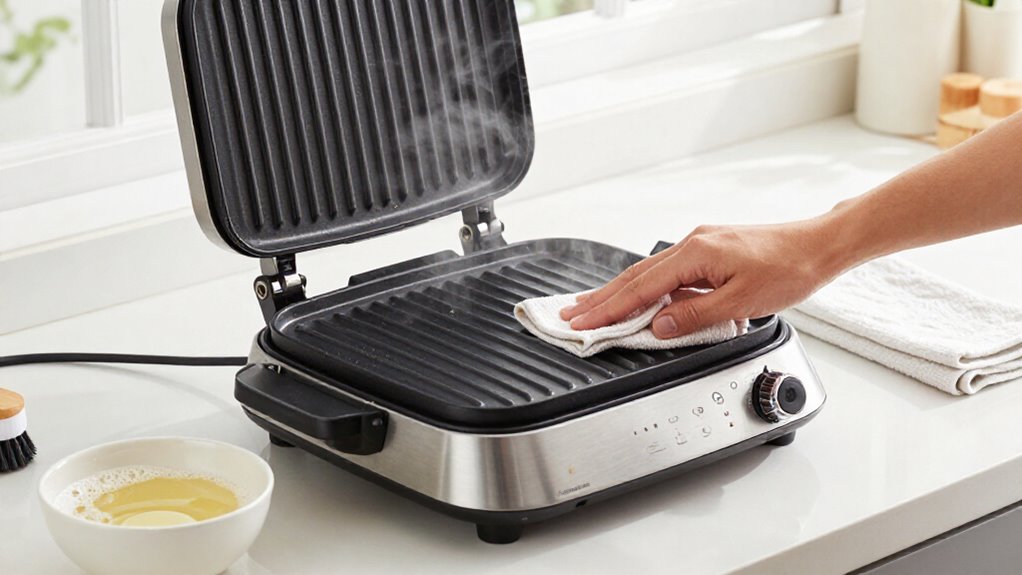
Unplug your grill and let it cool completely before cleaning. Gather a microfiber cloth, soft sponge, nylon brush, plastic scraper, mild dish soap, and warm water.
Wipe plates gently, keeping moisture away from electrical parts; clean nonremovable plates in place. Wash the drip tray only if permitted, then clear hinge gaps without forcing debris inward.
Rinse away soap, dry every part fully, and inspect coatings and the cord. Keep going for safer, more thorough care.
Preventing Grease Buildup
After each use, unplug the grill and let it cool until it’s safe to touch, then scrape away food and grease residue.
Empty and wash the drip tray regularly, following your owner’s manual for removable parts. If the manual permits, clean removable plates with warm, soapy water; wipe fixed plates with a slightly damp cloth. Never immerse or rinse fixed plates, and keep water away from electrical components.
For grease that’s stuck on, first confirm the plates are cool. Lay a damp paper towel over warm plates for a few minutes to soften residue, then gently wipe it away. Don’t scrape aggressively or let grease collect between cleanings. Deep-clean buildup monthly or as needed, and dry every part completely before you reassemble the grill.
Gathering Nonabrasive Cleaning Tools
Before you begin, check your grill’s manual for approved tools and cleaners, then gather a microfiber cloth, a soft sponge or nylon pad, and a plastic scraper. Use a soft-bristled nylon brush for seams and tight corners; it reaches residue without gouging coated surfaces. Keep a lint-free towel nearby, and replace cloths when they’re greasy or saturated so you won’t spread grime.
- A plastic or silicone scraper lifts stuck food; don’t use metal on coated plates.
- Choose a soft sponge or pad, not steel wool or a metal scourer, to protect the finish.
- Mild dish soap and warm water handle grease; skip harsh oven cleaners and bleach.
Set tools within reach, and choose gently; you’ll protect the finish and make cleanup feel manageable today.
Cool-Plate Cleaning Window
Unplug the grill and let the plates cool until they’re safe to touch before cleaning. That pause protects you from burns and helps preserve the nonstick surface. If food clings, lay a damp paper towel over warm plates for a few minutes; softened residue lifts with less effort. Don’t rush wet cleaning.
| Plate state | Your next move | Why it matters |
|---|---|---|
| Fixed | Wipe with damp cloth | Keep water away |
| Removable | Check manual; wash only if allowed | Clean without risking damage |
Remove plates only if your grill’s maker designed them to come off, and check the manual before washing or soaking. For burnt-on spots, spread baking soda paste, wait 15–20 minutes, then gently scrub, rinse, and dry. A pause means cleanup and plates ready for the meal.
Clean Hinge Gaps
Unplug the grill and let it cool before you carefully open the hinge. Brush crumbs from accessible gaps, then wipe them with a slightly damp cloth without spraying cleaner or forcing debris inside. Dry the hinge thoroughly before closing or storing the grill.
Unplug Before Cleaning
Once the grill is switched off, unplug it and let it cool until it’s safe to touch. Don’t rely on the controls alone to make the appliance safe: disconnect the plug before you clean or handle the grill. This reduces the risk of electric shock and helps prevent accidental heating while you work.
Before removing plates or cleaning near the hinge, check your owner’s manual for model-specific instructions. Use a slightly damp cloth to wipe the hinge gaps, and lift crumbs or grease with a soft brush or cloth. Work gently; don’t force water into the grill body.
Keep cleaner and excess moisture away from electrical parts, and never spray the grill or rinse it under a tap. Dry the hinge area thoroughly before you use or store the grill. Wait until it’s fully dry before reconnecting power.
Open Hinge Carefully
With the grill unplugged and cool to the touch, open the lid slowly and support it so it doesn’t swing or strain the hinge.
Use a slightly damp microfiber cloth to wipe the accessible hinge gaps, folding the cloth to reach narrow seams without forcing it into the grill body. Keep moisture controlled; don’t spray water or let liquid run toward internal components or electrical areas. If you meet resistance, stop rather than pry or twist the hinge.
Don’t remove hinge parts unless your owner’s manual identifies them as removable. Check the area for any remaining dampness and blot it with a clean, dry cloth before closing the lid fully. Let the hinge air-dry fully if you’ve used more than a trace of moisture.
Brush Away Crumbs
After the grill is unplugged and cool enough to touch, use a soft nylon or non-scratch brush to sweep crumbs from the plates and hinge gaps.
Open the hinge only as directed in the owner’s manual, and keep the grill steady on a clear, level work surface. Move the brush gently along each gap, guiding loose debris outward rather than forcing it deeper or toward the housing. Use short strokes around corners and seams; don’t scrape the nonstick plates or press hard against the hinge.
If crumbs cling, ease them free with a plastic scraper, taking care not to gouge the surface. Don’t use a metal tool, and don’t remove parts unless the manual says they’re removable. Gather the loosened crumbs with a dry cloth, keeping moisture away from the grill body. Check the gaps once more before moving on, and stop if you notice damage or a loose hinge.
Wipe With Damp Cloth
When the unplugged grill has cooled until it’s safe to touch, wipe its fixed plates and interior surfaces with a slightly damp microfiber cloth. Use gentle strokes to lift grease and crumbs without soaking the nonstick coating. For hinge gaps, fold a clean section of the cloth and carefully work it along accessible creases.
Keep moisture out of the grill body and away from electrical components; don’t push the cloth deep into openings. Never spray water or cleaner directly into the hinges. If you need an approved cleaner, apply a small amount to the cloth first, then wipe the area.
Check the cloth as you work and switch to a clean section when grease transfers. Take care around wires, sensors, and controls, and stop if you can’t reach a gap safely. Dry wiped areas completely before closing or storing the grill.
Dry Hinge Gaps Fully
Once the grill is unplugged and cool, gently lift crumbs and grease from the hinge gaps with a slightly damp microfiber cloth or soft, non-scratch brush.
Keep the cloth only slightly damp; excess water can run into the grill body and reach electrical components. Don’t spray cleaner or pour water near the hinge. Use light strokes to loosen residue in narrow spaces, and avoid steel wool or harsh scrubbers that could scratch surfaces or damage the finish.
Afterward, use a clean, dry microfiber cloth to absorb moisture from each gap. Check the hinge area, including both sides and any crevice where water might collect. Let it air-dry completely if needed. Don’t close or reassemble the grill until the hinge area feels fully dry.
Handling Nonremovable Grill Plates
Unplug the grill and let its fixed plates cool until they’re safe to touch. Wipe them gently with a slightly damp cloth, using a damp paper towel to soften stuck-on food. Don’t pour or spray water into the grill body, and dry the plates completely before use or storage.
Unplug Before Cleaning
Before cleaning fixed grill plates, switch off and unplug the appliance, then let it cool until safe to touch. Treat the plug as a required safety step: never handle or clean the grill while it remains connected to power. Allow enough cooling time for the plates and internal parts to lose heat; don’t rely on the power light to judge temperature. If you aren’t sure the surfaces have cooled, wait longer before you begin.
Check your owner’s manual for the approved method and any model-specific restrictions. Keep liquids away from the grill body and electrical components, and don’t spray cleaner onto the appliance. Never rinse it under running water. Make sure everything is completely dry before reconnecting and using the grill.
Wipe Plates Gently
After the grill is unplugged and the plates are cool enough to touch, wipe them gently with a slightly damp microfiber cloth or soft sponge and warm water with mild dish soap. Work across the fixed plates in small sections, following their grooves and applying only light pressure. Lift softened food residue rather than scrubbing; abrasive pads, metal tools, or forceful strokes can scratch the nonstick surface.
If residue remains, dampen the cloth again and make another gentle pass. Keep the cloth and suds on the cooking surface, away from the grill body, heating elements, and electrical parts.
Don’t pour or spray cleaner onto the plates. Use a separate clean, damp cloth to wipe away soap, then dry the plates thoroughly with a soft towel before use.
Avoid Excess Moisture
For fixed grill plates, use as little water as possible: unplug the grill and let it cool, then wipe the surface with a damp, not dripping, cloth. Don’t soak the plates or pour water over them; moisture can run into seams and reach the grill body, heating elements, or electrical parts. Work in small sections, lifting residue with the cloth rather than scrubbing aggressively.
If the cloth becomes dirty, rinse it away from the grill and wring it thoroughly before continuing. Keep the grill unplugged, and never spray water or cleaner directly onto the surface. When residue is gone, use a clean, dry cloth to remove dampness. Check edges and grooves for pooled water, then let the grill air-dry before you use or store it. This protects electrical components and reduces risk.
Clean Drip Tray Easily
Once the grill is off, unplugged, and cool, remove the drip tray and scrape grease and food scraps into the trash—not down the drain. Check your manual first. If it permits hand-washing, use warm water and a little mild dish soap.
For residue that won’t lift, leave the tray in warm, soapy water until it loosens, then gently scrub with a non-scratch sponge. Don’t use metal tools or abrasive pads, which can damage the tray’s surface. Rinse away all soap thoroughly, then dry the tray completely with a clean towel or let it air-dry. Reinstall it only when it’s fully dry and seated correctly. A clean, dry tray helps limit lingering grease and odors, and keeps runoff contained during your next cooking session.
Cracked Power Cord
A cracked power cord makes your indoor electric grill unsafe to use. Unplug it immediately, and don’t turn it on again. A crack can expose wiring, creating shock or fire hazards. Don’t cover the damage with tape or attempt a do-it-yourself repair; neither option makes the cord safe.
Keep the plug and cord away from water while you clean, and never spray cleaner onto electrical components.
Have the manufacturer or a qualified repair professional replace the cord. Ask for a part specifically approved for your grill model, not an improvised substitute. If the cord feels hot, sparks, or smells burnt, keep clear and contact a qualified repair professional before using the grill again. Don’t plug it back in until a professional confirms it’s safe.
Avoiding Soap Residue on Plates
To prevent soap residue from affecting your next meal, check the grill’s manual before washing removable plates.
If the manual permits washing, use warm water and a small amount of mild dish soap. Skip strong cleaners; they can leave unwanted traces and compromise a clean cooking surface. Rinse each plate thoroughly under clean water, paying attention to grooves and edges where suds may linger. You want dinner to taste like the ingredients, not yesterday’s detergent.
- Use only the cleaning method the manufacturer recommends.
- Rinse until you can’t see or feel any soap film.
- Dry completely with a clean microfiber cloth before reinstalling.
For fixed plates, don’t pour or spray water onto the grill. Wipe them with a slightly damp cloth, removing any soap residue while keeping moisture out of the grill body. Let every cleaned part dry before you cook again.
Inspecting Plate Coatings
After the plates are clean and dry, inspect their coatings for peeling, flaking, deep scratches, or exposed metal. These signs can mean the nonstick surface is damaged. Before checking them, make sure the grill has cooled and is unplugged to prevent burns or electrical hazards.
Use a soft cloth or non-scratch tool with mild dish soap when cleaning coated plates. Avoid steel wool, harsh scrubbers, and aggressive wire brushes; they can worsen coating damage. Remove plates only if your manufacturer designed them to come out, and consult your manual for coating-specific care instructions.
If you find damage, avoid scraping or testing the surface with utensils. When damage is extensive, stop using the plates and contact the manufacturer about replacement. Check them after each use.
Conclusion
When you finish, unplug the grill and let it cool to a safe cleaning window. Wipe plates gently, clear hinge gaps, and empty the drip tray before grease hardens. Use nonabrasive tools and rinse away soap residue so food won’t pick up a taste.
Check the coating and power cord each time; don’t use a grill with cracks or damaged plates. This routine helps you keep your grill cleaner and safer for your next meal.