Air Fryer Capacity Guide: What Each Quart Size Actually Cooks in Servings
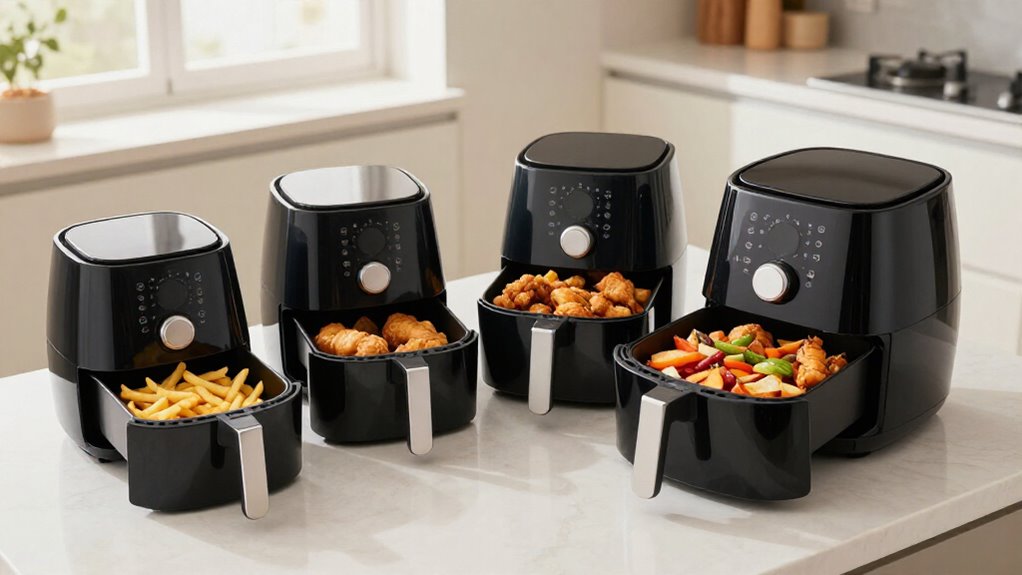
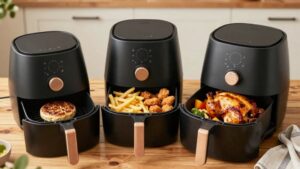
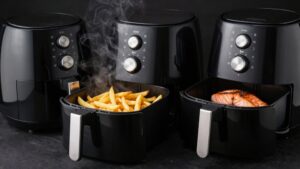
Choose a 2–3-quart air fryer for snacks, reheating, or one serving; a 3–4-quart model usually suits one or two people. A 5–6-quart basket typically handles meals for three or four, while 6–8 quarts gives you room for larger portions or gatherings.
These are estimates: food shape and basket dimensions matter, and crowded food won’t crisp evenly. Measure your counter and leave airflow clearance.
The guide below helps you match capacity to meals, guests, and space.
Servings by Quart Size
Air fryer capacity gives you a rough guide to servings, but leave about a quarter of the basket open so food crisps instead of steams.
A 2-3 qt model usually handles one serving, such as fries, vegetables, or two small chicken thighs. Choose 3-4 qt for one or two; a 4 qt basket can fit two chicken breasts or fries.
For three to four people, consider 4-5 qt: it can hold roughly 20-24 wings or 2-3 lb of fries. A 5-6 qt model is a practical family choice and can cook many meals for three or four in one batch.
If you regularly feed four to six, look at 6-8 qt; larger baskets may fit 30-40 wings or 4-5 lb of fries at once.
Servings by Quart Size
A useful rule of thumb is about 1 quart per person, but the right size depends on what you’re cooking: a 1–1.5-quart model generally suits one or two small portions, while 2–2.5 quarts can cover a meal for two.
| Capacity | Typical servings | Example foods |
|---|---|---|
| 3–4 qt | 2–4 | 3–4 salmon fillets |
| 4.5–5 qt | 3–5 | Chicken or family sides |
For a single serving, snacks, or reheating, you may find 1–1.5 quarts sufficient. A 2–2.5-quart model can cook two portions, such as several chicken thighs or a small batch of fries. If you regularly feed three or four, consider 3–4 quarts; larger appetites or family meals may call for 4.5–5 quarts.
Treat these counts as estimates: portions vary by appetite and food, so choose based on your usual meals. For batch cooking or guests, size up rather than relying on the one-quart-per-person guideline.
Usable Basket Space
Serving estimates only tell part of the story: a quart rating includes space above the food, not just the area you can use for cooking. The basket floor’s width, depth, and shape determine whether pieces fit in one layer. Food cooks best with hot air moving around it, so don’t fill every corner; crowding can leave results uneven and less crisp.
A 4-quart basket can hold two chicken breasts or a portion of fries, but a larger meal may require batches. Before you buy, check the interior dimensions and compare the basket layout in product photos or reviews. Measure your counter and allow room for the appliance. Similar quart ratings don’t guarantee the same usable cooking area, so judge the layout, not the number alone.
Quart-by-Quart Serving Estimates
Use these serving estimates as a starting point: a 2-quart fryer typically suits one person, while a 3-quart model can serve one or two. A 4-quart fryer generally handles two to four people; 5- and 6-quart models often serve three to four, with more room for larger portions. Your results depend on the food and serving size, so leave space for airflow and check the basket’s usable area.
2-Quart Serving Estimate
For one person, a 2-quart air fryer can cook a single serving of fries, nuggets, vegetables, or leftovers. Its small basket suits snacks, sides, and reheating better than a complete meal.
You can cook a small portion of chicken pieces, but don’t expect room for larger portions or a full dinner. You’ll likely need to prepare foods in separate batches if you want more than one modest item; crowding the basket can limit airflow and crisping.
For two people or regular meal cooking, a 3–4-quart model is usually more practical. Before buying, check the basket’s usable surface area, since quart ratings don’t guarantee room for a full meal. Use a 2-quart unit when single servings and quick reheating match how you cook most often.
3-Quart Serving Estimate
A 3-quart air fryer generally suits one person, handling a single serving of fries, vegetables, or leftovers. Its compact basket may also fit two small chicken thighs, but the usable floor area matters more than the quart rating. Check the basket’s shape and dimensions, since a narrow base can limit how pieces sit even when the stated capacity seems adequate.
For even cooking, arrange food in a single layer when possible. Crowding blocks airflow, which can leave food less evenly cooked and crisp. You can use this size for two people when making snacks or sides, but a full meal may mean cooking in batches. If you regularly cook for two or more, meal-prep, or want dinner ready at once, choose more capacity instead.
4-Quart Serving Estimate
A 4-quart air fryer typically serves one or two people, making it a practical choice for couples and smaller households. You can usually cook two chicken breasts, a portion of fries, or another modest meal in one batch. For two or three people, that may cover everyday meals, but larger portions can require multiple batches.
Keep enough room to arrange food in a single layer; basket shape affects usable space, and filling it to the top can limit how evenly food cooks. Its basket works best for snacks, sides, and modest meals rather than a full dinner for four. If you often cook for a larger household, plan to serve dishes in batches, or choose a model with more capacity for routine family-size portions.
5-Quart Serving Estimate
A 5-quart air fryer typically serves three to four people, making it a practical choice for a small family. You can usually cook about 20–24 wings or 2–3 pounds of fries, though the exact amount depends on basket shape and how you arrange the food. For a family of four, the basket may fit a meal’s protein and vegetables in one batch if the pieces are modest in size. Larger portions, or bulky foods, may need separate batches.
Keep items in a single layer where possible so hot air can circulate and brown them evenly. The five-quart label describes total basket capacity, not a target fill level; packing it tightly can compromise cooking. Check basket shape against your usual portions before you cook each time.
6-Quart Serving Estimate
A 6-quart air fryer typically serves about four people, or up to five when portions are moderate. For a family dinner, you can often cook enough chicken pieces or fries in one batch, depending on the food and how much each person eats. A large appetite or generous portions may reduce that estimate, so plan around your household’s usual servings rather than the quart rating alone.
For better browning, arrange food in a single layer where possible; crowding limits airflow and can leave food less crisp. Many 6-quart models can fit a whole chicken, but check the basket’s shape and dimensions before buying because usable space varies. If you regularly cook for five or six people, serve large portions, or want fewer batches, consider a 7- or 8-quart model.
Match Capacity to Meal Type
Match the air fryer to the meal you plan to make most often: choose 2–3 quarts for snacks, reheating, or a single serving; 3–4 quarts for simple meals for one or two; and 5–6 quarts for family meals of three or four. For a compact model, plan one portion of fries or a handful of vegetables; its basket works best for small batches. A 3–4 qt unit gives you room for a straightforward meal for two, such as two chicken breasts with fries or vegetables.
If you regularly serve three or four, a 5–6 qt basket can often cook the meal in one batch. For batch cooking, larger family dinners, or gatherings, consider 6–8 qt capacity, which can accommodate about 30–40 wings or 4–5 lb of fries. Check the basket’s usable surface and leave space around food; crowding restricts airflow and can reduce crisping. Choose based on your usual portions, not an occasional oversized meal. Also compare dimensions, since quart ratings don’t guarantee equal cooking area.
Whole Chicken Capacity
For a whole chicken, choose a basket of at least 6 quarts to leave room for hot air to circulate. That size gives you a safer fit and helps the bird cook evenly without pressing against the basket.
Some 5.8-quart models can hold a small chicken, but you’ll need to position it carefully, and the fit may leave little clearance. Check the basket’s interior dimensions and shape before you buy; quart capacity alone doesn’t tell you how much usable floor space you’ll have. The bird must sit without crowding the sides, so air can move around it.
Skip a 4-quart model for whole-chicken cooking. Its basket works better for chicken breasts or smaller portions. If you’re unsure whether a bird will fit, compare its size with the manufacturer’s basket measurements.
Cooking for Unexpected Guests
When unexpected guests arrive, a 6–8-quart air fryer can handle about 30–40 wings or 4–5 pounds of fries, while a 4–5-quart model may require several batches.
If you host often, size up 2–4 quarts from your everyday needs; an 8-quart model or larger gives you more room for a crowd. A 5–6-quart basket makes a meal for four, but appetizers for extra guests can add a round of cooking. Plan the menu around what fits rather than assuming the quart rating equals space.
Keep food in a single layer and leave room between pieces so hot air can circulate. Before choosing a larger unit, measure your counter and confirm you can accommodate its footprint and clearance. Choose capacity for your usual needs.
Fixing Soggy Food
If air-fried food turns soggy, overcrowding may be blocking the hot air it needs to crisp. Keep food in a single layer rather than filling the basket; leave room for circulation. Try these five fixes:
- Preheat your air fryer for 2–3 minutes at the target temperature, if the manufacturer recommends it.
- Shake or flip fries, wings, vegetables, and frozen foods halfway through cooking so hot air reaches every side.
- Use a perforated tray or mesh basket; foil shouldn’t cover its holes.
- Mist fresh vegetables, homemade fries, and breaded foods lightly with oil; don’t pour oil into the basket.
- Cook in batches if your food won’t fit without crowding.
These simple adjustments help restore crispness without extra oil.
Countertop Clearance Requirements
Before choosing a spot, measure the air fryer’s width, depth, and height, then check the manufacturer’s required clearances. Compare those dimensions with the counter where you’ll cook; the quart rating doesn’t tell you whether the appliance will fit.
Leave room to operate it safely:
- Follow the clearance distances in your manual, keeping open space around the fryer for airflow.
- Check the space above cabinets; hot air may vent from the sides or back.
- Pull the basket all the way out; make sure it won’t strike a wall, cabinet, or nearby appliance.
- Measure countertop depth as well as width, including space for handles and basket movement.
- Confirm the footprint before buying: 6–8-quart models generally need more room than 4–5-quart models. That check prevents cramped placement later.
Conclusion
Choose an air fryer by the portions you cook, not its advertised quart count alone. Check usable basket space, compare serving estimates, and match capacity to your usual meals. If you cook a whole chicken or host unexpected guests, leave room for those larger batches.
Remember that crowding can cause soggy food, and measure countertop clearance before buying. With these checks, you can pick a size that fits your cooking habits, kitchen, and available space.