Every Air Fryer Combo Appliance Type Explained (And Which One Fits You)
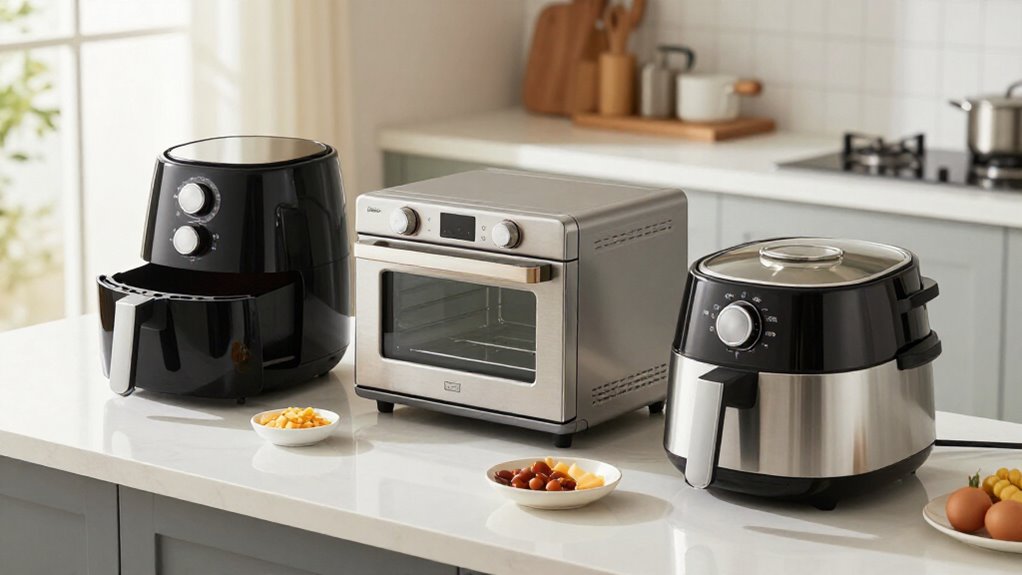
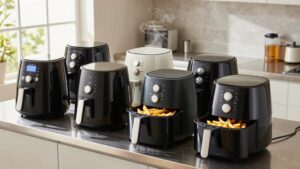
Air fryer combos come in basket, oven-style, basket-and-oven, and pressure-cooker formats. Choose a basket model for compact cooking and foods you can shake; a 4–6-quart size suits many daily meals.
Pick an oven-style unit for toast, baking, or rotisserie features, and a basket-and-oven design when you want both cooking surfaces.
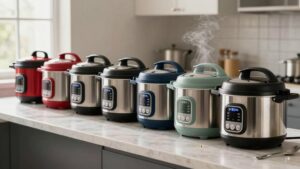
Pressure-cooker combos save counter space but limit air-frying area. Measure clearance, avoid crowded loads, and match capacity to your kitchen.
The sections ahead explain trade-offs.
Air Fryer Combo Buying Snapshot
Choose an air fryer combo by matching its layout and capacity to the meals you make. A basket-style model suits foods you can shake or turn, and it usually costs less. For daily meals, 4–6 quarts offers capacity. If you want two foods cooked at different temperatures, choose a dual-basket unit; models span 8 quarts for Ninja to 10 quarts for Philips, with separate controls and synchronized finish features.
Prefer broader cooking options? An air-fryer toaster oven adds baking, broiling, and toasting. Breville’s Smart Oven Air Fryer Pro offers 13 presets and fits a 13 × 9-inch casserole pan. For one or two portions, a 2.1-quart Cosori Lite weighs 4.9 pounds; larger-batch cooking may call for 9 quarts or more. Don’t crowd food: airflow supports crisping.
Countertop Space Trade-Offs
When counter space is limited, balance an air fryer’s footprint against the capacity and functions you need. A compact basket model suits a small kitchen, but leave vertical clearance to lift its basket. Larger baskets take more room while reducing batch limits.
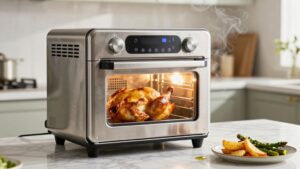
Oven-style air fryers occupy more counter depth, yet can handle trays, a pizza, or a whole chicken and may replace your toaster oven. Choose one if you cook for a family or entertain. A pressure-cooker/air-fryer combo keeps a small external footprint, though its pot limits usable air-frying surface; a second lid may need storage. Measure your counter, including depth and overhead clearance, before buying. If space is tight, prioritize the functions you’ll use rather than capacity you rarely need.
Cooking Frozen Fries and Chicken Nuggets
Frozen fries and chicken nuggets can go straight from the freezer into an air fryer: no thawing needed. Arrange them in a mostly single layer, leaving gaps for hot air circulation. Overcrowding traps moisture and can leave fries or nuggets soft rather than crisp.
If your combo has a basket, shake fries or turn pieces partway through cooking to encourage even browning. Check food before its package’s full cooking time ends; air fryers can cook frozen items faster than conventional ovens. Cooking a full package of sweet potato fries can show whether your appliance browns well without trapping moisture. Follow your model’s directions, and cook in batches if needed to preserve space around each piece. Frozen food thickness and load size can change cooking time.
Basket-and-Oven Combo Designs
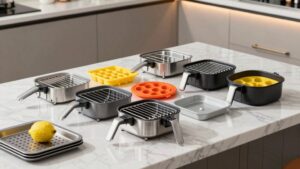
A basket-and-oven combo pairs a pull-out air-frying basket with oven functions for baking, roasting, and toasting. You’ll gain more cooking options, though oven-style air frying browns food best in a single layer, and small items can be harder to shake. Check your counter space before choosing one; these appliances need more room than basket-only fryers.
Basket-and-Oven Layout
Basket-and-oven combos pair a pull-out air-frying basket with an oven-style cavity, so you can shake foods like fries in the basket and use racks or trays for baking, toasting, and roasting. That split layout gives you two cooking surfaces without requiring a separate toaster oven. For even results in the cavity, spread food in a single layer and leave room for hot air to circulate.
Crowded trays can cook unevenly, so you may need to work in batches. Small pieces also take more effort to gather and toss than they do in a removable basket. The trade-off is counter space: these appliances usually occupy more room than compact basket-only models. Before buying, measure your available counter depth and width, then compare them with the unit’s dimensions and capacity. Choose this design if you want basket handling alongside an oven-style cavity; if easy shaking and a smaller footprint matter most, choose a simple basket-style model instead.
Cooking Versatility
When you want one appliance for more than crisping, a basket-and-oven combo offers a useful range of cooking options. Use its pull-out basket for fries and other foods that benefit from a shake; switch to the oven cavity for baking, toasting, roasting, or broiling. Some models expand the menu further with slow cooking and dehydrating, so you can handle more than quick snacks.
For oven-style air frying, spread food in a single layer to encourage even cooking. The basket makes shaking easier, while the oven cavity can accommodate larger cookware, such as a quarter-sheet pan or a 13-by-9-inch casserole dish. That added capacity comes with a larger footprint. Choose this design when you value varied cooking functions; pick a basket-focused model when compactness and easy shaking matter.
Best-Fit Kitchens
Your kitchen layout and cooking habits can help determine whether a basket-and-oven combo is a good fit. Choose this design if you want a pull-out basket for fries, tots, and other foods you can shake or turn, plus oven functions for tray- or rack-arranged dishes. The basket makes quick crisping convenient; the oven expands your options with baking, broiling, and toasting.
Before buying, measure your counter: oven-style combos generally need more room than compact basket models. These ovens usually work best when you spread food in a single layer, while small pieces can be awkward to toss mid-cook. If you prepare foods or want both formats in one appliance, the footprint may suit you. If space is tight, a basket-only model may fit better.
Cleanup After Greasy Foods
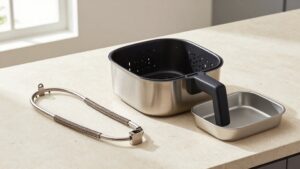
After cooking greasy foods, let your combo appliance cool before removing and cleaning its baskets and trays. Soak stubborn, greasy parts if the manufacturer’s instructions allow it. Wipe the interior surfaces to remove splatter and residue.
Clean Removable Baskets
Greasy foods are easier to clean up when your air fryer has a removable, dishwasher-safe basket and tray. Let the appliance cool before you take out the parts. You can then handle grease and stuck-on residue at the sink instead of reaching into the cooking chamber.
Check your manual before putting baskets or trays in the dishwasher. “Dishwasher-safe” claims and care instructions can vary by model, and some parts may need hand washing to protect them. A basket fryer with fewer removable pieces also means less disassembly and fewer items to wash. The Philips 3000 Series Dual Basket Air Fryer has removable components designed to simplify cleanup. Choose a setup for your portions, and consider how many pieces you’ll clean after a greasy meal.
Soak Greasy Components
When grease clings to removable air-fryer parts, unplug the appliance and let it cool before taking them out. Remove the basket, tray, and any other greasy components only when they’re safe to handle. Check your manual before soaking or washing each piece; coatings, materials, and dishwasher guidance vary by model. Don’t assume a part is dishwasher-safe; check for your specific model.
If residue sticks, place compatible parts in warm, soapy water and let them soak before washing. Then use a soft sponge to lift softened grease without scratching or stripping a nonstick coating. Avoid abrasive pads and follow the manufacturer’s cleaning instructions.
Tackle greasy components promptly after cooking, once they’ve cooled: dried-on residue takes more effort to remove and can accumulate between uses. Dry parts fully before returning them to the appliance.
Wipe Interior Surfaces
Once the appliance has cooled, wipe its interior surfaces to remove grease splatters and food residue. Follow your model’s cleaning instructions because interior finishes and approved methods differ. Use the recommended cloth or cleaning solution; don’t assume abrasive pads or strong degreasers are safe.
Wipe around the cavity and door where grease can collect, taking care not to wet electrical openings or controls. Remove baskets, trays, and other detachable parts first, then wash them separately according to the manufacturer’s directions. If a part is dishwasher-safe, use that option; otherwise, clean it by hand.
Wiping after greasy cooking keeps buildup from hardening and makes each cleanup easier. During cooking, avoid foil or parchment that blocks airflow; restricted circulation can affect results and leave more residue.
Rotisserie Chicken and Toast
If you want to roast rotisserie-style chicken and make toast with one appliance, choose an air-fryer toaster oven; basket models generally lack the same oven-style versatility. Check the product listing for a rotisserie attachment or preset before you buy; these features aren’t standard across air-fryer combos. The Breville Smart Oven Air Fryer Pro handles toast and air frying, while its pricier smarter version adds app-based presets, including rotisserie-style chicken.
For a large bird and plenty of toast, the 31.1-quart Ninja Prestige Smart XL fits a whole turkey or 18 slices of toast, but its footprint may feel excessive for daily cooking. The Instant Omni Plus includes rotisserie tools and fits a 12-inch pizza; testers found it expensive and prone to running hot.
Uneven Cooking Across Racks
Even an oven-style air fryer that handles toast and rotisserie chicken can brown food unevenly across its racks. Each level gets different airflow and heat, so a tray above another may brown faster while lower pieces stay pale or soft. Keep food in a single layer and leave space between pieces; crowded trays restrict circulation.
In tests, a whole bag of frozen sweet potato fries crowded the Breville Smart Oven Air Fryer Compact’s smaller tray and cooked unevenly. For multi-rack meals, rotate trays or swap their positions partway through cooking, then check doneness early and add time if needed. Large toaster-oven models may also need more preheating than basket-style fryers, so follow the manual’s guidance before loading food. You’ll get more even browning overall.
Using Foil Near Heating Elements
Can you use foil in an air fryer? Often, but placement matters. In combo appliances, circulating air can lift loose foil toward a heating element, where it may touch the hot surface. Foil can also obstruct airflow, leaving food unevenly cooked or less crisp.
Before using it, check your appliance manual; guidance varies by model.
- Keep foil well away from heating elements.
- Don’t cover basket holes or oven vents; airflow helps food cook and crisp.
- If your recipe calls for foil, tuck it securely beneath the food so it can’t move.
- Follow the manufacturer’s instructions, especially when switching between microwave and air-fry modes.
Use only enough foil for the recipe, and make sure it stays put throughout cooking. If you’re unsure, skip it.
Measure Cabinet Clearance
Before choosing a countertop air fryer, measure its height against the space beneath your upper cabinets, and leave the manufacturer’s required clearance above it for hot exhaust. Check the full footprint, too: a tall oven-style combo may not fit where a compact basket model does. For example, the Breville Smart Oven Air Fryer Pro measures 21.25 by 17 by 12.75 inches, so compare its dimensions with your usable counter area.
Also allow space to open the door, slide out baskets, and reach controls without striking cabinets or nearby items. If you’ll store the unit between uses, measure the cabinet opening and shelf height, then consider the lift. At 38.9 pounds, the Breville Pro may prove inconvenient to move often. Plan before you buy or install.
Conclusion
Choose an air fryer combo around how you cook, not its feature list. A basket-and-oven model gives you flexibility, but it takes more counter space and can be harder to clean. If frozen fries and nuggets are your staples, prioritize even airflow and simple cleanup. For rotisserie chicken or toast, check rack layout and capacity.
Measure cabinet clearance, keep foil clear of heating elements, and choose the design you’ll actually use and maintain every day.