Pressure Cooker Combo vs Standalone: Do You Really Need Both?
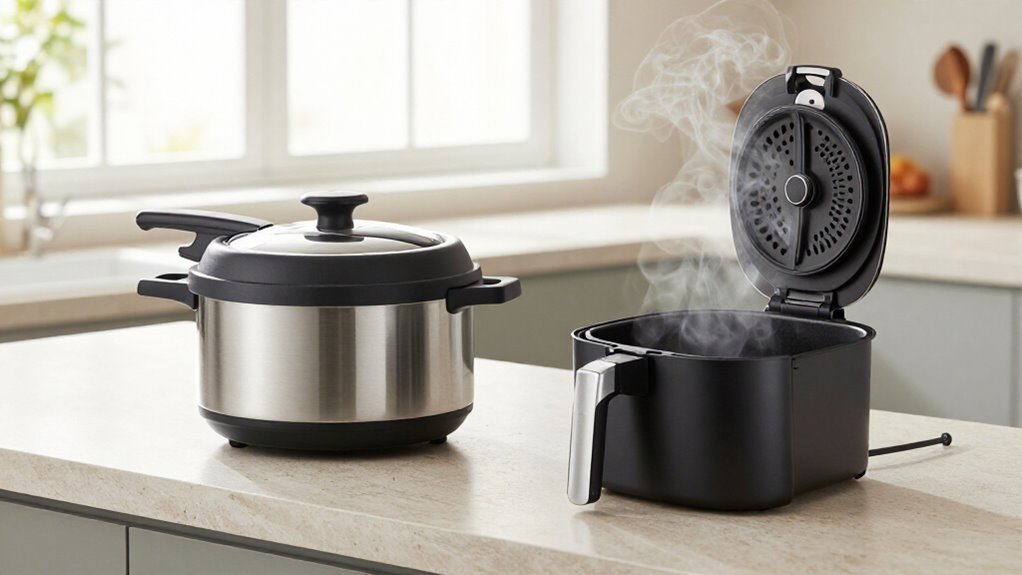
You don’t need both unless you regularly use a multi-cooker’s extra functions and value a standalone cooker’s advantages.
Pressure-cooking results depend more on your recipe, liquid, timing, and texture than on cooker format. Choose a combo to replace appliances and save space; choose a standalone for simpler upkeep, portability, or cooking without electricity.
Compare capacity, lid clearance, release method, and cost before buying.
The details below can help you decide which setup fits your routine.
Lid Design and Sealing
Lid design affects how easily a cooker seals and how reliably it holds pressure. For a standalone electric model, automatic alignment and interlocks help you seat the lid correctly, while a removable silicone gasket supports repeatable sealing. Stovetop lids are simpler, but you may need to align and lock them manually; many reach higher pressure.
Combo lids add parts for multiple functions, so check that locking pins engage fully. Their pressure performance generally suits everyday recipes, though designs may be less robust at the highest settings. Match any replacement gasket to your model: dimensions and fit vary, and combo lids often aren’t interchangeable.
| Cooker | Lid | Seal |
|---|---|---|
| Stovetop | Manual lock | Gasket |
| Electric | Interlocks | Removable gasket |
| Combo | More parts | Model-specific |
Pressure Release Methods
Once the lid is sealed, choose how to release pressure based on the recipe and how quickly you need to serve. Natural pressure release lets pressure fall gradually, but it can delay dinner.
A manual release vents steam faster, yet keep your hands and face clear of escaping steam to avoid burns; it can make a mess. Follow your cooker’s instructions and the recipe’s release guidance.
Stovetop cookers may cool faster if you run water over the lid, but don’t try this with an Instant Pot. Instant Pots don’t vent during cooking, so you generally need less liquid than a stovetop recipe specifies. Combo and standalone electric cookers use the same release choices; the extra crisping function doesn’t change pressure release.
Browning Before Pressure Cooking
Before pressure cooking, brown meat, onions, or garlic to build deeper flavor. A combo cooker may let you sear ingredients in its pot, so you can move from browning to pressure cooking without changing pans. However, the pot’s power can make browning slower than on a stovetop.
Work in small batches, and let moisture evaporate before adding more food; crowded ingredients steam rather than brown. A stovetop pressure cooker browns more readily over a burner. With a standalone electric model, you may need a separate pan for this step. If your cooker struggles to sear, use a Dutch oven or stainless-steel pan, then transfer the browned ingredients to the pressure cooker. This extra step takes space and cleanup, but it gives you browning.
Preset Cooking Programs
Preset cooking programs give you a starting point, with timed pressure settings for foods such as rice, beans, stews, and meat. They can help you estimate a cook when you lack a trusted recipe, but they don’t guarantee your preferred texture. Results depend on ingredients, recipe, local conditions, and desired doneness.
Rice presets usually target basic white rice, so you may need different settings for brown or specialty varieties. Preset programs also vary by model; switching cookers means learning what each button actually does.
Use these checks before relying on a preset:
- Check the manual for each program’s default time and pressure.
- Adjust for ingredients and doneness; consult a recipe when precision matters.
- Choose manual mode when you want control over time and pressure.
Batch Size and Capacity
How much capacity you need depends on the number of people you’re feeding and the space you have. For everyday meals, a 6-quart pressure cooker is a common, practical size. Tested multi-cookers typically hold 5.7 to 8 liters, giving you options for smaller servings or larger batches.
If you usually cook for two, a 3- to 4.5-liter slow cooker may be enough. For a crowd, consider a 5- to 8-liter model, but check its footprint before buying: a larger multi-cooker can take up substantial counter and storage space.
When you need generous capacity without extra width, a tall, narrow 8.5-quart stovetop cooker can hold large batches while occupying about the width of a 4-quart model. Its slimmer shape may fit your routine better than a bulky multi-cooker.
Replacement Parts and Warranty
Because multi-cookers contain electronic components, repairs can be more complex than on traditional pressure cookers. Before you buy, check warranty coverage and confirm that essential replacement parts remain available; compare those details directly across models.
- Inspect the sealing ring regularly; clean it and replace it when worn to protect the seal.
- Check the steam rack and inner pot for damage, and verify that replacements fit your model.
- For a traditional cooker, plan to replace its gasket every one to two years, depending on use.
Keep gaskets clean and flexible, and inspect seals and valves for wear or blockage. Standalone cookers have fewer parts but still need regular inspection. Compare coverage and parts availability before deciding.
Dependence on Electrical Power
Your choice also affects how much you depend on electricity. An electric pressure-cooker combo needs power for its heating element and controls; many models, including Instant Pots, draw about 700 to 1,200 watts. You get automated settings and monitoring, but you can’t pressure-cook if an outage cuts power.
A standalone stovetop pressure cooker needs no electricity of its own. You heat it on a gas or electric cooktop, and compatible models also work on induction. If the power fails, you may still cook with a working gas burner or heat source. Consider what remains available in your kitchen during outages. Choose a combo when you have reliable power and value hands-off operation; choose stovetop if you want a cooker independent of electrical components.
Texture and Flavor Differences
You’ll get tender results quickly from either cooker, but pressure can turn beans mushy if you don’t time them carefully. Sealed cooking keeps food moist and can intensify vegetable flavors, though it won’t develop the same depth as slow cooking. Use less liquid than you would in an uncovered pot, and brown ingredients in small batches to build color and flavor.
Tenderness and Texture
Pressure cooking makes tough cuts tender in a fraction of the time, a lamb shank can take about 45 minutes under pressure, compared with seven hours in a slow cooker; but the faster method may not develop the same depth of flavor as a long, slow braise. You’ll get moist results from the sealed pot, but beans can turn mushy if overcooked. Slow cookers suit stews, curries, soups, and pot roasts, giving meat time to soften.
Choose by texture:
- Pressure-cook for quick, tender meat.
- Slow-cook when you want extended softening.
- Use a stovetop pressure cooker for greater heat control with delicate vegetables.
Adjust timing to protect texture. Combo pressure settings work like standalone cookers; timing and your preferred result matter more for each ingredient you cook.
Flavor Concentration
Flavor develops differently under pressure than during a long, slow braise. A pressure cooker traps steam and moisture, so meat stays juicy while high heat tenderizes tough cuts quickly. That speed saves time, but it gives ingredients less opportunity to build layered flavor than a slow cooker’s simmer.
Slow cooking suits stews, curries, soups, and pot roasts; flavors meld and meat softens gradually.
Pressure-cooked broth can taste strongly of vegetables and look clear. You can skim or retain separated fat to make it lighter or richer. Because pressure cooking uses less liquid than stovetop methods, don’t add the same volume by default; adjust seasoning too.
Whether you choose a combo or standalone model, pressure-cooking results depend more on recipe, liquid, and timing than appliance format.
Countertop Space Requirements
A combo cooker can reduce clutter by replacing several appliances with one unit, but its larger footprint may still take up significant counter space. Check that you have room for the cooker and clearance to open its lid and vent safely. You’ll also need storage space when it’s not in use, so compare its size with the appliances you already own.
Counter Space Footprint
If counter space is limited, a combo cooker can replace several appliances by handling pressure cooking, slow cooking, rice cooking, steaming and, on some models, air frying.
This can free counter area if you’d otherwise keep several appliances nearby. But combos aren’t automatically compact: tested models range from 5.7 to 8 litres, and Instant Pots take significant counter space. Compare the cooker’s footprint with the appliances it would replace before you buy one. Consider these points:
- Measure its counter footprint.
- Confirm it replaces appliances you use.
- Keep separate cookers if they already meet your needs.
A stovetop pressure cooker generally weighs less and has fewer parts, but it still occupies counter space during use. Choose a combo for consolidation, not just its function list.
Storage and Clearance
Before buying, check whether the cooker will fit on your counter or in a cupboard, including the clearance its lid needs to open. Measure the appliance’s width, depth, and height, then compare those dimensions with your available space. Leave room above the cooker to lift or swap its lid without hitting cabinets, and make sure access to controls and room to move the pot.
Capacity affects the footprint: models holding 5.7–8 liters can be substantial, so don’t assume a multi-cooker will fit just because it replaces several cooking functions. If you already own separate cookers, weigh the extra unit’s size against how often you’ll use it. In a small kitchen, one appliance that handles pressure, slow, and rice cooking may make better use of limited counter and cupboard space.
One Appliance, Less Clutter
When counter space is tight, a multi-cooker can replace separate pressure, slow, and rice cookers, reducing clutter.
A single base may also handle other cooking tasks, so you could reclaim counter and cupboard room. But don’t assume it’s compact: tested models range from 5.7 to 8 liters, so measure before buying.
Check these three points:
- Measure the appliance’s footprint against your usable counter area.
- Confirm you’ve got cupboard room for the cooker and any accessories.
- Keep separate appliances only if they fit your kitchen and routine.
Stovetop pressure cookers weigh less and have fewer parts, but offer pressure cooking alone. If your appliances already fit your space and habits, a multi-cooker may add clutter. Choose the setup that suits your kitchen best overall.
Long-Term Ownership Costs
Over time, the best value depends on which appliances you’ll actually use and maintain. A multi-cooker typically costs $170–$450, while pressure cookers range from about $59 to over $500. Buying both can raise upfront costs, so compare that total with what you’d use regularly. If you already own appliances that meet your needs, extra modes may not repay the premium.
On the other hand, one multi-cooker may replace a rice cooker, slow cooker, steamer, or pressure cooker, saving purchases and storage space. Factor upkeep into your estimate: replace gaskets or sealing rings every one to two years, and clean removable parts.
Electric models also have electronic components that can make repairs complex. A stovetop cooker avoids those electronics and works across cooktops.
Conclusion
Your best choice depends on how you cook, not how many features a box lists. Choose a combo cooker if you value one appliance for pressure cooking and air frying, and you can accept its capacity, lid, and storage trade-offs. Choose a standalone pressure cooker if you prioritize reliable pressure cooking, simpler handling, or larger batches. If you’re unsure, compare your meals, counter space, and budget; buy both only when each solves a distinct need.