Toaster Oven Combo vs Pressure Cooker Combo: Which Air Fryer Hybrid Wins?
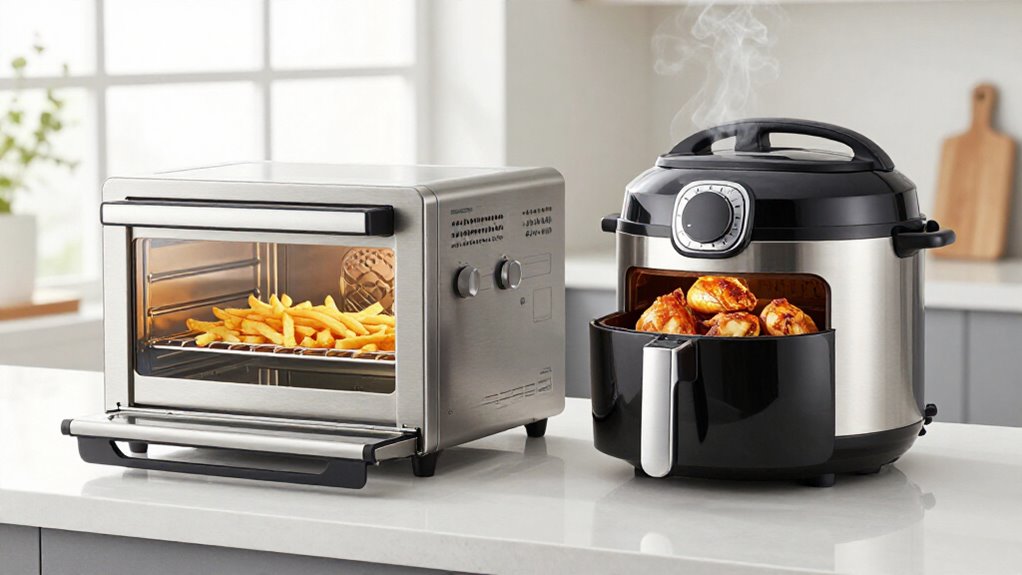
Choose a toaster-oven combo if you want crisp fries, wings, pizza, and larger single-layer batches; its wider chamber gives food room to brown, though it needs counter depth and airflow.
Pick a pressure-cooker combo if you value a smaller footprint and often make soups, beans, or braises alongside air-fried sides. It uses moist heat for tenderness and a separate lid for crisping.
Compare space, cleanup, controls, and warranty; the details below clarify which trade-offs fit your kitchen.
Countertop Footprint Comparison
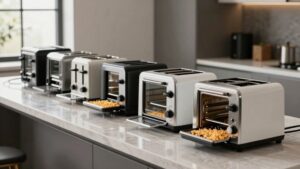
When counter space is tight, a pressure cooker combo usually takes up less of it. You’ll trade width for height, though: an air-fry lid needs overhead clearance and storage when detached. A toaster-oven combo spreads out but can handle wider dishes and may replace oven tasks.
| Footprint factor | Toaster-oven combo | Pressure-cooker combo |
|---|---|---|
| Typical counter area | 120–432 sq in | 100–196 sq in |
| Shape | Wider, shallower | Narrower, taller |
| Clearance | Door, top, and front | Extra top space in use |
| Parts storage | Pans and racks | Lid or basket |
| Best fit | Wide counters | Narrow counters |
Measure usable depth, not just appliance depth; the door needs room to open. Check overhead clearance before choosing a lid-style model, and account for parts you’ll store elsewhere. A larger oven may save space overall if it replaces another appliance; a crowded counter can erase the cooker’s footprint advantage.
Airflow and Pressure Mechanics
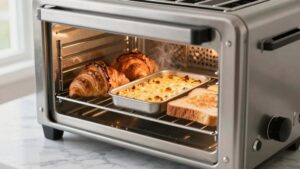
An air-fryer toaster oven uses a heating element and fan to move hot, dry air around food, crisping fries or wings without pressure. A top-mounted fan directs heat intensely, so you’ll need to monitor food to prevent darkening or burning.
A side-mounted fan runs more moderately, but you may encounter hot spots when convection is off. Pressure cooking works differently: a sealed pot traps steam. With at least two cups of liquid, steam can raise water’s boiling point to about 250°F, speeding moist-heat cooking. That makes the pressure setting useful for beans, soups, and braised meats. You can’t air-fry in a pressure cooker alone; the hybrid needs a separate lid or mechanism to circulate hot air. Choose the mode that matches your recipe.
Crispness Versus Tenderness
If crisp surfaces matter most, choose a toaster-oven air fryer: its fan circulates hot, dry air to brown fries and wings with little or no oil. That setup suits you when you want crackling skin and a dry bite; in testing, the Breville Smart Oven Air Fryer Pro delivered crispy fries and wings.
Choose a pressure-cooker hybrid for tender soups, beans, grains, and braised meats, where trapped steam and liquid soften ingredients rather than crisp them. On its own, a pressure cooker can’t air-fry; you’ll need the separate crisping lid and basket. Still, the Instant Pot Duo Crisp browned fries and made chicken and cauliflower gnocchi crispy and golden. Your choice comes down to the finish you value: crisp surfaces or moist, tender results.
Preset Programs and Controls
Beyond the cooking results, preset programs and controls can shape how easily each combo fits your routine. A toaster-oven combo often gives you a wider menu of one-touch options. The Breville Smart Oven Air Fryer Pro, for example, offers 13 functions, from toast and pizza to slow cook and dehydrate. Its three dials and six buttons let you set or adjust time and temperature, and it starts automatically after preheating.
However, don’t assume every model works alike: some require a separate start press, while the Instant Pot Omni Plus touchscreen can feel less intuitive than physical controls.
Pressure-cooker combos group functions into dedicated modes, but you may need to swap lids. With the Duo Crisp, attach the air-fryer lid before choosing air fry. The Ninja Foodi adds dehydration and broiling, too.
Recipes Each Model Handles Best
Choose the combo based on how you like to cook: toaster-oven air fryers shine with dry-heat recipes that need browning, while pressure-cooker combos excel at moist, slow-cooking dishes. For fries, wings, roasted vegetables, toast, pizza, and baked goods, choose the toaster-oven model. Its larger chamber lets you arrange food in one layer, encouraging airflow and crisp edges.
You can bake, roast, broil, proof dough, or dehydrate. For soups, stews, beans, grains, oatmeal, and braised pork shoulder, use a pressure-cooker combo. It needs liquid for pressure cooking, which softens fibrous sweet potatoes and carrots, and can cook these moist-heat dishes about 30% faster than conventional steaming, boiling, or braising.
A multicooker can switch to air frying for dry crisping, but those are distinct methods.
Replacement Parts Availability
Replacement-part availability varies by model, and the information here doesn’t establish which brand offers broader support. So don’t assume either appliance type will be easier to repair or keep in service. Check the manufacturer’s parts listings before you buy, focusing on model-specific compatibility.
The Instant Pot Duo Crisp uses a separate air-fryer lid and basket, and you can find a replacement lid. However, that lid doesn’t fit several other Instant Pot models, so confirm your exact model number before ordering.
The Breville Smart Oven Air Fryer Pro includes multiple racks and trays, but the available information doesn’t identify replacement sources for them. That leaves parts support unclear, not necessarily unavailable. For either hybrid, verify that replacement baskets, lids, racks, or trays match your unit; similar-looking accessories may not fit. A clear listing can help you assess long-term ownership costs.
Cleaning and Maintenance Demands
Although toaster-oven air fryers offer more cooking space, they generally take more effort to clean than basket-style models.
Grease can splatter across the door, racks, and interior walls, while batter may cling to metal fry baskets. After wings, you may need to wash the basket, wipe the oven with a vinegar-based solution, and scrub the glass. Don’t assume the drip tray slides out with the door; you might balance a hot basket over the open door or use a trivet, then launder mitts or towels.
Basket fryers usually simplify cleanup: their drawers and crisper plates are often dishwasher-safe, though bulky baskets consume rack space. Pressure-cooker hybrids add lid handling, and you must periodically replace sealing rings. Check removable parts and drying needs before choosing for routine.
Upfront Cost and Warranty
You’ll find toaster-oven combos range from $250 to $550, while pressure-cooker combos cost about $198 to $300. Compare those upfront prices with warranty coverage: several Breville models include two years, but warranty details aren’t provided for the listed Instant Pot or Ninja. Account for both when weighing value.
Purchase Price
Upfront cost varies by format: toaster-oven combos can run from about $350 for the standard Breville Air Fryer Toaster Oven to $400 for the Smart Oven Air Fryer Pro and $500–$550 for the Joule Oven Air Fryer Pro, while the Instant Pot Duo Crisp costs about $198 and a Ninja Foodi pressure-cooker-and-air-fryer combo about $300.
That gap reflects more than brand pricing: the Duo Crisp offers an eight-quart pot and two cooking methods for less than premium Breville ovens. The Ninja costs more than the Instant Pot but less than the Joule. Compare each price with functions you’ll actually use; Breville’s two-year limited warranty is an added known benefit on its $350 and $400 models before deciding which hybrid earns your counter space.
Warranty Coverage
Warranty terms can help distinguish these combos, but the available details are uneven: Breville’s $250 Smart Oven Air Fryer Compact, $350 Air Fryer Toaster Oven, and $400 Smart Oven Air Fryer Pro each include a two-year limited warranty. That gives you a clear baseline across three toaster-oven options, though limited coverage isn’t the same as a promise that every repair or accessory is included; check the full terms before buying.
The $500–$550 Joule Oven Air Fryer Pro costs more, but its warranty details weren’t provided, so you can’t assume it offers the same two years. The Instant Pot Duo Crisp is about $198, discounted from $220, yet its warranty duration is also unspecified. That missing information makes a direct value comparison incomplete: the lower price may appeal, but you should verify coverage, exclusions, and service requirements with the manufacturer. If warranty certainty matters, Breville’s stated term is the clearest evidence, not proof of superior durability. It doesn’t guarantee easy claims or long-term performance.
Cooking Multiple Dishes Simultaneously
When you cook several dishes at once, a toaster-oven combo’s racks can offer more usable space, but crowded trays may restrict airflow and crisping. You can coordinate separate foods more easily with independent baskets, while pressure-cooker combos generally require sequential steps because pressure cooking and air frying use different lids.
To limit flavor transfer, leave space between foods and consider whether their cooking times and temperatures align.
Cooking Capacity
How much you can cook at once depends on usable space and airflow, not just advertised capacity. The Breville Smart Oven Air Fryer Pro gives you a 1-cubic-foot chamber, two racks, and a 12-by-15-inch air-fry basket. You can arrange more food across its interior, but avoid crowding or stacking trays so tightly that air can’t circulate; restricted airflow can leave food steaming rather than crisping.
The Instant Pot Duo Crisp’s 8-quart rating describes its cooker, not simultaneous air-frying capacity. You air-fry in the basket inside the cooker, rather than using both functions at once. For separate foods, the Ninja Foodi DualZone offers two independent 5-quart baskets. You can keep dishes apart and use Smart Finish to coordinate their completion. Compare usable cooking surfaces, not headline capacity, when choosing.
Timing Multiple Dishes
Cooking several dishes at once depends on coordinating their timing as well as fitting them in the appliance. A toaster-oven air fryer gives you room for a batch, but you may rotate racks or turn food halfway through. Fries needed a shake during a 20-minute cook, while wings required flipping, so mismatched times demand attention. Closely stacked trays in the Instant Vortex Plus left some food steaming, limiting crisp results across levels.
A dual-basket model cooks foods independently; the Ninja Foodi DualZone’s Smart Finish coordinates them to end together. The Instant Pot Duo Crisp: pressure cooking uses moist heat, while air frying uses dry circulating heat, so you can’t run those modes simultaneously. Choose whether you’ll manage one chamber or value independently timed baskets.
Preventing Flavor Transfer
Although both appliance types can cook multiple foods at once, shared heat can transfer aromas and flavors. Toaster-oven combos let you separate foods on trays or in baskets, but leave room around each item so air circulates. Crowding or stacking traps steam and softens crisp surfaces. Keep pungent, heavily seasoned foods away from mild dishes; hot air and splatter can carry flavor between them.
With a pressure-cooker combo, uncovered ingredients share trapped steam and its moist cooking environment. Put strongly flavored foods in separate sealed, heat-safe containers when cooking them together. For very different flavors, cook separate batches and wipe surfaces between them.
Clean baskets, racks, trays, and oven walls after fatty or seasoned foods, including splatter on the door and interior. This helps.
Best for Batch Cooking
For large batches of crisp foods, the Breville Smart Oven Air Fryer Pro’s 1-cubic-foot chamber and 12 × 15-inch basket let you spread ingredients in a single layer, while its racks and roasting pan support cooking multiple foods. You can prepare separate components together, but allow extra time for the oven to heat and plan for its substantial counter footprint.
The 8-quart Instant Pot Duo Crisp suits meal prep that mixes crisp foods with beans, stews, or other pressure-cooked dishes. Its air-fry function browned fries and made chicken and gnocchi crispy and golden, though bulky mitts make the basket handles awkward to grip. For a large fries-only batch, the 6-quart Instant Vortex may serve you better: its basket holds more than 1½ pounds and produces crisp, even browning. Choose based on your batch’s size and mix.
Conclusion
Choose the hybrid that matches how you cook, not the longest feature list. If you want toast, roasted vegetables, and crisp food across a wide tray, a toaster oven air-fryer combo earns its counter space. If you value fast, tender meals, pressure cooking, and hands-off batch prep, a pressure-cooker combo may serve you better.
Check capacity, cleanup, warranty, and whether you can cook sides together. The right pick saves time without adding chores or hassle.