Meal Prepping With an Air Fryer: How Much Capacity You Actually Need
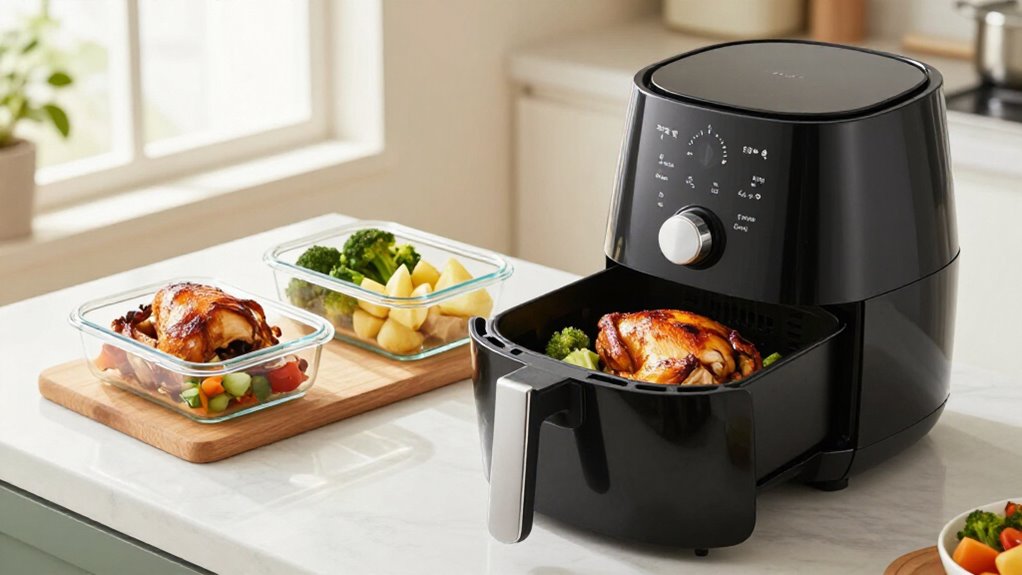
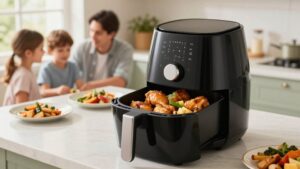
Plan on roughly one quart per person as a starting point: choose 2–3 quarts for one, 3–4 for two, or 5–6 for four. For weekly meal prep, a 6–8-quart model can reduce batches for four to six people, but don’t judge by capacity alone.
Check the basket’s usable floor and leave gaps around food; four chicken breasts may fit in a 5–6-quart basket only if they sit in one layer. More sizing tips can help.
Capacity for Weekly Meal Prep
For weekly meal prep, choose capacity based on how many people you feed and how many cooking rounds you’re willing to run: a 6–8-quart air fryer suits a household of four to six, while a 4–5-quart model can work for one or two people or smaller batches. For a closer look at how each size translates to real meals, see the Air Fryer Capacity Guide, which explains what each quart size actually cooks in servings.
Check the basket’s usable floor area; capacity ratings include empty space above food, and ingredients need room to sit in a single layer. As a guide, a 4–5-quart model may hold 2–3 pounds of fries, while a 6–10+ quart model may hold 4–5 pounds. These examples can help you estimate portions, though fit varies by basket shape.
If this’ll be your main meal-prep appliance, size up when practical, then measure counter space and cabinet clearance before buying.
Meals Per Basket Batch
Capacity only tells part of the story; meals per batch depend on how many portions fit in a loose layer with room for hot air to circulate. Count the pieces your basket’s usable base can hold, not the quart label. Shape matters: a broad fillet takes more space than a compact piece, and two six-quart baskets may fit different amounts.
For crisp, even results, arrange delicate foods in one layer and don’t exceed the max-fill line. If your meal needs more portions than fit, divide the total by the number that fit and round up to find your batch count.
For example, four 150-gram portions in one layer provide protein for four meals, before sides. Check your model’s fill guidance, too; some basket units shouldn’t exceed two-thirds full. Plan extra cycles when needed.
Fitting Four Chicken Breasts
Can four chicken breasts fit in your air fryer? A 5–6-quart model may hold them, but the basket’s floor area matters more than its stated capacity. Arrange the breasts in one layer, leaving space around each piece so hot air can circulate. That gap helps the chicken cook more evenly and brown properly.
If the breasts overlap or crowd the basket, cook them in batches rather than stacking them. Although extra cycles take longer, they’ll give you better results than forcing all four into one load. For frequent batch cooking, consider a 6–8-quart model, which generally provides more room than a 4–5-quart unit. Before buying, check the basket’s interior dimensions and usable cooking area; models with the same quart rating can offer different amounts of space for arranging food.
Basket vs. Oven Models
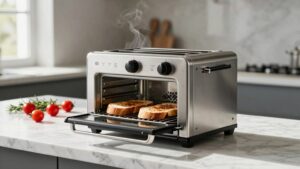
Choose a basket model for compact batches and reheating, but check its usable floor area—not just its listed quart capacity. An oven-style model gives you racks to cook multiple foods at once, which can cut meal-prep cycles. Weigh that flexibility against its larger footprint and your counter and cabinet space.
Batch Size and Layout
When planning meal prep, focus on usable cooking space, not just the quart rating: a 4–6-quart basket usually fits two to four portions in a single layer, while smaller models may require multiple batches. The listed capacity includes empty space above the food, so check the basket’s floor area and dimensions before buying. A single layer usually cooks more evenly because hot air can circulate around each piece.
If you’re feeding four to six people, a 6–8-quart model may reduce the number of batches without forcing you to crowd the basket. Oven-style models with multiple racks hold more food at once, but stacked layers can cook unevenly. You may need to rotate trays or rearrange food. Choose a larger basket or oven model if you want to prepare proteins and sides together, and make sure it fits your counter.
Cooking Multiple Foods
To cook a protein and sides at the same time, consider a larger basket or dual-compartment air fryer; a small basket may require separate batches. A single-basket model works best when you arrange items in one layer, leaving gaps for hot air to circulate. Check the basket’s floor area, not just its quart label: a wide base may hold more spread-out food than a narrow basket.
Oven-style models give you multiple racks, so you can cook vegetables and protein together, and some units fit 8-inch pans. Use trays to separate ingredients when their juices or seasoning shouldn’t mix, but check that each rack still has room for airflow. If you load either design too heavily, food may turn out less crisp and cook unevenly.
Counter Space Trade-Offs
Counter space can determine whether a basket or oven-style air fryer fits your meal-prep routine. A 4–5-quart basket model measures about 12–14 inches wide and deep and 12–13 inches tall, making it easier to fit on a counter. An oven-style unit gives you more room to cook foods at once, but its footprint may displace appliances. Measure the appliance’s dimensions and check clearance beneath wall cabinets before you buy.
Choose an oven-style model if it’ll serve as your primary cooker or you prepare multiple foods together. If you reheat, make snacks, or cook meals, a smaller basket may suit you better.
A 6-litre model can reduce batches than a 4-litre one, but takes more space. When counter space is tight, decide whether sequential cooking works before upgrading.
Cooking Multiple Food Types
When foods need different temperatures or cook times, prepare them in separate batches rather than crowding the basket. Plan the sequence around each item’s timing, and use racks only when hot air can still circulate. Cook strongly flavored foods separately to prevent their taste from transferring to milder ingredients.
Cook Foods Separately
Cook proteins and vegetables in separate batches if they need different temperatures or cooking times.
A 4–6-quart fryer can usually handle two to four portions in a single layer, but different foods may not fit well together. Separate batches let you match each food to its own settings and preserve space for airflow. If you crowd the basket, hot air can’t circulate freely, so food may cook unevenly and lose crispness. Shake or flip each batch halfway through to help it brown evenly.
Prepare and portion ingredients ahead, then cook each type in its own batch. You can serve the food soon after cooking or transfer cooled portions to airtight containers and refrigerate them for up to four days for later meals as needed.
Plan Around Cooking Times
Plan the sequence around each food’s cooking time and temperature. In a shared basket, leave enough floor space to arrange proteins and vegetables in a single layer; crowding blocks airflow and limits crispness. A 4–6-quart model often fits two to four portions, but mixed foods may need a larger basket or separate batches.
Match additions to their cooking windows rather than starting everything together. Brussels sprouts need about 15 minutes at 375°F, while salmon takes 7–10 minutes at 350°F. Add each at the point that lets both finish together, adjusting for portion size and your appliance.
Shake or flip foods halfway through for even cooking, and check shorter-cooking ingredients before the longer items finish. If your fryer has dual baskets, set each food separately.
Prevent Flavor Transfer
Keep strongly seasoned foods, such as Cajun shrimp, separate from mild foods to prevent flavor transfer. Use separate batches when marinades or spices could overwhelm another dish. For protein and vegetables, cook them apart if their seasonings or cooking times differ. Don’t crowd the basket; leave space for hot air to circulate and crisp each item evenly.
| Food type | Best approach | Capacity tip |
|---|---|---|
| Strongly seasoned | Cook separately | Clean between batches |
| Protein + vegetables | Separate if needed | Use extra room |
A larger fryer or separate compartments can handle multiple food types at once without piling them together. Still, keep items apart so flavors don’t mingle and airflow remains effective. After a strongly seasoned batch, clean the basket and tray before cooking mild foods each time.
Roasting Sweet Potatoes in Batches
For evenly cooked sweet potato fries, cut them to a similar size and toss lightly with olive oil, salt, and pepper. Arrange them in a single layer so hot air can circulate; crowding can leave fries soft and uneven. A 4-6-quart air fryer typically fits two to four portions at once, but judge capacity by the basket’s floor area, not its label alone.
Set the fryer to 375°F and cook for 10-15 minutes, flipping the fries halfway through. Check a few minutes early because your model and batch size affect timing. If you’re prepping more, cook successive batches instead of packing the basket full.
Portion the cooked fries for later meals. This takes extra cycles, but protects texture and gives you consistent, reliable portions.
Countertop Clearance Requirements
Batch size isn’t the only space consideration: measure the air fryer’s width, depth, and height against your counter and the clearance beneath upper cabinets. Before you buy, compare those measurements with the exact spot where you’ll use the appliance, not just its storage location. Typical 4–5-quart models measure about 12–14 inches wide and deep and 12–13 inches tall, but check the product specifications because dimensions vary.
Leave the manufacturer-recommended space around the unit so hot air can exhaust safely; don’t push it against a wall or tuck it tightly under a cabinet. If your counter is cramped, prioritize physical measurements over quart capacity when comparing larger models. A roomier unit may reduce cooking rounds for meal prep, but it won’t help if you can’t position it with the required clearance. Measure first, then choose a size that fits both your batch plans and your usable counter space too.
Ignoring Basket Shape Constraints
A quart rating doesn’t show how much food fits in a single layer: it includes the empty space above the food. Before you choose a model, inspect the basket’s usable floor area and shape. A wide, shallow basket can fit more pieces in one layer than a deeper basket with the same advertised capacity. That difference matters because crowded ingredients brown less evenly, and airflow needs room to circulate.
- Measure the basket’s flat base, not its rim.
- Compare that footprint with the foods you’ll cook, such as chicken pieces or vegetables.
- Check whether your pans or trays fit without blocking airflow.
If items won’t fit with space between them, plan on batches rather than choosing by quart label alone; verify dimensions before you buy.
Check Your Weekly Portions
How many portions do you plan to cook in a typical week? Count those servings before you choose an air fryer; household size alone won’t tell you how many batches you need. As a starting point, allow roughly one quart per person: 2 to 3 quarts for one person, 3 to 4 for two, and 5 to 6 for four.
A 4 to 6-quart model generally cooks two to four portions in a single layer. For weekly prep serving four to six people, consider a 6 to 8-quart model. If you prepare several meals at once, sizing up can reduce repeated cycles. Don’t pack the basket tightly: crowded food may brown unevenly.
Check the basket’s floor area, too. Its quart rating includes empty space above the food, so a broad cooking surface may fit more portions comfortably than a tall, narrow basket.
Conclusion
Before you buy, map your weekly portions to the food you’ll cook at once. A larger capacity helps only if its basket or oven layout fits your ingredients and your counter has room for the appliance and airflow. Check how many servings you need, whether foods can cook together, and how often you’re willing to run batches. If you meal prep for days, choose the model that matches your routine, not the number on the box.