Parchment vs Silicone Liners: Which Air Fryer Liner Wins on Cleanup?
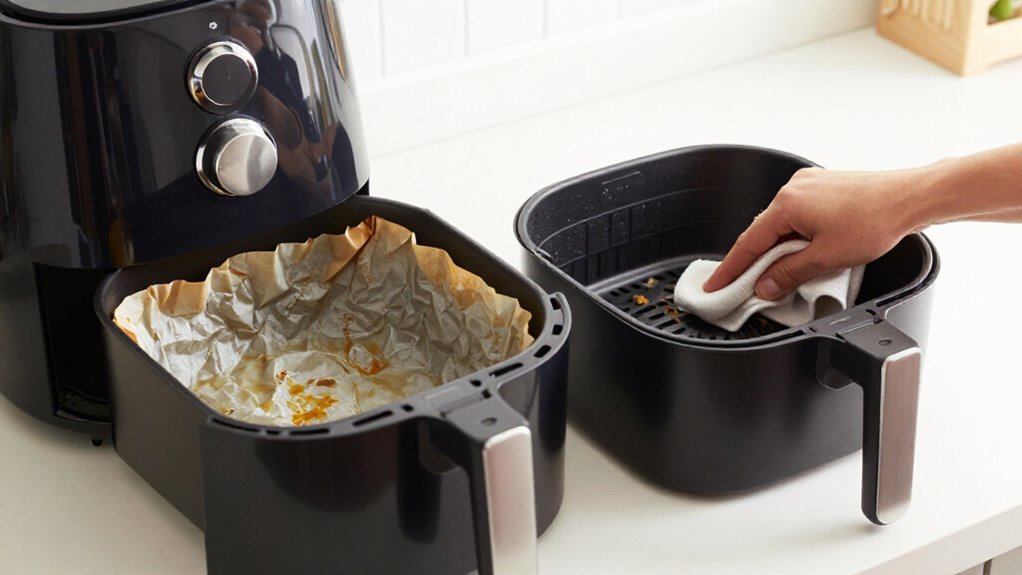
For sticky, saucy meals, parchment usually wins on cleanup: lift it out and toss it instead of scrubbing a liner. Silicone contains grease, but bacon fat, melted cheese, and glaze can settle in grooves, so you’ll need to wash it.
Neither liner guarantees a spotless basket; oil or marinade can seep through parchment, while silicone may trap residue.
Choose parchment for speed or silicone for less waste; basket fit and airflow can still tip your choice.
Cleanup Time and Residue
When cleanup time is the priority, both parchment and silicone liners keep most food residue off the air-fryer basket, but they handle the mess differently. With parchment, lift away crumbs, cheese, and sugary drips; wipe any grease that seeped through. Silicone catches oils and crumbs, but stuck bits can cling to textured or perforated surfaces, so wash it after cooling. Choose perforations when you want grease to drain and airflow to continue; solid silicone may soften crispness.
| Cleanup | Parchment | Silicone |
|---|---|---|
| Residue | Lifts off | May cling |
| Basket | Quick wipe | Rinse or wash |
| Grease | Can seep | Trapped or drains |
| Effort | Seconds | Wash, dry |
For sticky, glazed food, parchment usually cuts scrubbing; silicone saves basket cleanup if you wash it promptly after cooking.
Parchment’s Disposable Design
Because parchment is disposable, you can lift it out with crumbs, grease, and sticky residue instead of scrubbing the basket, especially useful for marinades, cheesy fries, cookies, dough, or melting chocolate. Unlike a silicone liner, which you must wash and dry after each use, parchment goes straight in the trash, saving cleanup time when food leaves a stubborn mess.
That convenience comes with a trade-off: you’ll need to keep buying liners, while reusable silicone spreads its upfront cost across many cooks. Parchment also creates single-use waste, and food-soiled sheets may not be recyclable under local rules. Choose food-safe parchment designed for air fryers, and check its temperature rating; many liners handle about 425°F. Add it after preheating, with food weighing it down, so loose paper can’t shift toward the heating element.
Browning and Crispness Comparison
For the crispiest results, airflow matters more than the liner material alone. Perforated parchment lets hot air circulate beneath food, so it can brown more evenly than solid paper. But a solid or walled liner may block airflow and soften the crust. In testing, grooved silicone liners made ultra-crispy fries because their channels drained collected oil.
That advantage showed most with fries; breaded foods on nonperforated paper browned less well, though you may notice only a modest texture difference. Silicone can still trail the crisper plate slightly when its surface restricts circulation. For either liner, keep food in a single layer with space around each piece. Don’t fold parchment over food or cover it; those barriers trap moisture and limit browning.
Loading and Removing Liners
Once you’ve chosen a liner for crispness, load it carefully: set a silicone liner flat in the basket before adding food, and check that it doesn’t block airflow.
Basket Shape and Liner Fit
A liner should match your basket’s shape and size without covering its airflow holes. Measure the basket or tray before you buy; a close fit protects the base while leaving circulation paths open. Shape matters as much as material: parchment and silicone both come in options for different fryers, but neither works well when oversized or poorly aligned. Avoid capacity-only guesses.
- Choose a rectangular liner for many dual-drawer models; Pintaur’s 8.67 × 5.9-inch silicone version targets 8–10-quart units.
- For 5–6.5-quart fryers, its 8.5-inch square liner offers a closer match.
- A 7-inch round option fits many 4–5.3-quart baskets, including the 5.5-quart Ninja Max XL.
- Paper sizes vary too: an 8.6 × 5.5-inch rectangle suits similar dual-drawer fryers. Compare dimensions, then check that the liner leaves basket holes exposed.
Dishwasher-Safe Silicone Care
After choosing a liner that fits your basket, check whether it’s dishwasher-safe; most silicone liners are, making cleanup easy after frequent use. Compared with disposable parchment, which you throw away, a silicone liner asks for a wash but saves repeated basket cleanup.
If you use the dishwasher, place the liner on the upper rack; then dry it and inspect it for cracks or discoloration before cooking again. Prefer washing by hand? Soak it in hot, soapy water, then scrub gently with a soft sponge, working through every groove where crumbs and grease can collect.
That extra attention matters more than a quick rinse: residue trapped in ridges can linger, while parchment avoids washing a liner but creates single-use waste after particularly messy meals, too.
Acidic Foods and Parchment
For acidic foods such as tomatoes, vinegar, or citrus, parchment avoids the reaction risk associated with aluminum foil, though marinades can seep through and soil the basket. This makes parchment a practical choice when you’re cooking tomato-glazed vegetables or citrus-marinated fish, while silicone doesn’t carry the foil-related concern either. Your choice hinges more on moisture, fit, and heat limits than acidity alone.
Before you line the basket, check these four details:
- Check the package rating; many paper liners tolerate 425°F (218°C), but limits vary.
- Match that rating to your recipe and your air fryer’s maximum temperature.
- Keep the sheet beneath food so airflow can’t lift it toward the heating element.
- For saucy meals, expect some marinade to pass through; parchment won’t seal the basket.
Cleanup Trade-Offs in Practice
Parchment can save you washing time after sticky or sugary foods because you can toss it when you’re done. Silicone cuts disposable waste and often goes in the dishwasher, but you may need to scrub crumbs from its grooves. Either liner can let grease or residue reach the basket, so check and wash it after cooking.
Cleanup Time
Which liner saves more cleanup time depends on what you cook: parchment is usually quickest immediately afterward because you can discard it, while silicone needs washing.
Use this quick guide:
- For sticky sauces, melted cheese, or crumb-heavy meals, parchment catches the mess and saves you from washing a reusable liner.
- You can lift it out and toss it, though grease that seeps through may still leave the basket needing attention.
- For routine cooking, silicone takes an extra step after each use, but you can reuse it instead of reaching for fresh paper.
- A grooved liner can keep the crisper plate spotless when you lift it out; collected oil and crumbs still add cleanup time.
Match your liner to the meal to save time overall, day to day.
Residue and Washing
After cooking, parchment offers the quickest cleanup: toss it, though grease or crumbs may still reach the basket. That makes it especially practical for sticky marinades, cheesy fries, or melted chocolate; you avoid washing a liner, but you may still need to wipe the crisper plate and basket.
Silicone catches grease, crumbs, and residue, often leaving the plate spotless when you lift it. However, food can lodge in grooves, so you’ll need to scrub those areas. For hand-washing, soak it in hot, soapy water, use a soft sponge, then dry it; most liners can also go in the dishwasher.
Whichever you choose, liners reduce mess but don’t replace routine air-fryer cleaning: remove accumulated oil and debris to lower fire risk as residue builds up.
Best Liner for Sticky Marinades
For sticky marinades, parchment usually makes cleanup easier: you can discard it instead of scrubbing glaze from silicone grooves. Silicone gives you a reusable option, but residue may take extra scrubbing to remove. Use temperature-rated parchment, add it after preheating, and weigh it down with food.
Sticky Marinade Cleanup
When sticky marinades leave sugary sauce on the basket, disposable parchment is usually the easiest liner: it catches much of the mess and goes straight in the trash after cooking. That doesn’t mean the basket stays spotless: marinade or oil can seep through paper, so plan to wash it afterward. For safer use:
- Add parchment only after preheating, and weigh it down with food.
- Check the liner’s air-fryer rating; many handle 425°F (218°C), though some go higher.
- Compare with silicone: its grooves may need scrubbing after especially sticky meals.
- Use parchment for heavy glaze; choose silicone when residue won’t be as stubborn.
Perforated paper can help airflow, but follow the fryer manual and keep the liner clear of the heating element.
Silicone’s Reusable Advantage
Although parchment is easier to toss after a sticky meal, a reusable silicone liner can handle sugary marinades with less fuss over time: its non-stick surface helps glaze release, and it catches drips for washing instead of throwing away.
For cooking, you can reuse one liner instead of buying parchment, lowering waste and replacement costs. After cooking, let it cool, then wash it by hand or place it in the dishwasher; dry it before storing. Sticky residue may lodge in grooves, so scrub rather than assuming the non-stick finish removes trace. Choose food-grade silicone that fits your basket without blocking airflow, and check its temperature limit. Parchment remains simpler for a mess, but silicone suits glazed meals when you’re willing to clean it.
Parchment’s Easy Disposal
If you’d rather toss sticky marinade than scrub it from reusable silicone, disposable parchment makes cleanup simpler. For glazed wings or saucy vegetables, you can lift out the mess and discard it instead of washing a sticky insert. Silicone costs less per use over time, but you’ll need to clean it after every cook.
- Choose food-safe parchment designed for air fryers; check its temperature rating, often 425°F (218°C).
- Preheat first, then add parchment with food on top to weigh it down.
- Keep loose paper away from the heating element; airflow can shift it and create a fire risk.
- Expect some cleanup: oil, marinade, or crumbs may seep through and dirty the basket.
Parchment adds waste and recurring cost, so save it for messiest meals rather than daily use.
Bacon Drippings and Cleanup
For bacon, parchment catches drippings and splatter for quick disposal, while reusable silicone contains the grease without adding paper waste. Discard parchment, but check beneath it: grease may seep through, so you may need to wash the basket. Silicone gives you a barrier you can use; however, bacon fat can settle in its grooves, where you’ll need to scrub.
Either liner cuts mess, but neither replaces basket cleaning. Wash regularly to prevent grease and residue buildup. To protect airflow, don’t cover the crisper plate with paper. Instead, place a paper liner beneath the plate to catch drips as air flows through. Choose parchment when disposal matters; choose silicone when you prefer reuse and don’t mind washing it.
Conclusion
If cleanup tops your list, parchment usually wins: you lift it out and toss away grease, crumbs, and sticky marinade. Silicone cuts purchases and handles frequent use, but you’ll need to wash its surface and remove trapped residue.
Choose parchment for bacon, acidic foods, or quick turnover; choose silicone for a reusable fit and less waste. Whichever you use, leave airflow open, secure the liner beneath food, and follow your fryer’s heat and safety instructions.