Toaster Oven Hot Spots and How to Avoid Them
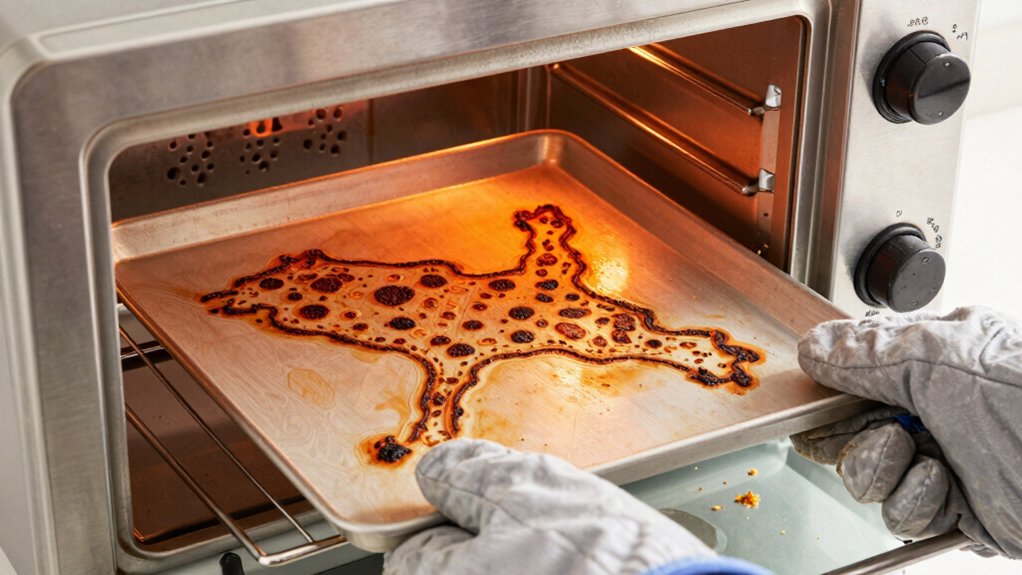
Your toaster oven likely has 20–40°F hot spots, often at the back, corners and top third. These can scorch edges or leave centers undercooked.
Map them by preheating 15–20 minutes, placing thermometers or probes across the rack, and running a 350°F test for 5–10 minutes.
Keep food centered, use the middle rack, add thermal mass like a stone, and adjust setpoints in small increments.
Follow a calibration log and you’ll avoid surprises. Continue for step‑by‑step tests and fixes.
Quick Overview
- Map hot spots with a bread/toast test or multiple oven probes to locate dark, pale, and +20–30°F zones.
- Use the middle rack and center items between heating elements to minimize scorching and uneven browning.
- Keep pans 1–2 inches from the top element. Maintain consistent vertical clearance for multi-rack baking.
- Add thermal mass (baking stone or steel) and preheat 15–20 minutes to stabilize temperatures and reduce variance.
- Calibrate periodically: log setpoint vs actual; adjust controls in small increments; retest after repairs.
80°F Temperature Variance Map
How hot is each spot in your toaster oven? You need a Temperature Variance Heat Map to spot risk zones and set a Calibration Procedure. Use the bread test and probe tools to map dark-to-pale zones; record +20–30°F hot spots and 20–40°F overall variance. Place slices across the chamber, run 350°F for 5–10 minutes, then log results.
| Location | Temp Variance | Risk |
|---|---|---|
| Back wall | +20–30°F | Fast burning |
| Corners | +20–30°F | Localized scorching |
| Top third | Warmest | Uneven browning |
If readings exceed safe margins, recalibrate thermostat or add thermal mass (stone/steel). Repeat mapping after maintenance to confirm corrected variance.
Rack Positions & Distances
Want more consistent results? You must control rack placement and distance management to reduce hot spots and avoid burned edges. Place racks so food sits centered between elements; too close increases scorching risk, and too far slows browning. Measure vertical gaps and keep consistent clearances when using multiple racks to preserve airflow.
Rotate trays only when necessary. Rotation hides positioning errors but doesn’t fix them.
Use the middle rack for most baking to minimize element influence. Keep at least 1–2 inches from the top element for items that brown quickly. When using two racks, stagger pans so upper and lower foods aren’t directly aligned. If broiling, move the rack closer for a rapid sear; monitor continuously to prevent flare-ups.
Prioritize deliberate rack placement and strict distance management to manage thermal concentration.
Calibration Procedure Steps
Before you start, preheat the oven and let temperatures stabilize so readings aren’t biased by startup spikes. Place a reliable oven thermometer or multiple probes across the rack. Then, adjust the controls incrementally while mapping temperatures to build a simple heat map.
Repeat tests, record results, and only accept settings that keep variations within a safe, predictable range.
Preheat And Stabilize
When should you start the preheat-and-stabilize sequence? Begin it at least 15–20 minutes before cooking to achieve reliable preheat stability and reduce thermal drift. Power the oven, set the target temperature, and let the controls run until they cycle steadily; that cycling indicates stable internal conditions.
Use consistent calibration timing; measure after the same interval each time to compare results and detect shifts. Avoid opening the door during stabilization. Every door movement resets equilibrium and risks misleading readings.
If readings vary by more than 10–15°F, repeat the sequence and note the variance. Document start time, setpoint, and observed stabilization point. This disciplined approach lowers the risk of uneven baking from transient hot spots and improves calibration accuracy.
Thermometer Placement Tips
How should you position your thermometer to get a reliable calibration reading? Place it at the center of the rack where food usually sits, with the probe tip exposed to open air. Do not let it touch walls, pan edges, or heating elements.
For a proper calibration procedure, preheat the oven to the target temperature and wait the full stabilization time before reading. If you suspect hot spots, repeat readings at several positions: front, back, left, and right; document variance. Use an oven-safe thermometer or probe thermometer rated for the temperatures you will use.
Avoid placing the thermometer too close to the element; that gives falsely high readings and masks risks. Regularly verify placement to ensure consistent, actionable calibration procedure data.
Adjusting Oven Controls
You’ve already checked thermometer placement and mapped any temperature variance. Now adjust the oven controls to bring readings in line with targets. Start by recording setpoint versus actual temperature at several rack locations.
If readings are consistently high or low, change the control dial or digital offset in small increments (5°F/2–3°C). Then wait for stabilization before re-measuring. Log each adjustment and resulting temperatures so you can reverse a change that worsens variance.
Prioritize conservative moves to avoid overshoot; sudden large corrections risk scorching or undercooking. If controls won’t correct a persistent hotspot pattern, note that calibration limits have been reached and plan mechanical or placement remedies.
Proper documenting during oven calibration ensures traceable, lower‑risk adjusting controls.
Test With Heat Map
Ready to map your toaster oven’s heat. You’ll create a simple heat map that shows where temperatures deviate most and pinpoints persistent hot spots. Preheat to the temperature you normally use. Then place a grid of oven-safe thermometer probes or foil-wrapped temperature stickers across the rack so you cover the full cavity.
Run for 15–20 minutes, recording steady-state readings at each point. Note any readings that exceed the average by more than 10–15°F; these are hot spots that will overcook or burn food. Use the heat map to guide pan placement, stone placement, or control adjustments.
Prioritize avoiding zones that show repeated high readings to reduce fire risk and prevent uneven cooking.
Repeat And Record
Now that you’ve mapped temperature variations, repeatable measurements let you calibrate around those hot spots and reduce risk. You’ll run the same toast test or probe pattern across multiple cycles, logging position, set temperature, and observed delta from setpoint.
Use a spreadsheet or notebook with timestamps; consistency proves whether a hot spot is stable or intermittent. Repeat tests after changing racks, adding a baking stone, or cleaning debris to confirm mitigation. If readings still exceed safe variance, adjust rack placement or avoid that zone for delicate bakes.
Recheck quarterly or after any repair. By documenting every trial and adjustment, you create a defensible calibration record that lowers food safety and quality risks in your toaster oven.
Frequently Asked Questions
How Do Baking Stones Affect Cooking Time?
Baking stones usually increase cooking time slightly because their thermal mass absorbs heat before food heats through. You’ll notice baking stones improve temperature distribution and reduce hot spots. However, the stoneware impact means you must preheat longer; often 20–30 minutes to reach stable temperature.
Plan for slightly extended cooking time and monitor doneness. Failing to preheat risks undercooked centers. Use an oven thermometer to verify target temperature and adjust time accordingly.
Can I Use Aluminum Foil to Block Hot Spots?
Yes, you can use aluminum foil to block hot spots, but you should be careful. You’ll want to tent or shield areas lightly to redirect heat and improve heat distribution. Do not line the oven or cover vents.
Foil can reflect excessive heat away from food, but it may create new hotspots or block airflow, which increases fire risk. Always avoid contact with heating elements and monitor closely while testing placements.
Are Convection Toaster Ovens Less Prone to Hot Spots?
Yes, convection toaster ovens usually reduce hot spots because convection performance circulates air, evening temperature across the chamber.
You still face risks: bakeware variability, rack placement, and overloaded cavities can recreate uneven zones. You should test your oven, use sturdy, well‑conducting pans, avoid crowding, and rotate trays when needed. Regular cleaning preserves airflow so convection actually mitigates rather than masks localized overheating problems.
Will Dark Pans Worsen Uneven Browning?
Yes, dark pans can worsen uneven browning. They absorb more heat, creating hotter spots where food contacts the pan; this intensifies browning and can scorch edges while leaving centers undercooked. You should prefer lighter, heavier-gauge bakeware. Rotate pans and use baking stones or lower temperatures to reduce risk.
Regularly test your toaster oven’s heat pattern so you’re not surprised by sudden overbrowning or unevenly baked results.
How Often Should I Replace Heating Elements?
You should check and consider replacing heating elements every 3–7 years, or sooner if you see uneven heating, sparks, or visible damage.
When replacing heating elements, prioritize certified parts and proper installation to avoid fire risk. Meanwhile, use baking stones and avoid aluminum foil touching elements.
In convection toaster ovens, monitor for faster wear. Dark pans can worsen uneven browning; therefore, swap thin or warped pans to reduce stress on elements.
Conclusion
You’ve identified hot spots, adjusted racks, and calibrated the controls. Now make sure your toaster oven stays reliable. Always preheat fully and place a thermometer where food will sit. Avoid crowding and keep vents clear to reduce uneven cooking and fire risk.
After adjustments, run another heat-map test and record results. Repeat checks periodically and after repairs. These simple, routine steps cut burn, undercooking, and safety hazards.