Toaster Oven Cookware Materials Guide
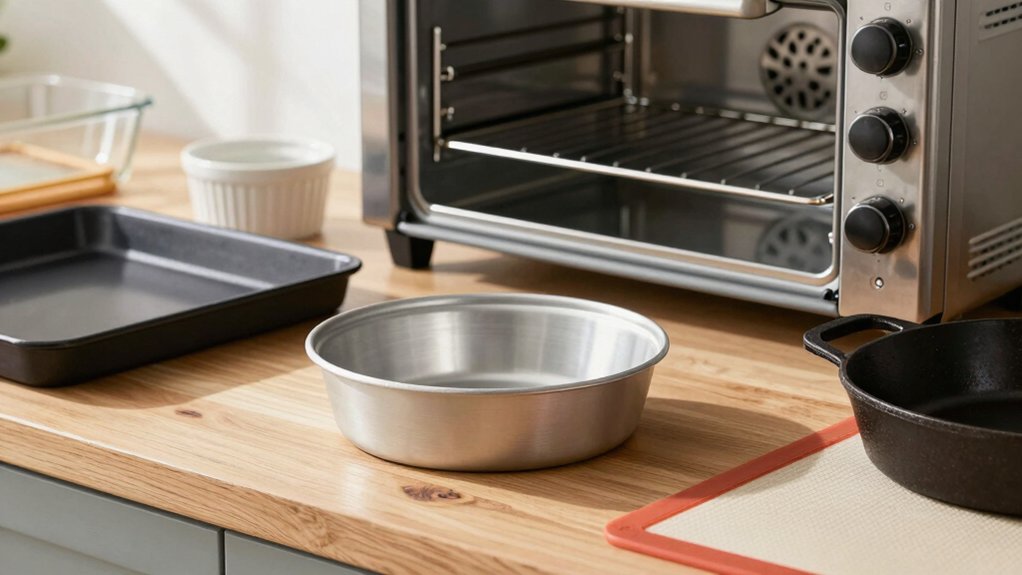
Pick cookware by material and temperature limits, not looks. You’ll want anodized or clad aluminum for fast, even heat up to ~450°F. Avoid raw aluminum with acidic foods.
Ceramic and stoneware handle gentle baking, but they can crack or off-gas near high broil temps; so check specs. Nonstick PTFE survives brief spikes to ~500°F but degrades above that. Ceramic coatings usually have lower ceilings.
Use sturdy racks and follow maker max-temp ratings. More guidance follows.
Quick Overview
- Prefer heavy-gauge stainless or anodized/clad aluminum for high-heat, even cooking and minimal leaching.
- Avoid uncoated aluminum with acidic or wet foods to prevent metal transfer and staining.
- Check manufacturer max-temperature ratings; many ceramic and nonstick coatings limit safe use to 400–450°F.
- Thin chrome-plated racks and lightweight pans can warp or lose coating near 450–500°F; use heavy-gauge or broil-rated racks.
- Prevent coating degradation by avoiding empty-pan preheats, sudden broil spikes, and temperatures above polymer limits of approximately 500–572°F for PTFE.
Aluminum vs. Ceramic Heat Limits
How hot can you safely run aluminum or ceramic in a toaster oven? You’ll generally stay below 450°F (232°C). Aluminum conducts heat well and is fine for dry, nonacidic baking. However, uncoated pieces can leach into wet or acidic foods, raising concerns about aluminum toxicity; therefore, prefer anodized or clad pans and gentle washing.
Ceramic resists sticking but faces ceramic cracking from uneven, rapid heating. Many manufacturers warn against toaster-oven use. Check specs for PFAS or nano-metals and avoid acidic contact if metal content’s present.
| Material | Practical Limit |
|---|---|
| Aluminum (anodized/clad) | ~450°F, safe if coated |
| Ceramic/stoneware | Prone to thermal shock; avoid near max temp |
Rack-safe Temperature Limits
After checking cookware heat limits, you’ll also need to contemplate the oven rack itself: most toaster oven racks are rated for roughly 450–500°F (232–260°C). However, thin wire racks or chrome-plated finishes can warp, discolor, or lose their coating at sustained high temps. You should assess rack condition, your cookware’s base, and intended cycle to maintain temperature safety and material compatibility.
Inspect racks for plating wear, bends, or loose welds before high-temp use. If you need higher temps, choose heavy-gauge stainless or cast-iron racks designed for broiling. Use pans with flat bottoms to distribute weight and avoid concentrated stress points. When in doubt, lower oven temps slightly or use an internal probe to prevent exceeding rack ratings.
Nonstick Coating Temperature Thresholds
You’ll want to know the typical temperature limits for nonstick coatings. Many PTFE pans are rated to about 500°F; while ceramic coatings often top out lower, near 400–450°F. Pay attention to manufacturer oven-safe ratings and warning signs of polymer degradation: fading, bubbling, or a chemical odor. Overheating can release harmful fumes and shorten the coating’s life.
To protect coatings, preheat carefully and avoid sudden high broil settings or empty-pan heating that can push temperatures past safe thresholds.
Common Coating Temperature Limits
Curious about how hot you can safely run nonstick pans in your toaster oven? You’ll find common coating temperature limits vary by material and manufacturer. Typical PTFE-based nonstick surfaces handle around 450–500°F briefly. Many ceramic or silicone-infused coatings recommend staying under 400–450°F.
That matters when you’re using aluminum baking sheets; lightweight pans heat fast and can exceed coating limits if left under direct broil or higher setpoints. Always check manufacturer specs: they’ll state maximum safe temps and whether brief spikes are acceptable. If you push past those thresholds, you risk loss of nonstick performance and potential off-gassing.
When in doubt, use lower temperatures, preheat cautiously, and favor materials rated for higher heat.
Polymer Degradation Temperatures
How hot can a nonstick coating safely go before it starts to break down? You need to understand polymer degradation as a function of temperature and time: most PTFE-based coatings begin degrading above about 260–300°C (500–572°F). Ceramic or silicone-based finishes tolerate lower thermal stress but resist short spikes.
Coating thresholds vary by formulation, thickness, and substrate adhesion. Thinner films heat faster and reach damaging temperatures sooner. You should avoid overheating and prolonged exposure near a coating’s upper limit since breakdown can reduce release properties and release fumes.
Monitor actual pan surface temps rather than oven dial settings. Preheat cautiously, and favor materials whose coating thresholds give a comfortable safety margin for your toaster oven uses.
Oven-Safe Manufacturer Ratings
Knowing a coating’s thermal limits is only part of the picture. Manufacturers translate those limits into oven-safe ratings you can use every day. You should read those ratings closely; they reflect testing for sustained temperatures, not brief spikes. They determine whether a pan’s nonstick layer will hold up in your toaster oven.
Look for explicit max-temperature numbers and any caveats about broiling or direct heating. Compare ratings across materials to ensure material compatibility: ceramic coatings often list lower ceilings than bare stainless or titanium, while seasoned cast or carbon steel tolerate higher heat.
Prioritize products that publish clear oven safety data and testing protocols. This way, you can match cookware to recipes without risking coating breakdown or compromised performance.
Signs Of Overheating
What warning signs should you watch for when a nonstick coating is overheating? You’ll notice discoloration (dull, brown patches), peeling or blistering edges, and a persistent chemical or metallic odor: all indicators you’ve exceeded safe temperature thresholds.
Many PTFE coatings begin to degrade above about 500°F; ceramic and titanium variants tolerate higher heat but still show surface crazing or flaking when stressed. Watch food sticking where it didn’t before and tiny vapor plumes during aggressive browning.
These signs matter for nonstick safety because degraded coatings can release fumes and particles. Monitor oven temps closely and avoid long unattended broiling; adjust preheat timing to prevent overshoot.
Replace cookware at first clear damage to keep cooking safe and predictable.
Safe Preheat Practices
If you’ve seen signs of overheating on a nonstick surface, such as discoloration, peeling, or that sharp chemical smell, stop and reassess your preheat routine to protect the coating. You should know typical PTFE-based nonstick coatings start degrading above about 500°F (260°C); many consumer toaster ovens can reach or exceed that. Therefore, limit empty preheating and avoid broil settings when using coated pans.
Use lower preheat temperatures and shorten preheat timing to just what the recipe needs. Additionally, place nonstick bakeware only after the chamber nears set temp to minimize exposure. For toaster safety, consult manufacturer max-temperature specs for both pan and oven. When in doubt, choose ceramic or titanium alternatives that tolerate higher temps without releasing harmful fumes.
Frequently Asked Questions
Can I Use Cast Iron in a Small Toaster Oven?
Yes, you can use cast iron in a small toaster oven, but mind cast iron cautions: its weight can damage racks. It heats slowly; however, it retains heat intensely. Preheat gradually, avoid thermal shock, and ensure it fits with airflow.
If weight or size is an issue, consider oven safe alternatives like aluminum sheet pans, stainless-steel clad pans, or lightweight carbon steel for similar responsiveness without the bulk.
How Do I Prevent Warping in Thin Sheet Pans?
You prevent warping in thin sheet pans by using proper warping prevention and thin sheet pan care: preheat oven with the pan inside, avoid extreme temperature shocks, and don’t overload pans with heavy food.
Use heavier-gauge or rimmed pans when possible; stabilize pans with a baking stone or rack, and hand-wash gently. Allow pans to cool gradually and store flat to maintain shape and extend usable life.
Are Copper Pans Safe for Acidic Foods?
Yes, but only when the copper safety is guaranteed by a proper lining. You shouldn’t cook acidic foods directly in unlined copper because acids react with copper, affecting flavor and safety.
Use tin‑lined or stainless‑steel‑clad copper pans for acidic foods; they give you copper’s responsiveness without leaching. Check lining condition regularly, avoid worn spots, and reline or replace pans if the protective layer is compromised to maintain safe cooking.
Can I Broil With Ceramic-Coated Bakeware?
Yes, you can broil with ceramic bakeware, but check the manufacturer first: many aren’t rated for direct broiler heat.
Using nonstick ceramic coatings often limits high-temperature exposure; therefore, they can degrade or discolor under intense broiling. If the product specifies broiler-safe, preheat carefully. Keep the rack lower to reduce direct flame contact, and avoid sudden temperature shocks.
When in doubt, use broiler-safe stainless or cast iron instead.
How Do I Season Carbon Steel for Oven Use?
You season carbon steel for oven use by cleaning, drying, and applying a thin layer of neutral oil; those are the seasoning basics.
Preheat the oven to 400–450°F. Place the pan upside down with foil below, and bake for an hour. Repeat thin coats until a smooth, dark patina forms. That patina acts like oven safe coatings, improving release and rust resistance.
Maintain it with light oiling after use.
Conclusion
You’ve now got the facts to keep cookware and your food safe in a toaster oven. Match materials to the temperatures you use: aluminum and many metals handle higher heat; ceramics and nonstick coatings often don’t. Watch manufacturer oven-safe ratings and don’t exceed coating temperature thresholds.
Use rack-safe limits, preheat cautiously, and stop using warping or discolored pieces. If a pan smells, smokes, or flakes, replace it. Those steps cut risk and extend cookware life.
Related reading: Air Fryer Accessory Materials Heat Safety Guide covers this topic in detail.