Smokeless Indoor Grill How It Reduces Smoke
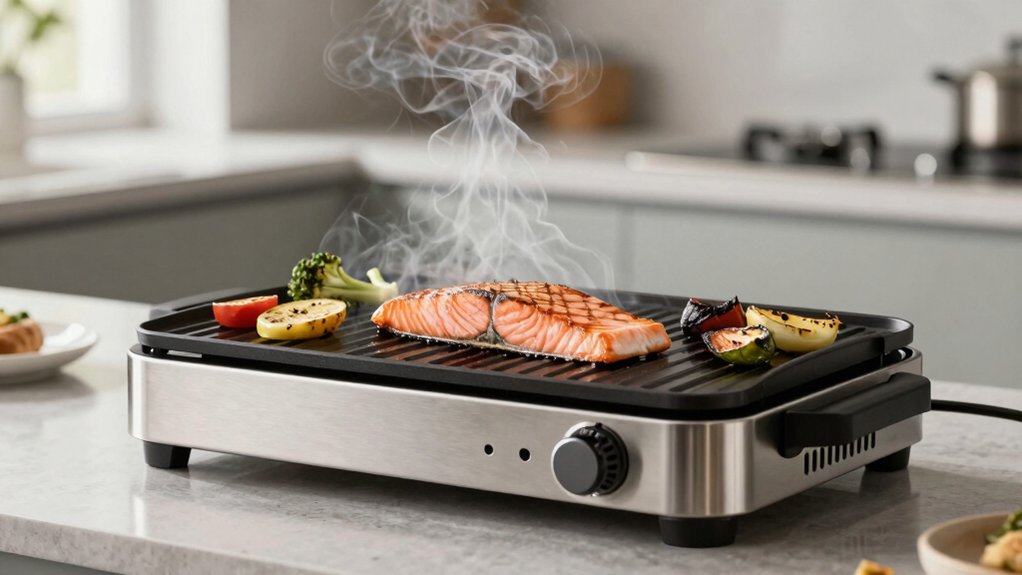
A smokeless indoor grill cuts visible smoke about 80–90% by combining precise high-heat control, grease diversion trays, and multi-stage filtration. You’ll sear at 425–510°F with infrared or heating arrays. A sloped, removable drip tray channels fat away from hot elements to prevent flare-ups.
Mechanical pre-filters, activated carbon, and a turbo extraction fan capture particulates and odors; though ventilation’s still wise for very fatty foods. Keep filters and trays maintained to stay efficient. More specifics follow if you want them.
Quick Overview
- Advanced filtration (mechanical pre-filters + activated carbon) captures particulates and absorbs odor-causing VOCs before air recirculates.
- High-extraction turbo fans and adjustable airflow remove smoke and direct fumes away from the cooking area.
- Removable, sloped grease drip trays channel fats away from heat; this prevents flare-ups that generate most smoke.
- Controlled infrared/heating arrays and temperature limits (typically 425–510°F) reduce charring and minimize smoke production.
- Regular maintenance: clearing pre-filters and replacing carbon preserves filtration efficiency and sustained smoke reduction.
Smoke Emissions Comparison Chart
How much smoke will a smokeless indoor grill actually cut? You’ll see evidence: independent tests report visible smoke reductions of about 80–90% versus traditional grilling. However, odors and fine particulates can persist. Don’t be swayed by irrelevant benefits in marketing claims; focus on measured reductions and indoor air implications.
The chart below summarizes key comparisons to guide purchase and ventilation choices.
| Metric | Smokeless vs Traditional |
|---|---|
| Visible smoke | 80–90% reduction |
| Odor & particulates | Reduced but detectable |
These results mean you’ll cut most visible smoke and combustion emissions; this lowers carbon output and VOCs. Yet, you’ll still need ventilation for high-fat foods and to address lingering fumes highlighted in testing.
Temperature Limits & Filters
Temperature limits and filter performance work together to determine how cleanly a smokeless indoor grill operates: you’ll want grills with precise temperature ranges (typically 425–510°F for searing, with some models capped around 450°F for safer indoor use) so you can sear without excess smoke. You will also need a filtration system that includes mechanical pre-filters plus activated carbon and a turbo extraction fan; this system must be rated to capture both larger grease particles and finer particulates.
You should monitor temperature limits closely. Staying below char thresholds and using infrared or even heating arrays reduces flare-ups. Maintenance matters: replace carbon regularly and keep pre-filters clear to preserve smoke filtration efficiency. Consider models with adjustable fan speeds to balance capture rate and noise.
- Set temp to sear briefly, then lower to finish.
- Replace carbon per manufacturer intervals.
- Use higher fan speed for fatty cuts.
Removable Grease Drip Tray
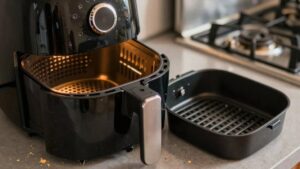
You’ll want to check how well the removable grease drip tray collects and separates fat from the heat source to prevent flare-ups and smoke. Make sure the tray is easy to slide out, sized and positioned to handle your typical cooking volume, and designed to keep hot grease away from heating elements.
Look for trays that are simple to clean and durable to maintain long-term grease management.
Grease Collection Efficiency
A removable grease drip tray captures and channels fats and juices away from the heat source, preventing flare-ups and the smoke they produce. When the tray is sloped and positioned correctly, it directs runoff into a secure reservoir so you can dispose of buildup easily and keep the grill operating smoke-free. You’ll want a tray that promotes consistent grease flow and offers straightforward tray accessibility for routine inspection.
Look for smooth internal channels, gentle slope angles, and secure seals that reduce splatter and pooling. Materials that resist corrosion and are easy to wipe or rinse lower maintenance time and microbial risk. By keeping drippings isolated from infrared or conventional heat elements, the tray minimizes combustion of fats. This reduces particulate and odor emissions so your indoor grill stays effectively smokeless.
Easy Tray Removal
Removable grease drip trays make cleanup quick and cut smoke risk by getting fats away from heat sources before they can carbonize. You’ll want ones that slide or snap out smoothly without tools. When you choose a model, prioritize easy tray removal that lets you dump grease immediately and reduces time liquids sit near hot elements.
Look for low-profile handles, guided rails, or snap latches that align consistently so you won’t fumble during operation. A secure tray design supports lid stability when you open the grill; trays that wobble can shift the lid or spill grease. Aim for dishwasher-safe metals or nonstick coatings to shorten cleaning cycles. Quick removal combined with proper lid stability minimizes flare-ups, lowers particulate formation, and keeps indoor air cleaner.
Heat Separation Design
When you separate hot elements from pooling grease, the grill cuts smoke at its source by keeping drips from vaporizing on heated surfaces. You’ll rely on a removable grease drip tray positioned below the cooking plane to collect fats; using heat separation to prevent contact between combustibles and hot elements. That tray is sloped and sealed so liquids flow away quickly, reducing flare-ups and particulate formation.
Emptying and cleaning the tray is straightforward. This stops residue buildup that otherwise raises smoke output. Combined with controlled indoor airflow, captured vapors are directed toward filters rather than recirculating over heat. In practice, this design lowers volatile organic emissions and extends filter life; giving measurable reductions in visible smoke during typical grilling cycles.
Capacity And Placement
Several sizes of drip trays fit different cooking loads, so pick one that holds the fats and juices your typical meals produce without frequent emptying. You’ll want a tray with sufficient capacity to prevent overflow during long cooks; manufacturers often specify milliliter or cup capacity—compare that to the fattiness of foods you grill.
Placement matters: set the tray directly under the sloped cooking surface where grease naturally drains, and ensure it seats fully so juices can’t bypass it and reach the heat source. A removable design lets you quickly check fill level between batches without disassembling the grill. Proper capacity and precise placement reduce flare-ups and smoke generation by capturing drippings before they hit hot elements.
Cleaning And Maintenance
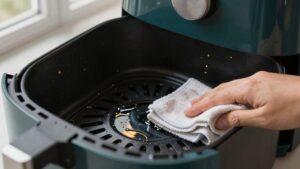
A grease drip tray that’s cleaned regularly keeps smoke low and your grill working efficiently. You should empty and wash it after every heavy use to prevent hardened residues that can ignite or block drainage. You’ll remove the tray, scrape solids with a spatula, then use warm soapy water and a nonabrasive pad or a dishwasher if the manufacturer allows.
Use dedicated cleaning tools to avoid contaminating filters or nonstick surfaces. Inspect tray seals and drainage channels for buildup and clear them promptly. Set a maintenance schedule: quick wipe after each use, deep clean weekly if you cook frequently, and full inspection monthly. Consistent care preserves drip management, prevents flare-ups, and supports any smoke-capture filtration and infrared heating systems.
Frequently Asked Questions
How Noisy Is the Grill’s Smoke Extraction Fan During Operation?
You’ll hear a moderate hum from the extraction fan, typically comparable to a quiet kitchen exhaust (about 40–55 dB). It’s loudest at high extraction settings; however, it stays unobtrusive during normal use.
Regular fan maintenance, such as cleaning blades and filters every few uses, keeps the noise level low and efficiency high. If you notice rattling or increased volume, tighten components and replace worn filters to restore quiet operation and optimal smoke capture.
Can the Grill Safely Handle Fatty Cuts Like Pork Belly?
Yes, you can safely cook fatty cuts like pork belly with proper safety considerations. Use the grill’s sloped drip tray and grease management to direct fat away from heat. Keep temperature controlled to avoid flare-ups. Employ the smoke-capture filtration and water tray to reduce smoke and odors.
Empty and clean trays and filters frequently. Monitor cooking closely, and don’t overload the surface to maintain safe, efficient operation.
What Is the Expected Lifespan of Replaceable Carbon Filters?
You can expect replaceable filters’ lifespan of about 3–12 months depending on use frequency and grease load. Heavy grilling several times weekly pushes replacement toward 3 months; occasional use lasts closer to 12.
Check manufacturer guidelines and visual clogging. Maintain smoke fan reliability by cleaning pre-filters and fan housing every 1–3 months and replacing activated carbon as recommended.
Regular inspection ensures consistent airflow, odor control, and optimal filter performance.
Does the Grill Require Special Cleaning Solutions or Tools?
No, you won’t need special cleaning chemicals; warm soapy water and nonabrasive cloths work for most surfaces. Use manufacturer-approved cleaners for nonstick coatings to avoid damage. Also, avoid bleach or abrasive pads.
You should clean drip trays, water trays, and splatter guards after each use. Additionally, replace worn replacement parts like carbon filters, gaskets, or nonstick plates per recommendations to maintain performance and prevent smoke or odors.
Is There a Warranty Covering Smoke-Related Component Failures?
Yes, most models include warranty coverage that may cover smoke-related failures if caused by defective parts or manufacturing. You should check terms: keep proof of purchase, follow recommended cleaning solutions, and use proper tools as required. Neglect or improper cleaning often voids claims.
Document failures, contact support promptly, and ask for specifics on covered components (fans, filters, drip trays) and any exclusions before proceeding.
Conclusion
You’ll notice smokeless indoor grills cut visible smoke by limiting flare-ups and controlling max temperature. They often use filters and a heat-separation design to keep grease from vaporizing. Removable drip trays and efficient grease collection make placement and capacity practical for your space. Easy tray removal and routine cleaning keep performance consistent.
Overall, choosing models with proven filter and temperature controls gives you the clearest indoor air and the least maintenance.