Silicone Air Fryer Liner Safety
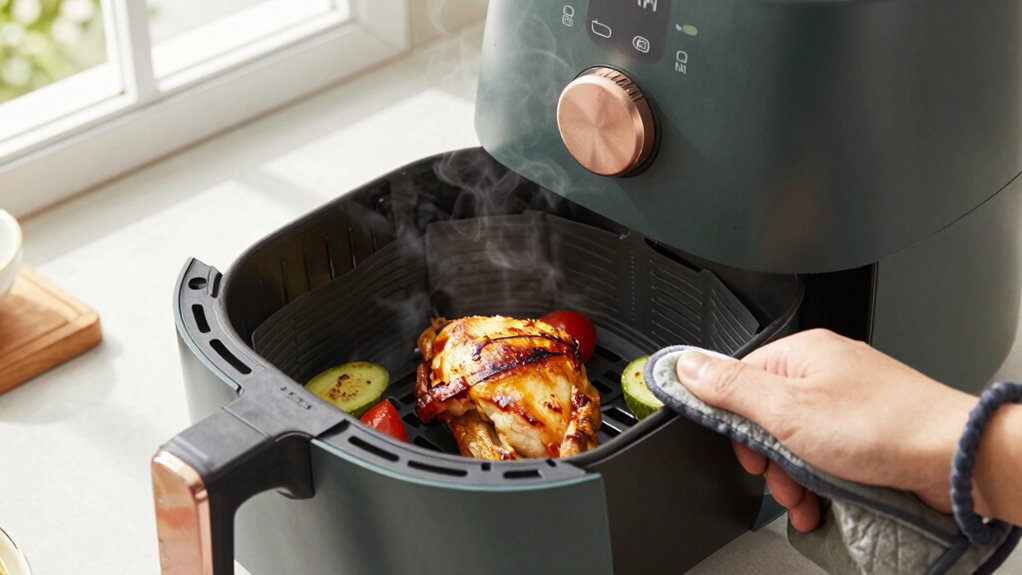
You can safely use silicone air-fryer liners if you match their manufacturer temperature rating to your air fryer. Confirm food-contact certification and avoid repeated high-heat dishwasher drying that accelerates aging. Most food-grade silicone tolerates around 425°F (218°C); however, some formulations list higher limits—do not assume.
Inspect for warping, cracks, or odors and replace damaged pieces. Ask for test reports (FDA, LFGB, SGS) when in doubt. More practical care and safety details follow if you want them.
Quick Overview
- Match the liner’s maximum temperature rating to your air fryer’s maximum; never exceed the lower of the two.
- Confirm FDA food-contact compliance with written manufacturer documentation or third-party test reports (e.g., SGS, LFGB).
- Most food-grade silicone tolerates about 425°F (218°C); some formulations list higher limits. Check the specific label.
- Dishwasher cycles (wash ~50–70°C, dry up to ~80–90°C) are usually safe. However, repeated heat and detergent can accelerate aging.
- Inspect liners regularly for cracks, warping, or odor changes. Stop use if damaged to avoid contamination or deformation.
Max Temp Rating (°F)
How hot can silicone liners go before you need to worry? You should match liner ratings to your air fryer’s max temp: most food-grade silicone withstands ~425°F (218°C) and many products list 428–465°F. Check labels, since exceptions exist and marketing claims can overstate performance.
Treat manufacturer max as the limit; do not assume general silicone tolerances if specs are absent. Avoid treating this as an unrelated topic to appliance limits.
| Liner Type | Typical Max Temp |
|---|---|
| General grooved/perforated | 425°F (218°C) |
| Powerlix pot | 464°F (240°C) |
| LYCAQL pot | 428°F (220°C) |
Verify certification and never exceed the lower of liner or air fryer max.
Fda-Approved Silicone Checklist
Wondering whether a silicone liner is truly FDA-approved? You should verify claims carefully: “FDA approved” on packaging can be misleading unless tied to specific food-contact compliance. Check documentation and labels, and insist on silicone certifications from reputable labs.
- Request written statements of FDA food-contact compliance.
- Look for third-party test reports (LFGB, SGS, or equivalent).
- Verify temperature-range testing matches your air fryer’s settings.
- Confirm absence of prohibited additives and heavy metals.
You should expect batch-level traceability, clear manufacturer contact details, and test dates. If a seller can’t produce documentation, don’t assume safety.
These steps reduce risk and align with food-grade silicone standards. They help you choose liners that resist decomposition and avoid unsafe chemical release under normal use.
Dishwasher-Safe Temperature Limits
Check the manufacturer’s temperature ratings before placing a silicone liner in the dishwasher, since many rate food‑grade silicone to about +230°C. However, dishwasher cycles can still exceed recommended limits on heated drying. You should match typical dishwasher cycle temperatures (usually 50–70°C for wash, up to ~80–90°C for heated dry) against the liner’s specs. Be aware that repeated exposure to high dishwasher heat can contribute to gradual silicone heat degradation and accelerate wear of seals or gaskets.
To preserve longevity, avoid very high‑heat cycles. Follow care instructions and rinse off heavy oil before washing.
Manufacturer Temperature Ratings
Why do manufacturer temperature ratings matter for silicone air fryer liners? You should treat those ratings as the primary guide to safe use, because manufacturer safety data reflects testing limits for heat resistance and chemical stability. Check labels for explicit dishwasher-safe temperatures and maximum oven or fryer temps; ratings typically align with food-grade silicone limits (up to about 230°C) but vary by formulation.
Following stated limits preserves warranty coverage and reduces risk of deformation or premature aging. If a label omits dishwasher or high-temperature specs, contact the maker or avoid aggressive cycles. Keep documentation—photos or manuals—if you need to claim a warranty after damage. Relying on tested, documented ratings is a cautious, evidence-based way to protect performance and safety.
Typical Dishwasher Cycles
How hot does your dishwasher actually get, and why that matters for silicone liners: Most household dishwashers run cycles that reach 50–70°C (122–158°F) for normal washes and 60–75°C (140–167°F) for sanitizing or heavy-duty cycles. Some high‑heat or steam-sanitize settings can approach or exceed 80–90°C (176–194°F). You should check manufacturer specs and the liner’s rated temperature; food-grade silicone typically tolerates these ranges.
However, verifying prevents surprises. Use the top rack when advised; avoid prolonged exposure to extreme steam-sanitize cycles, and follow care labels to maintain nonstick safety.
Dishwasher limits vary by model and detergent chemistry, so when in doubt, hand-wash on warm soapy water to protect the liner’s surface and extend service life.
Silicone Heat Degradation
Wondering how dishwashers might affect your silicone liner over time? You should know food-grade silicone tolerates typical dishwasher temperatures, often up to 70–80°C on the top rack, without chemical breakdown. Evidence shows high-quality silicone resists decomposition well below its rated upper limit, approximately 230°C; therefore, routine machine washing won’t produce toxic gases or leachates.
However, repeated exposure to heat and detergents can accelerate silicone aging, causing surface dulling or reduced elasticity. That process differs from heat induced deformation, which occurs when temperatures approach or exceed the material’s rated limit. Dishwashers don’t reach those levels.
Still, follow manufacturer guidance: use the top rack, avoid prolonged high-heat cycles, and inspect liners for cracking or warping to ensure ongoing safety.
Seal And Gasket Effects
Could the seals and gaskets in your air fryer or silicone liner assembly limit dishwasher-safe temperatures? You should evaluate seal integrity because some gaskets, often rubber or composite, soften or deform at typical dishwasher high-heat cycles. Manufacturers test food-grade silicone liners to ~230°C; however, adjacent non-silicone parts may have lower tolerances.
Check gasket compatibility with hot-water and detergent exposure. Incompatible materials can harden, crack, or lose sealing function over repeated cycles. Inspect seals regularly and follow manufacturer temperature guidance for both the liner and the fryer door or basket seals.
When in doubt, wash liners on the top rack or by hand to minimize thermal and chemical stress on nearby gaskets. Prioritize documented material specifications over assumptions about universal dishwasher safety.
Care For Longevity
Since gasket condition can limit safe cleaning options, check both your silicone liner and the fryer seals before using a dishwasher cycle. You should follow manufacturer temperature limits: most food-grade silicone tolerates up to about 230°C (446°F). However, dishwasher top-rack heat and prolonged cycles can stress seals and printed labels.
For care tips, run shorter, lower-heat cycles; avoid heated dry; and place the liner away from direct heating elements. Use mild detergent and soft utensils. Abrasive brushes reduce flexibility and accelerate wear.
For longevity tips, dry thoroughly to prevent trapped oil from degrading the surface. Store flat or gently rolled to avoid creasing. Inspect regularly for cracks, thinning, or odor changes. Replace if any degradation appears.
Frequently Asked Questions
Can Silicone Liners Affect Air Fryer Cooking Times or Crispiness?
Yes, silicone liners can slightly affect cooking time and crispiness. You’ll usually see minimal cooking time impact because food-grade silicone withstands typical air fryer temperatures. However, dense or non-perforated liners may reduce hot-air circulation; this can cause a crispiness interference and marginally longer cooking time impact.
Use grooved or perforated silicone, avoid layering, and check doneness a few minutes earlier or later to compensate cautiously. This approach helps maintain crisp results.
Do Liners Release Odors When First Heated?
Yes, new silicone liners can emit a faint smell during heating, especially on first use. However, high-quality food-grade silicone resists decomposition and won’t release toxic gases within rated temperatures. You should preheat the liner alone or wash it first to reduce initial odor. Additionally, ventilate the area and run an empty cycle once or twice.
For odor management, verify food-safety certification and repeat cleaning if a persistent smell remains.
Can Silicone Liners Be Used on Stovetops or in Ovens?
Yes, you can use silicone liners in ovens if they’re rated for that purpose; they’re heat resistant up to about +230°C. So ovens compatibility is generally good.
However, can silicone liners be used for stovetop use? No, you shouldn’t place them directly on open flames or hot pans. Always check manufacturer specs and food‑grade certifications. Avoid direct contact with heating elements, and replace warped or damaged liners to stay safe.
How Do I Remove Stubborn Oil Stains From Silicone Liners?
You can remove stubborn oil stains by soaking the liner in hot, soapy water with a few drops of dish detergent for 30–60 minutes. Then, scrub gently with a soft sponge; repeat if needed.
For tougher stains, make a paste of baking soda and water, apply it, and let it sit for 15–30 minutes. Then rinse.
To prevent stains, wipe liners after each use, wash promptly, and avoid harsh scrubbing or high-heat exposure that degrades silicone.
Are Silicone Liners Recyclable or Biodegradable?
No, silicone liners aren’t typically recyclable through curbside programs, and they’re not biodegradable. You should be cautious about recyclability myths and biodegradability claims: silicone is durable, inert, and can’t break down like compostable plastics.
Some specialized facilities accept silicone for industrial recycling or repurposing, but you’ll need to locate them. To reduce waste, repair, repurpose, or donate usable liners rather than disposing of them.
Conclusion
You can safely use silicone air fryer liners if you follow temperature and care limits. Check the max temp rating, which is usually 400–450°F, and FDA-approval for food-grade silicone before use. Note dishwasher-safe labels and typical cycle temps to avoid slow degradation.
Follow manufacturer guidelines for seals and gaskets. Avoid direct contact with heating elements. With gentle cleaning and proper storage, you’ll minimize heat-related breakdown and keep liners safe and functional for longer.