Rice Cooker Water Ratios for Grains
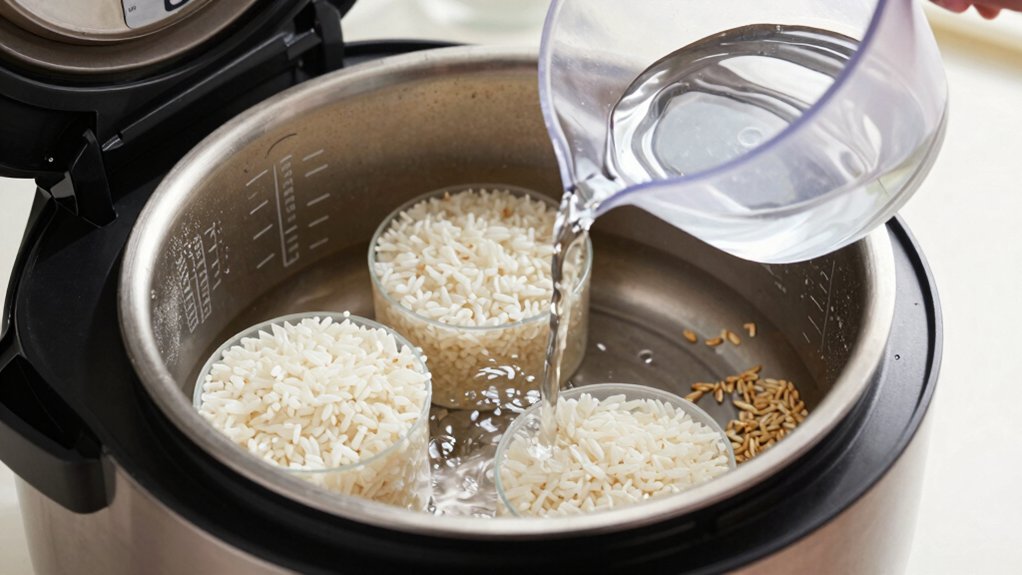
Use calibrated ratios in your rice cooker for consistent results: for white long-grain use 2 cups water per 1 cup rice, white medium-grain 1.5, brown long-grain 1.75, and wild rice about 4 (soak 30 minutes first). For basmati, use 1.25× the rice volume after rinsing. Measure with the cooker’s marks or a 180 ml cup. Don’t overfill, and let rice rest 10–15 minutes after cooking.
Keep going and you’ll find texture adjustments and soak tips next.
Quick Overview
- Use calibrated ratios: white long-grain 2.0, white medium-grain 1.5, brown long-grain 1.75, wild rice 4.0 cups water per cup rice.
- For basmati, multiply rice volume by 1.25 (1 cup rice → 1.25 cups water) for fluffier, less sticky grains.
- Rinse rice until water runs clear to protect basmati aroma and prevent overly cloudy, gummy texture.
- Use the rice cooker’s inner markings or a 180 ml measuring cup for repeatable, precise water additions.
- Soak wild rice 30 minutes; then drain and cook with about 1.75–2.0 cups water per cup soaked rice for desired firmness.
Grain-to-Water Ratios Chart
Wondering how much water to add for different grains? You’ll measure uncooked grain and add water based on tested ratios so your cooking vessel yields consistent results. Use the rice-cooker cup or standard measuring cup and consult type-specific guidance below.
| Grain | Water per 1 cup uncooked grain |
|---|---|
| White long-grain | 2.0 cups |
| White medium-grain | 1.5 cups |
| Brown long-grain | 1.75 cups |
| Wild rice | 4.0 cups |
These values reflect calibrated, evidence-based ratios; adjust slightly for texture preferences. For rice cookers, follow inner-pot markings and use the supplied 180 ml cup. Rinse rice, level it in the cooking vessel, then add water to the appropriate ratio for reproducible results.
Use 1.25x for Basmati
If you followed the chart’s ratios for other rices, apply a slightly different multiplier for basmati: use 1.25 times the rice volume in water (so 1 cup basmati → 1.25 cups water) to preserve its long, separate grains and delicate aroma. You’ll get fluffier, less sticky grains and a brighter basmati fragrance when you reduce excess moisture. Follow measured cups and your cooker’s inner markings for repeatable results.
- Rinse basmati until water runs clear to protect texture and aroma.
- Use the cooker’s calibrated water marks or a 180ml cup for precision.
- Don’t overfill; respect cooker safety limits and tight seals to avoid boil-over.
This ratio balances absorption and evaporation specific to basmati in electric cookers.
Soak Wild Rice 30 Minutes
Soak wild rice for 30 minutes before cooking to shorten cook time and improve kernel expansion, which research shows enhances even hydration. Use about 1:2.5 water-to-rice after soaking, adjusting slightly higher if you don’t drain.
Keep soaking water cool or room temperature to prevent early fermentation. If you want firmer grains, drain and use the lower end of the ratio. For softer grains, leave some soak water and add a bit more during cooking.
Soak Time Benefits
Why should you soak wild rice for about 30 minutes before cooking? A 30-minute soak duration softens kernels, shortens active cooking time, and promotes uniform hydration. You’ll notice fewer split or undercooked grains because water penetrates bran layers more evenly.
Soaking also loosens surface starch and debris, improving texture and reducing cooking variability that can cause uneven doneness. For dryness control, brief soaking helps you predict final moisture: soaked grains absorb more efficiently, so you’ll avoid compensating with excessive added water.
Evidence-based practice favors short soaks for firmer whole grains; extended soaks risk fermentation or nutrient loss. In a rice cooker, this controlled pre-hydration makes the appliance’s automatic cycle more reliable, giving consistent, reproducible results.
Water-To-Rice Ratio
How much water should you use after a 30-minute soak? After soaking wild rice for 30 minutes, reduce the usual water-to-rice ratio slightly because grains have absorbed surface moisture. Use about 1.75 to 2 cups water per 1 cup soaked wild rice (wet measure), depending on desired chewiness. Aim lower if you prefer firmer texture.
This recommendation stems from measured absorption decreases after brief soaks and aligns with rice cooker behavior, which minimizes evaporation. Note that guidance for other grains and non rice topics may differ; consult specific grain cooking times and manufacturer markings. Always rinse first, level the grains, and use the rice cooker’s calibrated cup or measured cup for consistent, evidence-based results.
Drain Or Not
After soaking wild rice for 30 minutes, you should drain the soaking water before cooking to remove surface starches and any floating debris. This slightly reduces the liquid the grains will need and prevents cloudy or gummy cooking water.
When you make the drain decision, aim to rinse briefly under cold running water to remove loosened starch without washing away desirable surface moisture. Draining also reduces particles that can settle and cause a soggy texture during extended rice-cooker cycles.
Measure cooking water after draining, using your cooker’s markings or the appropriate ratio for wild rice—typically slightly less than unsoaked grains require. Draining is evidence-based: reduced surface starch lowers viscosity of the cooking water and yields clearer, firmer kernels.
Temperature Considerations
What temperature should you aim for when soaking wild rice for 30 minutes to balance hydration and food safety? Aim for cool to lukewarm water between 50–60°F (10–15°C) if you’re soaking at room temperature. For a quicker hydrate, you can go up to 75°F (24°C), but this should be monitored closely. These temperature considerations limit bacterial growth while allowing kernels to uptake water predictably.
Use filtered water and stir once to ensure even wetting. Avoid hot water above 120°F (49°C) because it can prematurely soften outer bran and promote uneven cooking later. After 30 minutes, drain promptly and proceed to your rice cooker.
If ambient temperature exceeds 80°F (27°C), shorten soak time and refrigerate to maintain safety while you soak wild rice.
Texture Adjustment Tips
Now that you’ve soaked wild rice for 30 minutes at a controlled temperature, use that brief soak to fine-tune texture before cooking. Soaking softens outer bran, shortens cook time, and yields more consistent kernels. Reduce water slightly if you prefer chewier rice.
For firmer results, drain thoroughly and use the lower end of the recommended water ratio. For tender results, retain some soaking water and add the full measured amount. These texture tips rest on hydration kinetics: pre-soaked grains absorb less during cooking, so adjust liquid by roughly 10–15%.
Use patience tricks: let rice rest 10–15 minutes after the cooker switches to warm to equalize moisture without adding water. Record your adjustments so you can reproduce preferred outcomes reliably.
Frequently Asked Questions
Can I Cook Rice and Quinoa Together in One Cycle?
Yes, you can cook rice and quinoa together in one cycle, but you’ll need to adjust for differing cook times and texture goals. Use the rice cooker’s brown/grain setting if quinoa’s quick cook time suits your rice type. Alternatively, pre-soak the rice to even timings.
Reduce overall water slightly because rice cookers retain moisture. Test small batches to match your preferred chewiness or fluffiness and refine water ratios.
How Do Altitude and Humidity Change Water Amounts?
You should increase water at high altitude and in low humidity because altitude adjustments reduce boiling point and speed evaporation. The humidity impact changes grain moisture loss. Add about 5–10% more water per 1,000 feet above sea level and an extra splash if your air is very dry. Reduce slightly in very humid conditions.
Test and adjust by 1–2 tablespoons per cup until you get consistent texture in your cooker.
Can I Double a Recipe Without Adjusting Water Ratio?
You can usually double a recipe without changing the water ratio, but you should make water adjustments if your rice cooker’s capacity or evaporation behavior changes.
If the doubled rice fits comfortably and the cooker seals well, keep the same rice-to-water proportion. If the pot’s crowding, longer heat-up time, or different grain mix affects absorption, increase water slightly and monitor texture. Then adjust in future batches.
Do Flavored Broths Affect Required Water Volume?
Yes, flavored broths change the liquid’s flavor impact, but usually do not require changing total volume. You should account for broth concentration: concentrated stocks (reduced or bouillon) can over-salt or over-flavor. Therefore, dilute them to match the recipe’s intended intensity.
If you want a milder taste, add extra water; for a stronger taste, use less dilution. Taste and adjust before cooking. Since absorption will lock in the broth’s concentration, it is important to get it right beforehand.
How Long Can Cooked Rice Stay on “Keep Warm”?
You can keep cooked rice on “keep warm” for about 4–6 hours safely; beyond that, quality and safety decline.
Keep warm effects include moisture retention and slower cooling, which can encourage bacterial growth if left too long. You should cool and refrigerate leftovers within two hours for best safety. Alternatively, stir and reheat thoroughly before serving.
If rice smells off, looks wet and slimy, or has a strange texture, discard it.
Conclusion
You’ve got reliable ratios and simple tweaks to make each grain turn out right in your rice cooker. Use 1.25x water for basmati. Soak wild rice about 30 minutes, and adjust soak times and water slightly to suit texture preferences.
Don’t overcomplicate draining unless the grain calls for it. Keep cooker temperature steady and test small batches to refine results. Following these evidence-based steps will give consistent, predictable grain outcomes every time.