Rice Cooker Keep Warm Safety
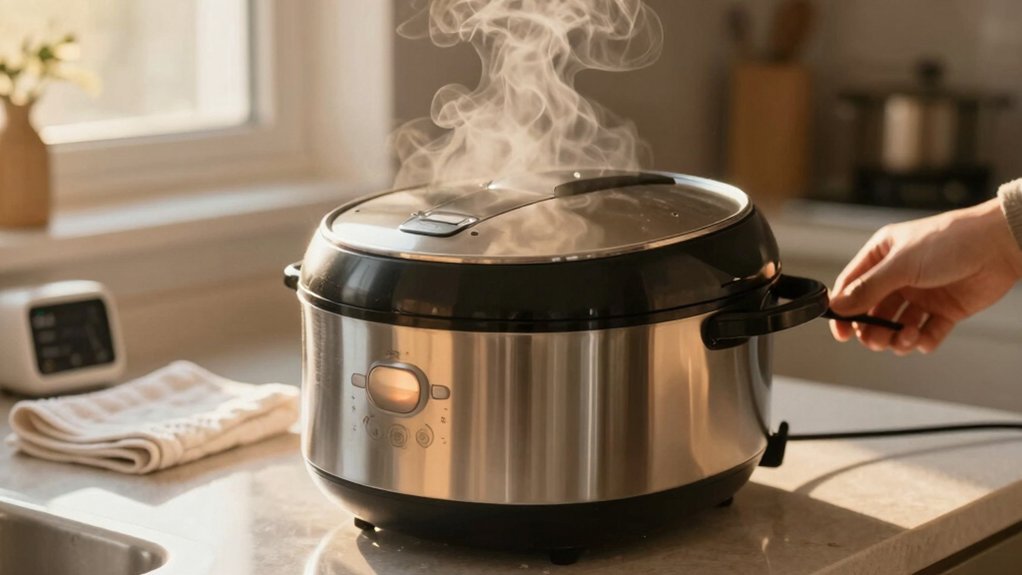
Set your rice cooker’s keep-warm to about 140–165°F (60–74°C) and check with a probe; that band suppresses bacterial growth and preserves texture.
Don’t keep rice on warm more than 12 hours. Safety and quality decline after that, and risks rise if the heat dips toward the danger zone. Cool leftovers promptly and refrigerate or freeze if you won’t eat them within the safe window.
Keep going for practical tips on monitoring, storage, and reheating.
Quick Overview
- Keep rice on “keep‑warm” no longer than 12 hours and monitor temperature to avoid prolonged danger-zone exposure.
- Target keep‑warm temperature about 65°C (±2°C); below ~60–65°C increases bacterial risk.
- Use a probe thermometer to verify the cooker, not just indicator lights, for consistent 60–74°C holding.
- If rice won’t be eaten within 12 hours, cool in shallow containers and refrigerate at ≤4°C or freeze.
- Discard rice held beyond 12 hours or showing off odors, sliminess, or discoloration. Reheating doesn’t make it safe.
Keep-Warm Temperature Range
How warm should your rice cooker keep rice to stay safe? You should aim for about 65°C: industry standards cite 65±2°C as sufficient to inhibit bacterial growth. The FDA notes cooked rice is safe up to 12 hours at ≥65°C. Models vary, so choose one that supports consistent temps and aids disaster planning by preserving food safety during outages.
Energy efficiency matters; prefer units that maintain target temps with minimal power. Below 60–65°C, you risk bacterial proliferation in moist rice. Use sealed, higher-quality designs for longer holds; basic units should be limited to 4–6 hours. Verify manufacturer specs and don’t exceed recommended durations to protect safety and quality.
| Model Class | Target °C | FDA Compliance |
|---|---|---|
| Economy | 65 | ~62% |
| Premium | 67 | ~88% |
Maintain 140–165°F (60–74°C)
Why keep the rice cooker at 140–165°F (60–74°C)? You should maintain that range because it balances food safety and quality: it’s high enough to inhibit most bacterial growth yet low enough to avoid steam-driven overcooking.
Keep-warm thermostats and microcomputer controls help you hold that band reliably.
- Safety: holding 140–165°F (60–74°C) minimizes bacterial proliferation in nutrient-rich rice.
- Quality: that range reduces moisture loss and slows starch retrogradation compared with cooler settings.
- Texture: staying within the band prevents a compromised texture from overheating or drying.
- Practicality: monitor time and temperature; don’t rely solely on unlabeled indicators; verify with a probe thermometer.
Be cautious: follow your manual’s max-duration guidance and adjust for rice quantity.
Avoid Leaving Rice >12 Hours
Don’t keep rice on the keep‑warm setting longer than 12 hours because temperatures can fall into the 60–70°C danger zone that allows bacterial growth in moist, starchy food.
Prolonged holding also degrades texture and flavor and increases the risk of foodborne illness. Watch for off smells, sliminess, or unusual texture. If you won’t eat rice within that window, cool it promptly and refrigerate or freeze in shallow containers for safe storage.
Bacterial Growth Risk
When should you stop relying on the keep-warm function? You should stop before the recommended 12-hour limit because microbial risk rises as bacterial survival increases when temperature control lapses. Don’t ignore authors’ intention in manuals; they set limits based on food safety data.
Keep-warm settings aim to maintain safe heat; however, perfectly relevant two-word ideas like moisture retention and time exposure still favor growth in cooked rice. You should monitor texture and time. Transfer rice to refrigeration within a couple of hours if you won’t eat it soon.
If you must keep rice warm longer, reheat to steaming hot before serving and check your cooker’s thermostat accuracy. Err on the side of caution to minimize foodborne illness risk.
Temperature Danger Zone
Having noted that bacterial risk rises as keep-warm time stretches, you should treat the cooker’s 12-hour ceiling as a hard boundary for food safety rather than a convenience guideline. The keep-warm range around 60°C aims to suppress bacterial proliferation; however, that protection weakens over many hours in a moist, nutrient-rich medium. You shouldn’t interpret manufacturer limits loosely or substitute assumptions about safety. Doing so risks growth in the temperature danger zone (5–60°C).
If rice has been held beyond 12 hours, discard it. Don’t attempt reheating to justify keeping it. Questions about appliance features are legitimate, but decisions about discard aren’t an unrelated topic or irrelevant discussion. They’re core safety actions backed by time-temperature control principles and manufacturer recommendations.
Texture And Quality Loss
Starch retrogradation and moisture loss start degrading rice texture long before bacterial limits are reached, so you shouldn’t rely on keep-warm as a way to preserve fresh-cooked quality beyond the manufacturer’s 12-hour guidance. You’ll notice firmness, grain separation, and a dry mouthfeel as amylose recrystallizes and water migrates away from starch granules.
Keep-warm temperatures slow but do not stop these physicochemical changes; that leads to measurable texture loss and perceptible quality degradation over hours. To retain intended mouthfeel and aroma, serve within a few hours or refrigerate promptly if you must delay consumption.
If you refrigerate, cool rice quickly, store in sealed containers, and reheat thoroughly. Treat keep-warm as convenience, not long-term preservation, to avoid progressive quality decline.
Foodborne Illness Signs
How can you tell if rice left in the cooker too long has become unsafe? You’ll notice off-odors, slimy or sticky texture changes, and visible discoloration; these are practical indicators that bacterial growth may have occurred.
Because rice is moist and nutrient-rich, it enters the temperature danger zone quickly when keep-warm falls below recommended levels. Symptoms after eating contaminated rice include nausea, vomiting, abdominal cramps, and diarrhea; onset can be rapid. If you suspect rice was left longer than the manufacturer’s limit, especially beyond 12 hours, don’t taste-test it: discard it.
When in doubt, prioritize health: contaminated rice can carry toxins not removed by reheating. Document signs and follow recall or manufacturer guidance if illness is suspected.
Safe Storage Alternatives
If you’ve ever found rice sitting in the cooker past the safe window or noticed signs of spoilage, don’t try to salvage it. Use one of several safer storage options instead. You should transfer hot rice into shallow, covered containers within one hour to cool rapidly; then refrigerate at 4°C or below. This preserves quality and keeps the temperature range out of the bacterial growth zone.
For longer storage, freeze portions in airtight bags. Label dates and use within one month for best texture. If you plan to keep rice warm for serving, limit keep-warm use to the manufacturer’s maximum (typically 12 hours); confirm the cooker maintains the target keep-warm temperature. When in doubt, discard rice.
Frequently Asked Questions
Can You Leave Different Foods in Keep-Warm Besides Rice?
Yes, you can keep leaving foods other than rice in the keep-warm function, but you’ll need to be cautious. Different foods vary in moisture and bacterial risk. Low-acid, wet dishes can support growth if temperature falls below 60–70°C.
Follow manufacturer time limits (usually ≤12 hours); avoid unattended long periods, and don’t overfill. Turn off and cool leftovers promptly. Store refrigerated if not serving within a safe window, and clean thoroughly.
How Often Should I Descale or Deep-Clean the Inner Pot?
You should descale frequency for the inner pot about every 1–3 months. Perform deeper inner pot maintenance quarterly or whenever mineral buildup appears. If you use hard water daily, clean monthly; with soft water, every three months suffices.
Always cool, unplug, and follow manufacturer cleaning steps. Use mild descaling solution or vinegar, rinse thoroughly, and dry completely. Regular maintenance prevents residue, preserves thermostat accuracy, and reduces bacterial risk.
Is It Safe to Stack Containers Inside While Keeping Warm?
No, you shouldn’t stack containers inside while using the keep warm safety mode. Stacking containers blocks steam circulation, prevents consistent 60°C maintenance, and creates cold spots where bacteria can grow.
You’ll also risk uneven heating, pressure buildup, and damage to inner pot coatings. For safety, keep a single layer; use manufacturer-approved inserts; and follow the recommended maximum keep-warm duration and cleaning procedures to reduce contamination and electrical hazards.
What Should I Do if the Cooker Emits Burning Smells?
If your cooker emits burning smells, stop using it immediately, unplug it, and move it away from flammable materials. Open lids and ventilate the area; however, do not inhale fumes.
Inspect for scorched food, melted parts, or burn marks. Do not attempt repairs if you see damage.
Follow safety precautions: contact the manufacturer or a qualified technician, register for recalls, and replace the unit if electrical faults or persistent odors persist.
Can Keep-Warm Damage Nonstick Coatings Over Time?
Yes, prolonged keep-warm use can contribute to safe coating wear and heat damage risk. You should avoid running keep-warm continuously beyond manufacturer limits. Sustained moderate heat and repeated cycles gradually degrade nonstick surfaces.
Inspect the inner pot regularly for scratches, peeling, or discoloration; replace it if you see damage. Follow cleaning, drying, and usage guidelines to minimize wear and register the product for recall notifications.
Conclusion
Keep your rice cooker’s keep-warm between 140–165°F (60–74°C) and don’t leave rice sitting more than 12 hours. Temperatures below that enter the bacterial danger zone; this increases the risk of Bacillus cereus and other foodborne illness. Prolonged warming also degrades texture and quality.
If you won’t eat within safe timeframes, cool rice quickly and refrigerate or freeze it. When in doubt, discard rice showing off-odors, slime, or unusual texture to avoid illness.