
Pressure Cooker Sealing Ring Care and Replacement Signs
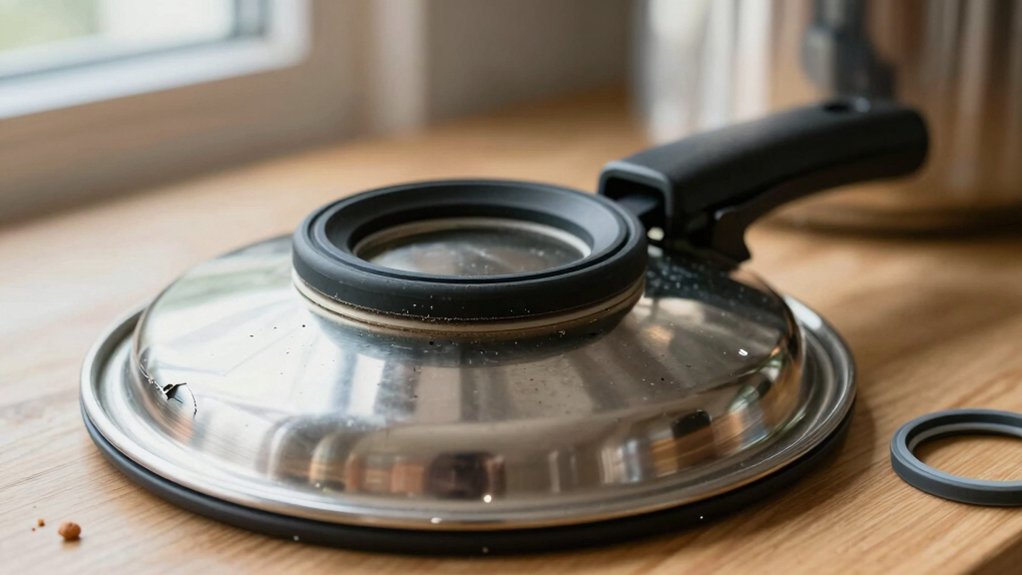
You should inspect and measure your pressure cooker sealing ring regularly and replace it when you see color transfer, tackiness, cracking, or loss of firmness. Measure the inner diameter flat across the gasket seat to confirm model compatibility before buying replacements.
Clean removable rings with warm soapy water; use baking soda paste for stains. Rinse and air-dry; avoid turmeric and strongly colored sauces. Silicone lasts longest; rubber degrades faster.
Continue for guidance on sizing, materials, and step-by-step cleaning.
Quick Overview
- Measure the sealing ring’s inner diameter flat across the gasket cutout to confirm model compatibility and rim clearance.
- Clean removed rings with warm soapy water; use baking soda paste for stains. Rinse and air-dry completely on a lint-free surface.
- Replace rings showing persistent dye, uneven discoloration, tackiness, softening, micro-cracks, or leakage after cleaning.
- Expect silicone rings to last 1.5–3 years; rubber 6–18 months under heavy heat. Inspect EPDM/TPE quarterly.
- Match ring diameter to manufacturer model lists (GoWISE, Fagor, Prestige) instead of assuming universal fit.
Sealing Ring Diameter Chart
Sizing a pressure cooker sealing ring starts with measuring the gasket’s inner diameter flat across the cutout. That single dimension tells you which model or universal size will fit. You’ll record the sealing ring diameter and then match it to manufacturer lists (GoWISE, Fagor, Prestige) to confirm model compatibility.
Measure accurately with the ring lying flat. Compare to quart/liter capacity tables or specific item numbers. Avoid assuming “universal” fits without verifying rim clearance.
| Inner Diameter | Typical Fit |
|---|---|
| 9 in (≈23 cm) | 4–6 Qt / small sets |
| 10 in (≈25 cm) | 8–10 Qt / larger pots |
| 22 cm | Generic silicone universal |
| 24 cm | Generic rubber universal |
Ring Material Lifespan Guide
Select a gasket material based on expected lifespan and usage conditions: silicone typically lasts 1.5–3 years under normal household use, resisting heat and odors better than rubber. Natural rubber often degrades in 6–18 months when exposed to high heat, oils, or acidic foods. You’ll choose material by matching duty cycle, cleaning frequency, and chemical exposure to expected ring material lifespan.
Plan maintenance scheduling around that estimate and inspection cues.
- Silicone: high thermal stability, low odor absorption, longer service life.
- EPDM: moderate heat resistance, good chemical tolerance, medium lifespan.
- Natural rubber: flexible but shorter lifespan under heat/oils.
- TPE/TPV: engineered balance of durability and cost; inspect quarterly.
Color Transfer Troubleshooting
If you spot color transfer on the gasket, first identify the source: sauces, turmeric, or dyes can stain rubber and silicone. Remove the ring and clean it with warm soapy water. Then treat persistent stains with a baking soda paste applied gently and rinsed thoroughly.
If discoloration persists or the ring shows any material degradation, replace it with the correct model-specific gasket.
Identify Source Of Transfer
How can you quickly pinpoint where color transfer is coming from? Inspect the gasket, lid groove, and inner pot sequentially under bright light. Use two word discussion ideas: “visual inspection” and “material contact” to structure checks.
Isolate variables by removing the gasket and comparing stains on both ring and lid. Subtopic relevance: note whether dye originates from cookware coatings, plastic utensils, or food residues. Perform a wet wipe test: moisten a white cloth, rub suspect areas, and observe transfer. Photograph findings and record solvent behavior (water vs. mild soap).
If transfer persists only on the gasket, contamination or material breakdown is likely. If present across surfaces, an external dye source or cookware abrasion is indicated. This targeted approach narrows cause without cleaning steps.
Remove And Clean Ring
Having identified where the color transfer originates, remove the gasket to isolate and clean the affected ring without contaminating other parts. You’ll need gloves, mild detergent, and a soft cloth.
Carefully unseat the ring from its groove; do not stretch or twist. Then inspect for stains, cracks, or deformation. If intact, prepare lukewarm soapy water and submerge the ring briefly; agitate gently to lift pigments. Use the cloth to blot and roll residue away rather than scrubbing, which can abrade the material.
Rinse thoroughly under running water to remove all soap and loosened dye. Air-dry completely on a lint-free surface before reinstallation. If dye persists or material shows damage, replace rather than attempt further cleaning.
Avoid Strongly Colored Foods
Why do vivid foods stain sealing rings so easily? Pigments like turmeric, beet, and tomato contain lipophilic chromophores that diffuse into silicone or rubber microstructure, causing discoloration and potential material softening.
To avoid colored foods, limit high-pigment recipes or use an inner liner or bag to prevent direct contact with the gasket. If staining occurs, employ targeted cleaning methods: remove the ring, wash in warm soapy water, then use a mild detergent solution and a soft nylon brush to dislodge surface pigments. Rinse thoroughly and air-dry fully before reinstallation.
Avoid harsh solvents or bleach, which degrade elastomers and shorten service life. Monitor stained areas for texture change; persistent discoloration plus tackiness or hardening indicates replacement is required.
Use Baking Soda Paste
If stain removal from turmeric or tomato hasn’t responded to soap and a soft brush, make a baking soda paste to lift color without harming the gasket: mix 1 part baking soda with 1–2 parts water to form a spreadable paste. Apply it to the stained areas, let it sit 10–15 minutes, then gently scrub with a soft nylon brush and rinse thoroughly. Avoid abrasive pads or solvents; inspect for residual tackiness or texture change. Replace the seal if discoloration persists or material properties have altered.
Use controlled baking soda techniques informed by basic cleaning chemistry: the mild alkaline buffer chelates pigments and loosens organic deposits. Work gently, rinse until no residue remains, then dry fully. Document any softening, crazing, or stickiness; those indicate compromised function and need replacement.
Replace Discolored Ring
How can you tell when color transfer has compromised a sealing ring beyond cleaning? Inspect immediately after cleaning under bright light. A discolored ring that shows uneven pigmentation, embedded dye particles, or surface staining that resists baking soda and mild detergent indicates material alteration.
Use tactile tests: if discoloration coincides with tackiness, stickiness, or a change in elasticity, it’s likely chemically degraded.
Establish replacement criteria: persistent staining after standardized cleaning, measurable change in Shore hardness, visible micro-cracking, or leakage during a controlled water test. Document findings and compare to manufacturer’s tolerance. If any criterion is met, remove and replace the ring with a model-specific gasket.
Don’t attempt bleach or solvents that can further weaken the material.
Frequently Asked Questions
Can I Use a Non-Branded Gasket Safely in My Cooker?
You can, but you shouldn’t assume non-branded gaskets are safe without checks. Verify material, dimensions, and pressure ratings against your cooker’s specs to avoid compatibility concerns.
Inspect fit, hardness, and sealing lip geometry. Perform a cold water pressure test before cooking. Replace immediately if you see leaks, deformation, or longer cook times.
Keep a manufacturer-approved spare on hand for critical safety and consistent performance.
How Often Should I Keep a Spare Sealing Ring on Hand?
Keep one spare ring per cooker and plan a replacement cadence of 12–18 months under normal use. Shorten to 6–12 months for heavy use or if you cook acidic foods often. Inspect after each use and replace immediately if you see cracks, deformation, or steam leaks.
Store spares properly and match model specifications. Having one ready minimizes downtime and ensures you can perform a prompt swap when performance degrades.
Can I Cook Acidic Foods Without Damaging the Ring?
Yes, you can cook acidic foods, but check gasket compatibility first. Some rubber or silicone gaskets resist acids well; others degrade faster. Use manufacturer-specified materials for tomato-, vinegar-, or citrus-based recipes. Avoid prolonged contact at high temperatures, and rinse the gasket promptly after use.
Inspect for softness, cracking, or stickiness after acidic meals and replace if signs appear. Keep a spare compatible gasket on hand.
Are Silicone and Rubber Rings Interchangeable on My Model?
No, you usually can’t swap silicone compatibility with rubber without confirming your cooker’s specs. Gasket material alternatives aren’t universally interchangeable. You should check the manufacturer’s compatibility list and part number.
Different materials have distinct heat tolerances, elasticity, and chemical resistance. Using the wrong gasket can prevent proper sealing, increase steam leakage, and shorten component life. If unsure, buy the model-specific replacement designed for your pressure cooker.
Does High-Altitude Affect Sealing Ring Performance?
Yes, high altitude can reduce sealing performance. At altitude, lower ambient pressure changes how your cooker reaches and holds set pressure. The sealing ring must maintain an airtight fit.
You’ll notice longer heat-up times, more steam leaks, or failure to reach pressure if the gasket is marginal. Inspect for wear; ensure correct seating; and replace with the specified ring to restore reliable sealing performance and safe operation.
Conclusion
Check your sealing ring’s diameter against the chart to confirm compatibility. Follow the material lifespan guide to predict replacement timing. If color transfer appears, identify whether it’s from food, detergents, or storage. Then remove and clean the ring with a mild detergent or a baking soda paste.
Avoid prolonged contact with strongly colored foods and store rings separately. Replace any discolored, brittle, or misshapen ring promptly to preserve seal integrity and safety.