Parchment Vs Silicone Liner Differences
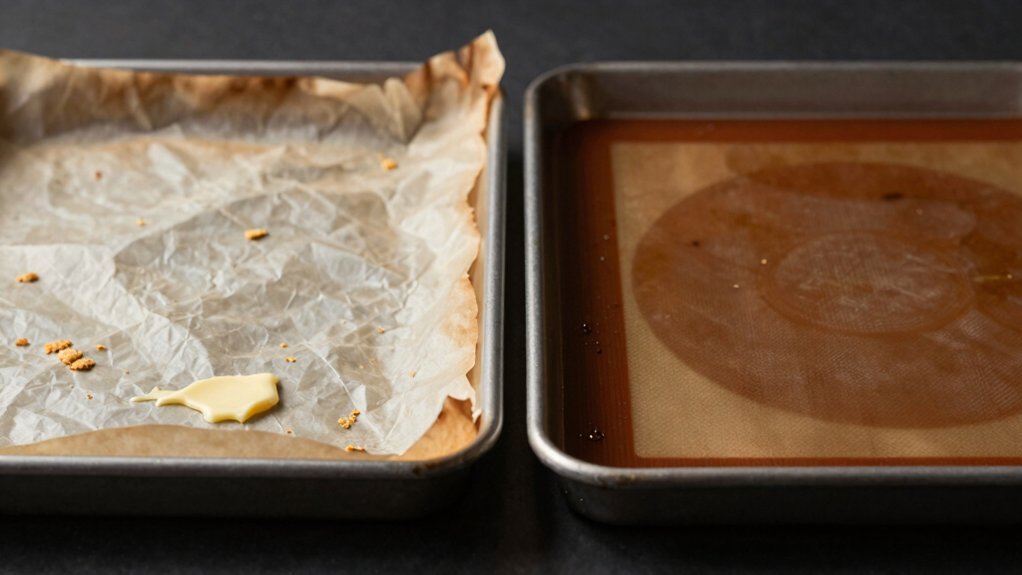
You’ll pick parchment when you want crisper edges and a disposable liner for baking up to about 420–450°F.
Silicone works better for repeated use, higher heat (often 480–500°F depending on brand), and more even heat distribution.
Silicone can discolor from oils over time but stays safe and nonstick.
Stains are cosmetic and removable with prompt cleaning and baking soda or vinegar.
Keep this guide handy, and you’ll learn practical tips on preventing and treating oil stains for long-term mat care.
Quick Overview
- Parchment tolerates about 420–450°F and is single-use; it has higher mass loss compared to silicone.
- Silicone mats withstand higher temperatures (often 400–500°F+) and are reusable for long-term high-heat tasks.
- Parchment is breathable and promotes crisper edges. Silicone insulates for more even baking.
- Silicone can discolor from oils and spices over time. However, stains are cosmetic and don’t affect safety.
- Clean silicone promptly with soap, baking soda, or vinegar. Store flat to reduce staining and extend life.
Heat Tolerance Comparison
Curious which liner will hold up under high heat? You’ll see parchment durability tops out around 420–450°F depending on brand. It browns or becomes brittle if you exceed that. Silicone reusability often spans 400–480°F for food‑grade mats; high‑heat grades reach 500°F+. Use parchment when you want breathability and crisper edges. Choose silicone for repeated candy work or even heat distribution.
| Parchment paper | Silicone mat |
|---|---|
| Max ~420–450°F; single‑use; mass loss higher | Max ~400–480°F (high‑heat to 500°F+); reusable, low mass loss |
| Breathable; crisps edges | Insulating; uniform baking, may steam bottoms |
Check brand ratings before use. Pick silicone for long‑term high‑heat tasks; parchment for one‑off roasting or crisp baking.
Temperature Ratings Cheat-sheet
Want a quick reference for which liner survives your recipe? You need clear temperature ratings and material durability info to pick confidently. Parchment paper typically tolerates up to about 450°F (brand-dependent) and works well for roasting and standard baking. Silicone mats handle higher heat, resist sugar work, and offer longer-term performance; however, they can slightly insulate baked goods.
- Relief: no guessing — know the safe ceiling for each liner.
- Confidence: choose based on honest material durability, not marketing.
- Satisfaction: avoid ruined batches by matching liner to method.
Use parchment for one-off bakes and direct-heat crisping below its limit. Use silicone when you need reusable, high-heat stability and even heat distribution.
Silicone Staining With Oils
You’ll notice silicone mats can discolor when they contact oils and fats, because their porous surface can trap lipid residues and pigments over time. Learn which oil types cause the worst staining, how to prevent absorption with simple habits, and practical cleaning methods to lift or minimize discoloration.
With routine care and occasional deeper cleaning, you can keep mats looking and performing well for years.
Why Silicone Stains
Why does silicone sometimes stain when you use oily ingredients? You’re seeing silicone staining because food-grade silicone is slightly porous at a microscopic level and can absorb color and oil over repeated use. Oils, especially colored or spiced fats, migrate into the material through oil transfer; this leaves darker spots that look like stains.
Heat accelerates this process by opening microscopic channels and reducing oil viscosity. Thus, baked-in oils penetrate faster. You can limit staining by wiping mats promptly after cooling, washing with warm soapy water, and avoiding prolonged contact with strongly pigmented oils or sauces.
Stains are usually cosmetic; they don’t affect non-stick performance or food safety. However, thorough cleaning keeps appearance better over the mat’s long reusable life.
Types Of Oily Stains
Because different oils vary in color, viscosity, and ingredient makeup, they leave distinct kinds of stains on silicone mats. Knowing these differences helps you treat them correctly.
Light vegetable oils usually leave faint, diffuse oil-based residues that feel slick, but are pale and easier to emulsify with soap. Butter and animal fats produce tackier, yellowish deposits that can oxidize and darken over time; they form stubborn types of stains. Nut and sesame oils often leave darker, aromatic stains because of roasted compounds and pigments. High-heat or seasoned oils (like browned butter) can carbonize slightly, creating thin, clingy films that resist simple washing.
Identifying the oil type guides whether you’ll use hot soapy water, degreasing solution, or a gentle abrasive to restore the silicone.
Preventing Oil Absorption
Knowing what type of oil caused a stain helps you pick the right prevention steps before it soaks into silicone. You should act quickly: blot excess oil with a paper towel rather than rubbing, which spreads it. For high-fat batters, lightly dust or use a thin parchment layer under the silicone to limit oil absorption while keeping nonstick effectiveness.
Avoid cooking sprays that leave polymer residues; they reduce long-term nonstick effectiveness and attract more oils. Let hot pans cool slightly before placing silicone to prevent oil migration from heat. Regular cleaning after each use removes residual oils before they penetrate.
If you store mats, keep them flat and dust-free so trapped oils won’t concentrate and compromise performance over time.
Removing Oil Discoloration
How do you deal with unsightly oil discoloration on silicone mats? You’ll first know that oil staining happens when oily residues sit on the non‑porous surface and darken over time. To remove it, wash the mat with hot, soapy water and a soft sponge; this lifts fresh residues.
For persistent stains, make a paste of baking soda and water, rub gently, let sit for 10–15 minutes, then rinse. Baking soda is mildly abrasive and safe for food‑grade silicone. You can also use a dilute white vinegar rinse to break down oils, followed by thorough drying to prevent dust cling.
Avoid harsh solvents or scouring pads; these can damage the silicone’s finish and performance.
Long-Term Maintenance
Long-term maintenance of silicone mats focuses on preventing and reversing oil staining so your mats stay safe and perform well over years of use. You’ll want to clean mats promptly after oily bakes: wash with warm, soapy water and a soft brush to lift trapped oils that cause discoloration.
For stubborn stains, use a paste of baking soda and water or a dilute white vinegar soak; both have evidence-backed degreasing action without harming food-grade silicone. Avoid abrasive cleaners that can damage the fiberglass layer. Rotate mats and avoid prolonged contact with concentrated fats to reduce staining.
Factor cost considerations: replacing a stained mat is more expensive than periodic cleaning. Preventive maintenance extends usable life and lowers long-term maintenance costs.
Frequently Asked Questions
Can I Cut Silicone Baking Mats to Fit Odd Pans?
No, you shouldn’t cut silicone baking mats to fit odd pans. Cutting silicone mats damages the embedded fiberglass microfibers and can release tiny fibers. This compromises heat resistance and safety.
Instead, trim parchment paper to shape or buy a correctly sized silicone mat. If you must reshape, contact the manufacturer for guidance. However, generally avoid cutting: using proper-sized liners preserves nonstick performance, durability, and food safety.
Are Silicone Mats Safe for Freezing and Cold Storage?
Yes, silicone mats are safe for freezing and cold storage when they’re labeled food-grade. They resist temperature extremes and won’t leach chemicals; thus, silicone safety is strong. You’ll find good freezing compatibility for storing dough, pastries, or candies on the mat.
Clean and dry the mat before freezing, and avoid sharp objects. Note that mats can attract dust in storage. Follow manufacturer care instructions for best results.
Do Parchment and Silicone Affect Baking Times?
Yes, they can slightly change baking times. You’ll notice parchment offers minimal insulation and better breathability, so cookies crisp a bit faster. Silicone’s lower thermal conductivity and insulating surface can slow browning and extend bake time slightly.
With parliamentary refinement of technique, you’ll adjust temperature or minutes by small increments. Test batches and note results. Silicone often needs a minute or two longer for equivalent color and crunch.
Can Parchment Be Composted or Recycled?
Yes, uncoated parchment can be composted, and some municipal programs accept it for recycling. However, coated parchment (silicone or quilon) usually cannot be composted or recycled. You will want to check local rules: treat this like a parliamentary process where policies decide fate.
In culinary terminology, “greaseproof” matters: silicone-coated sheets resist composting. If unsure, tear off food bits and compost uncoated pieces. Dispose of coated ones in trash or follow specific recycling guidance.
Will Silicone Mats Retain Baking Odors Over Time?
Yes, silicone mats can retain baking odors over time, though it’s usually mild. You’ll notice odor retention especially after strong scents like garlic, fish, or sugar caramelization.
You can reduce smells by washing with hot soapy water, using baking soda paste, or running them through the dishwasher. For persistent odors, air them in sunlight and avoid storing them folded. Proper cleaning and drying will minimize ongoing odor retention.
Conclusion
When choosing between parchment and silicone liners, focus on your cooking needs: use parchment for high-heat baking and single-use convenience. Use silicone for reusable, moderate-heat applications. Silicone tolerates lower maximums and can absorb or stain from oils. However, proper care — prompt cleaning, occasional baking soda scrubs, and avoiding prolonged oil contact — prevents buildup and extends life.
Match liner type to temperature, food, and maintenance willingness for safest, longest-lasting results.