Panini Press Temperature and Pressure Basics
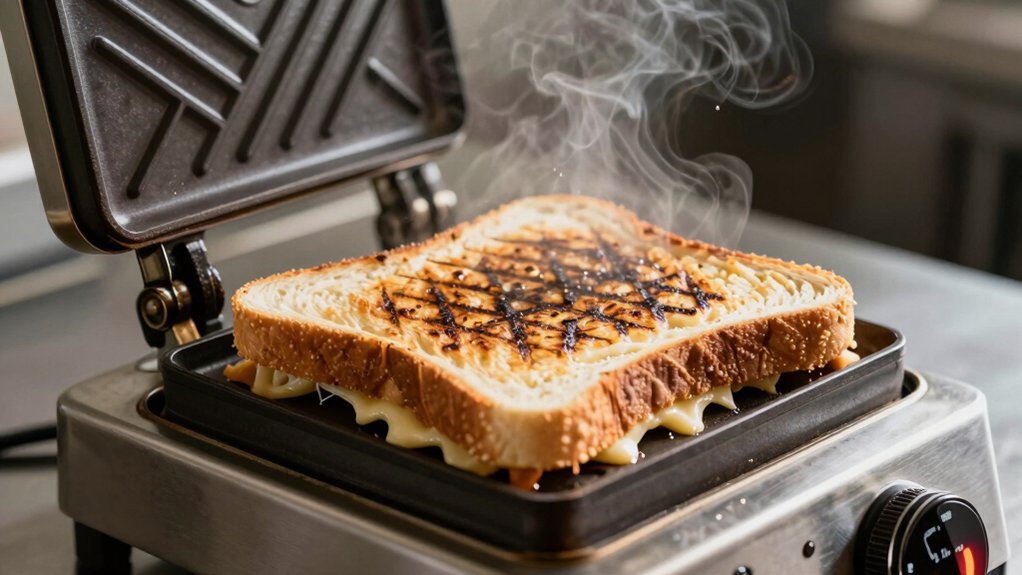
Set plate temps to match bread and filling: 300–350°F for delicate breads and grilled cheese; 350–375°F for standard panini; and 425°F+ for rapid meat searing.
Apply 8–10 PSI for fragile loaves, 12–15 PSI for typical sandwiches, and 16–20 PSI when compressing dense or cold fillings for better conduction.
Protect nonstick plates by favoring lower heat, avoiding metal tools, cooling before cleaning, and reapplying a light oil film. Keep going to learn practical setup and care.
Quick Overview
- Typical panini plate temps range about 120–570°F; operators usually use 350–375°F for standard sandwiches.
- Use 325–350°F for delicate breads and grilled cheese to avoid over-browning while ensuring melt-through.
- Apply roughly 8–20 PSI: 8–10 PSI for fragile breads, 12–15 PSI for standard sandwiches, and 16–20 PSI for dense fillings.
- For searing meats or rapid crusting, raise plates to 425°F+ and allow sufficient plate recovery time for consistent heat.
- Protect nonstick coatings by favoring lower temps, using plastic/silicone tools, cooling before cleaning, and lightly oiling periodically.
Grill Plate Temperature Ranges
When you set a commercial panini grill, know that plate temperatures commonly span roughly 120–570°F (50–300°C) depending on model and controls. Most operators stabilize around 350–375°F for standard sandwiches. Choose lower ranges (300–350°F) for delicate breads like brioche and grilled cheese. Use mid ranges (325–375°F) for thick chicken and dense vegetables to ensure doneness without charring.
For high-heat searing of meats, set the grill to 425°F or higher. Also, account for plate material and wattage since aluminum recovers in 30–60 seconds while cast iron can take 90–180 seconds. High-wattage units (≈2500W+) shorten recovery times.
| Food | Temp (°F) | Note |
|---|---|---|
| Grilled cheese | 325–350 | Delicate bread |
| Panini/sandwich | 350–375 | Standard crust |
| Searing meats | 425+ | Rapid crusting |
You’ll monitor grill plate thermostats, verify temperature ranges with IR, and adjust plates pressure separately.
Plate Pressure PSI Guide
How much pressure should you apply to a panini plate? You should target 8–20 PSI depending on sandwich thickness and fragility. Balance compression for even heat transfer with plate protection and pressure stability. Measure with a calibrated gauge or infer from manufacturer specs; consistent setpoints prevent warping and protect nonstick surfaces.
- 8–10 PSI for delicate breads: preserve texture, avoid crushing.
- 12–15 PSI for standard sandwiches: ensure even contact and browning.
- 16–20 PSI for dense or cold fillings: increase conduction without excessive squeeze.
Record PSI and repeatable lid height. Validate by measuring cook uniformity and structural integrity. Maintain pressure stability across cycles to ensure reproducible results and extend plate life.
Safer Nonstick Coating Care
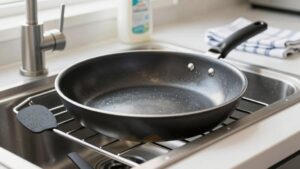
Protect nonstick plates by favoring lower temperature settings when possible and never using metal utensils that can abrade the coating.
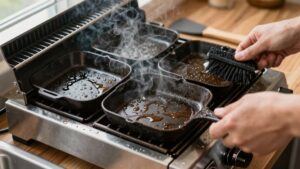
Let the plates cool to near ambient temperature before cleaning. Then, use soft sponges and mild, nonabrasive cleaners to remove residues.
Periodically reapply a light film of high-smoke-point oil to restore surface repellency and extend coating life.
Choose Low Heat
A low-heat approach (around 200°F) preserves nonstick coatings by minimizing thermal stress and reducing the breakdown of polymer layers. You should favor gentler settings for delicate breads and any surfaces with Teflon-like finishes.
Using low heat benefits coating lifespan and maintains bread integrity by lowering peak surface temperatures that accelerate polymer degradation and Maillard-driven charring. Set the press to the lowest effective temperature for brioche, thin ciabatta, or sandwiches with sensitive fillings. Monitor internal bread color and texture rather than relying solely on time.
Low settings also reduce off-gassing risks associated with overheated fluoropolymers and allow more consistent heat transfer across thin loaves. Combine low heat with moderate initial pressure and slight extension of cook time for predictable, safe results.
Avoid Metal Utensils
Why use plastic or silicone tools instead of metal ones? You protect the nonstick coating: metal utensils can scratch polymer layers, creating focal points for adhesion failure and accelerated wear. Use high-temperature silicone or heat-resistant nylon rated above your press’s maximum to avoid deformation; check manufacturer specs for temperature recall and safe-use thresholds.
Scratches compromise thermal transfer uniformity and introduce microscopic crevices where food and oils accumulate, raising cleaning difficulty and potential flaking. When adjusting or removing sandwiches, employ utensils with smooth edges and long handles to maintain distance from hot plates. Inspect surfaces regularly under good light; minor abrasions reduce service life and may void warranties.
Adhering to tool-material limits preserves coating integrity and consistent cooking performance.
Cool Before Cleaning
How long should you wait before cleaning a hot nonstick panini plate? Wait until the plate reaches near-ambient temperature or a manufacturer-specified safe-touch threshold, typically 20–60 minutes depending on mass and ambient conditions.
Cooling safety reduces thermal shock to the coating and prevents warping of the platen. You should power off, unplug, and allow passive cooldown; forced cooling (cold water or rapid chilling) can degrade nonstick chemistry. Observe manufacturer cooldown indicators if present.
For maintenance etiquette, document cooldown times and cleaning start times in commercial settings to ensure consistent procedure compliance and staff accountability. Only begin gentle wiping or detergent cleaning once the surface is cool to the touch and residual heat readings are within specified safe limits.
Use Gentle Cleaners
Preserving a nonstick coating requires choosing mild detergents and nonabrasive tools, because harsh chemicals and scouring pads rapidly degrade polymer surfaces and reduce release properties. You should select pH-neutral dish soap and soft microfiber or nylon scrubbers to remove residue without compromising the coating’s microtexture.
Avoid bleach-based cleaning chemicals and abrasive cleaners; they accelerate surface erosion and increase adhesion sites for food. After the press cools, apply warm water and the mild detergent. Allow a short soak to loosen deposits, then gently wipe plates following manufacturer-specified patterns to prevent uneven wear. Rinse thoroughly to remove surfactant residues that alter thermal transfer.
Inspect the coating visually and functionally. Any flaking or persistent sticking indicates replacement or professional servicing is required.
Reapply Light Oil
When should you reapply a light oil layer to a nonstick panini press? Reapply oil after thorough cleaning and whenever you notice diminished release or uneven browning at typical grill temperature settings. A thin, even film of high-smoke-point oil restores micro-protection to the coating and reduces friction that accelerates wear.
Monitor performance: sticky spots, increased food adhesion, or erratic searing indicate reapplication is needed. For consumer units operating 200–440°F, apply oil at ambient temperature, then heat briefly to the target grill temperature. The medium range is recommended to polymerize the film lightly. For commercial units, follow manufacturer limits to avoid exceeding coating temperature tolerance. Wipe excess with a lint-free cloth; repeat periodically based on frequency of use and observed coating condition.
Frequently Asked Questions
Can I Use Frozen Sandwiches Directly on the Panini Press?
Yes, you can cook frozen sandwiches directly on a panini press, but you should adjust temperature and technique to prevent uneven heating and cheese leakage.
Preheat to medium (about 325–375°F). Use light initial pressure, and extend cook time to ensure fillings reach a safe temperature. Consider a foil wrap or a folded edge to contain melting cheese. Monitor frequently and avoid high heat that causes exterior burning before the center thaws.
How Do I Prevent Cheese From Leaking Onto Plates?
Use parchment liners under sandwiches and size them to catch drips: this provides reliable cheese containment and prevents mess. Trim excess cheese before grilling and press gently for the first 30 seconds to let fillings warm without squeezing out.
Use medium heat to melt cheese steadily rather than force it out with high searing temperatures. After cooking, let sandwiches rest briefly on the liner to reabsorb soft cheese before plating.
Can I Press Pastries or Desserts Safely?
Yes, you can bake pastries on a press if you control temperature, pressure, and safe handling. Use low-to-medium heat (around 200–325°F) and gentle initial pressing. Avoid excessive lid force to prevent filling escape.
Choose sturdier pastries or partially pre-bake delicate dough. Apply coatings that tolerate heat and monitor internal temperature.
Clean immediately after cooling to prevent residue buildup and cross-contamination. Follow food-safety protocols for handling and storage.
Does Altitude Affect Panini Cooking Times?
Yes, altitude impact reduces boiling points and can slightly lengthen panini cooking times. You will need cooking time adjustments: increase low-to-medium setting durations by about 5–10% per 3,000 feet (900 m) ascent to ensure thorough heating, especially for dense fillings and thick breads.
Compensate with slightly higher temperatures if your press allows; however, monitor for over-browning. Use a thermometer or test slices to validate doneness rather than relying solely on timing.
Can I Use Metal Utensils on the Grill Plates?
You shouldn’t use metal utensils on coated grill plates; they’ll scratch nonstick surfaces and reduce your ability to can you preheat effectively. Use silicone, wood, or heat-resistant nylon tools instead.
Foods that stick most are cheese, sugary glazes, and moist bread. Proper preheating and light coating (butter or mayo, chosen per temperature compatibility) minimize sticking. If plates are uncoated cast iron, metal tools are acceptable but still risk gouging finish.
Conclusion
You’ve learned the optimal grill plate temperature ranges and how plate pressure (PSI) affects contact and cook time. Plus, you have learned evidence-based care for nonstick surfaces. Choose lower heat when possible; avoid metal tools, and let plates cool before cleaning to preserve coatings. Use mild cleaners and reapply a light oil layer to maintain release properties.
Following these technical, practical steps will extend plate life, ensure consistent results, and reduce health and equipment risks.