Food Steamer Mineral Scale Removal
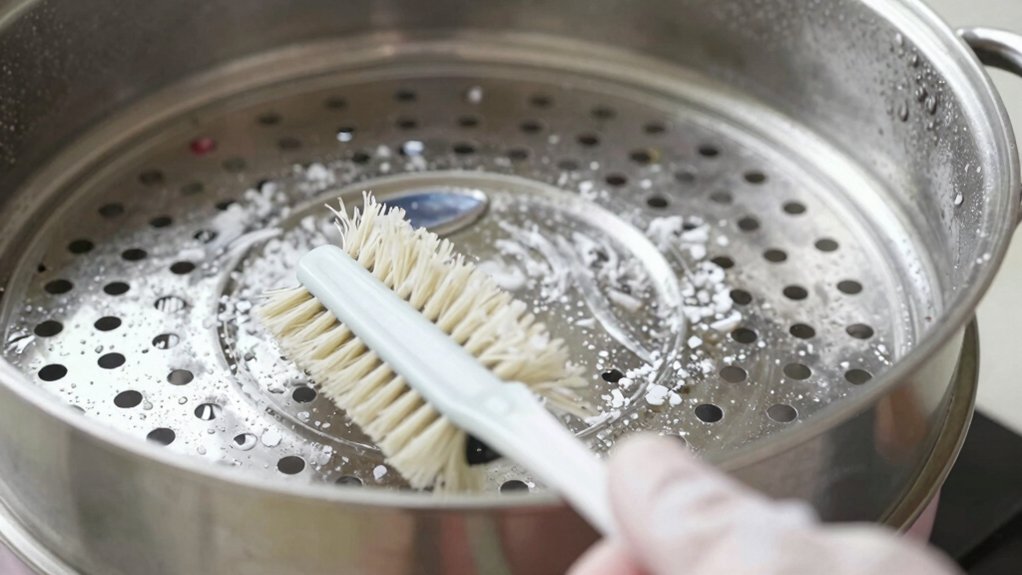
You can remove mineral scale from your food steamer quickly with vinegar, controlled heat, and thorough rinsing. For light buildup, mix 1 part vinegar to 3 parts water and soak for 30–60 minutes.
For moderate buildup, use 1:1 for 15–30 minutes.
For heavy scale, use undiluted vinegar briefly for 10–20 minutes with short steam if the steamer allows.
Warm the solution; do not boil.
Then rinse three times with distilled water and neutralize if needed.
More tips follow below.
Quick Overview
- Assess scale severity and choose treatment: light (soak), moderate (short cycle), heavy (deep clean plus repeat soak).
- Use vinegar diluted per severity: light 1:3, moderate 1:1, heavy briefly undiluted (10–20 minutes).
- Warm the solution (steam but don’t boil) to speed descaling. Limit contact time to avoid damage.
- Rinse thoroughly with distilled water and run three plain-water cycles to remove residue.
- Record water hardness and descaling dates to set proper maintenance intervals: weekly to quarterly.
Mineral Scale Removal Times
How long should you expect descaling to take? You’ll plan by scale severity: light buildups take about 10 minutes with a vinegar soak. Routine operating cycles run approximately 30 minutes. Heavy scale needs a 15-minute active deep-clean plus soak and rinse steps. Follow timing precisely to protect components and bakeware safety.
| Task | Typical Time |
|---|---|
| Vinegar soak (light) | 10 minutes |
| Operating cycle (moderate) | 30 minutes |
| Deep-clean (heavy) | 15 minutes active |
You’ll always rinse three times with distilled water after treatment. Avoid dishwasher effects: do not use dishwasher cycles for internal parts. Thermal shock cracks bonded layers. Use soft-bristle brushes only and adhere to specified soak limits to prevent coating damage.
Descaling Frequency by Water Hardness
Why does water hardness matter for your descaling schedule? You’ll adjust descaling frequency based on measured water hardness. Hard water deposits minerals faster; you’ll descale more often. Soft water slows buildup; you can extend intervals. Check local hardness reports or test strips to set a routine.
Visualize white crust on heating elements after a few weeks in hard water. Picture slow steam flow and longer cook times as scale accumulates. Imagine clean, bright internals when you follow an appropriate descaling frequency.
Procedure: test hardness, record results, set descaling intervals (weekly for very hard, monthly for moderately hard, quarterly for soft), log outcomes, and shorten intervals if you see scale. Adjust for heavy use.
Vinegar Concentration and Contact Time
Decide on a vinegar strength: common options are full-strength (5–10% acetic acid) or a 1:1 water dilution. Follow safe dilution ratios for your steamer.
Allow the solution to contact scale for the required duration (typically 30–60 minutes); this time can be reduced if you apply heat. Warmth speeds chemical action, but avoid boiling. After descaling, rinse and neutralize thoroughly with several water flushes to remove residual acidity and prevent corrosion.
Vinegar Strength Options
Wondering which vinegar concentration will work best for descaling your steamer? Choose strength based on scale severity: light buildup — 1:3 vinegar to water; moderate — 1:1; heavy — undiluted white vinegar applied briefly.
Fill the reservoir so affected areas are submerged. Let the solution sit (contact time) without heating: 30–60 minutes for diluted, 15–30 minutes for full strength. Then run a short steam cycle if manufacturer allows. After treatment, rinse thoroughly several times to remove odor.
Observe vinegar safety: wear gloves, avoid inhaling fumes, and keep pets away. Store leftover vinegar in a labeled, sealed container away from heat; proper vinegar storage preserves potency and prevents accidental misuse.
Safe Dilution Ratios
Having reviewed vinegar-strength options, you can pick a safe dilution based on buildup severity and exposure time: for light scale, use 1 part white vinegar to 3 parts water and soak for 30–60 minutes. For moderate scale, use 1:1 and soak for 15–30 minutes. For heavy scale, apply undiluted vinegar only briefly (10–20 minutes) before running a short steam cycle if the manufacturer permits.
Measure and mix in a well-ventilated area. Fill the reservoir to cover affected surfaces, start timing immediately, and avoid prolonged exposure to prevent component corrosion. After contact time, run a brief rinse cycle or flush the reservoir with clean water multiple times. You’ll achieve effective mineral removal while maintaining appliance integrity by following these safe dilution and contact guidelines.
Required Contact Durations
How long should vinegar stay in your steamer depends on concentration and scale severity: for light deposits use 1:3 vinegar-to-water and soak 30–60 minutes. For moderate scale use 1:1 and soak 15–30 minutes. For heavy buildup apply undiluted vinegar only 10–20 minutes and follow with a short steam cycle if the manufacturer allows.
After soaking, empty and rinse thoroughly. If residue remains, repeat one additional short soak rather than prolonging contact. Never exceed recommended times to protect seals and coatings. Use gloves and ventilate the area. Document each descaling session and note results so you build two-word discussion ideas for maintenance planning.
Keep contact durations separate and relevant, and avoid methods irrelevant to other listed H2s.
Heat Effects On Efficacy
Why does heat matter when descaling with vinegar? You’ll use heat to accelerate reaction rates: warmer vinegar dissolves mineral bonds faster, improving limescale lift. Set vinegar concentration to a safe mix (typically 1:1 with water) and avoid stronger solutions that can harm seals. Preheat the solution until steam appears; don’t boil. A maintained warm temperature boosts effectiveness without damaging components.
Control contact duration based on scale severity: light deposits need 30–45 minutes warm soak. Heavier scale may require up to 60 minutes with intermittent agitation. Monitor progress and repeat short cycles rather than one prolonged exposure. These heat effects, plus correct vinegar concentration and controlled contact duration, give reliable, efficient descale results while minimizing appliance risk.
Rinsing And Neutralization
Once the warm vinegar soak has loosened scale, you’ll need to remove acidic residue promptly to protect seals and metal parts. Use a 1:1 vinegar-to-water mix for soaking 30–60 minutes. Stronger concentrations speed action but increase risk to soft gaskets. After soaking, follow rinsing protocols: discard solution, flush reservoir three times with fresh water, and run a short steam cycle to expel trapped acid from internal passages.
Perform neutralization steps by filling the reservoir with a baking soda solution (1 teaspoon per cup) or plain water if baking soda isn’t available. Run one brief cycle, then empty. Repeat plain-water flushes until no vinegar odor remains.
Dry components fully before reassembly. Test a steam-only cycle to confirm neutralization.
Frequently Asked Questions
Can Descaling Void My Steamer’s Warranty?
Yes, descaling can void your steamer’s warranty if you ignore the manufacturer policy. Check the user manual for approved descaling agents, concentrations, and procedures.
Use recommended solutions and follow timing, temperature, and rinsing steps precisely. Keep receipts for commercial descalers and record maintenance dates. If you follow the manufacturer policy, descaling won’t void warranty; however, deviating from instructions or using harsh chemicals can lead to denied claims.
Can I Use Distilled Water Instead of Tap Water?
Yes, you should use Distilled Water when possible. It prevents mineral scale; you’ll reduce descaling frequency and protect heating elements. If Distilled Water isn’t available, consider Tap Alternatives like filtered water or bottled low-mineral water. These help but won’t eliminate buildup.
Empty and dry the reservoir after each use. Run monthly descaling if you use Tap Alternatives, and follow manufacturer guidance to preserve performance and warranty.
Is Citric Acid Safe for Food-Contact Surfaces?
Yes, citric acid is safe for food-contact surfaces when used and rinsed properly. For citric safety, mix food-grade citric acid to manufacturer or package ratios; apply and let soak up to 30–60 minutes. Then run a warm water rinse and wipe.
Avoid concentrated undiluted contact with food. Neutralize residue by thorough rinsing. Store citric acid out of reach and label solutions to maintain safe food contact practices.
How Do I Dispose of Used Descaling Solution?
Pour used descaling solution down the sink with running water, following disposal guidelines and safety considerations. You’ll neutralize mild acids by diluting heavily (at least 10:1 water to solution).
Wear gloves and avoid skin or eye contact; ventilate the area. Don’t mix with bleach or ammonia. If solution is concentrated or contains harsh chemicals, follow product label for hazardous-waste disposal or take it to a local household hazardous waste facility.
Can I Run the Steamer Immediately After Rinsing?
Yes, but don’t rush. After rinsing, refill the reservoir with fresh water. Run a short steam cycle and discard that first steam; it flushes residual solution and restores steam quality.
Inspect for remaining mineral buildup. If you still see deposits or odd odors, repeat rinsing and a rinse cycle. Only resume cooking once steam looks clear, smells neutral, and no cleaning solution residue remains.
Conclusion
You’ll remove mineral scale reliably by matching descaling frequency to your water hardness and using the right vinegar strength and contact time. For light deposits, dilute vinegar works; for heavy buildup, stronger solutions or longer contact are needed.
Apply warm (not boiling) liquid to boost efficacy, then rinse thoroughly until no vinegar smell remains. You can neutralize with a baking soda rinse if desired. Repeat on schedule to prevent recurrence and maintain steamer performance.