Electric Pressure Cooker Safety Features Explained
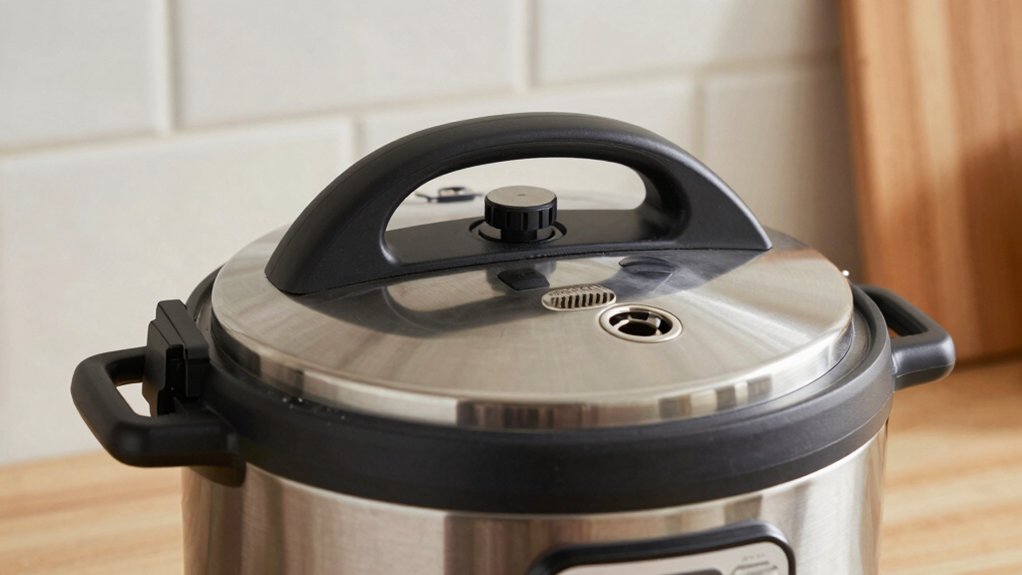
Modern electric pressure cookers keep you safe with multiple redundant systems: weighted or spring relief valves that vent above 30–70 kPa; primary regulators holding nominal pressure near 80–100 kPa; solenoids for precise control; and fusible or float backups.
Lid locks are interlocked to pressure sensors and won’t release until safe setpoints are reached. Manual-release is blocked until depressurization and faults trigger alarms. Overheat cutouts and logged safety overrides add fail-safes.
Continue for detailed behaviors and timings.
Quick Overview
- Multiple pressure relief valves (primary and redundant) vent excess pressure automatically to prevent dangerous overpressure.
- Lid interlocks and pressure-sensing interlocks prevent opening until internal pressure falls below a safe setpoint.
- Spring, weighted, or solenoid regulators maintain nominal cooking pressure with varying precision; they include backup venting.
- Fail-safe features (fusible plugs, float valves, alarms) and automatic cutouts protect against overheating and sensor faults.
- Manual-release lockouts and logged safety overrides require criteria and maintenance actions before allowing forced depressurization.
Max PSI & Valve Types
Curious how much pressure your electric cooker actually reaches and which valve keeps you safe? You’ll see rated limits around 80–100 kPa (11.6–14.5 PSI); venting begins 30–70 kPa (4.35–10.15 PSI).
Know valve roles: weighted valves (80–85.5 g, 3 mm) give simple mechanical regulation; spring-loaded units offer ±2–4 kPa precision but can fatigue. Solenoids provide ±1 kPa control. Fusible plugs and float valves act as last-resort or lock indicators.
Treat unrelated concept or irrelevant topic notes as distractions—focus on maintenance, correct seating, and clear vents. Replace fusible plugs after activation. If spring or float shows wear, service before use. Safe operation depends on redundant, functioning valves and adhering to manufacturer specs.
| Valve | Precision | Role |
|---|---|---|
| Weighted | low | primary vent |
| Spring | ±2–4 kPa | regulated backup |
| Solenoid | ±1 kPa | precise control |
Electric Cooker’s PSI Limits
How much pressure does your electric cooker actually generate and what limits keep it safe? You’ll see cookers typically operate within a narrow gauge range, controlled by weights, springs, and valves to prevent overpressure. Don’t treat PSI limits as an irrelevant topic or a random aside: they’re core to safety.
- Nominal operating pressure: manufacturers set a target PSI/kPa range enforced by weighted vents or regulators.
- Primary safety valve: opens at a defined excess pressure to protect the vessel.
- Secondary/backup vents: redundant sprung valves or gasket relief prevent catastrophic failure.
- Design limits and standards: electrical controls, thermistor cutouts, and directives cap allowable pressure and mandate interlocks.
You must follow manual limits and maintenance schedules to keep pressure containment reliable.
Lid Lock Sensor Behavior
You should understand when the lid lock sensor engages relative to pressure rise and time, so you don’t attempt to open the cooker prematurely.
Check that the interlock holds above the specified pressure threshold and that manual-release controls remain disabled until the float drops and the sensor indicates safe pressure.
If the sensor reports faults or an override condition is present, stop use and follow the manufacturer’s fault and safety-override procedures.
Lid Lock Activation Timing
When pressure rises during cooking, the lid lock engages automatically to prevent opening until conditions are safe. The sensor (mechanical or electronic) must detect either sufficient pressure build-up or the correct lid position before it allows the lock to activate. You should understand lid activation depends on interlock timing calibrated to prevent premature locking or delayed engagement.
Mechanical floats or micro-switches provide immediate feedback; electronic systems sample pressure and lid position then drive a solenoid when thresholds are met. Timing tolerances are tight: engagement must occur after seal completion but before pressure reaches unsafe levels. You must not force the lid during this window.
Maintain sensors and follow manufacturer calibration procedures so interlock timing remains reliable and prevents accidental depressurization or scalding.
Pressure Level Interlock
Building on lid lock timing, pressure level interlocks determine exactly when the lid can be released by sensing internal pressure against defined thresholds. You rely on sensors: mechanical floats, pressure transducers, or microswitch-coupled plungers to prevent lid actuation until measured pressure falls below a safe setpoint. The controller compares real-time pressure to that setpoint and keeps the lock engaged despite power or user input. This prevents sudden steam or hot liquid ejection and complements weighted vents and primary safety valves.
Don’t conflate this with an unrelated topic like timer functions; the interlock is strictly pressure-governed. As a safety reminder, always wait for the interlock indicator or audible click before attempting to open the cooker to avoid scalding or equipment damage.
Manual Release Lockout
How should a manual-release lockout behave to keep you safe? You need a manual lockout that prevents lid opening until internal pressure is within safe limits. The lid lock sensor must sense pressure via the float/post or electronic transducer and mechanically or electronically inhibit latch release until pressure release reaches the defined threshold.
When you initiate a manual pressure release, the system must hold the lock until steam flow subsides and the float drops or sensor reads safe pressure. The lockout should tolerate short fluctuations and only reset after a stable, low-pressure reading to avoid premature unlocking.
Design must fail-safe: loss of power should default to locked or require verified depressurization before allowing manual lid movement.
Sensor Fault Indicators
Having defined how a manual-release lockout must hold until pressure is safe, you also need clear sensor fault indicators that tell you when the lid lock sensor isn’t trustworthy. You should see immediate, unambiguous sensor fault indicators: an audible alarm plus persistent error code whenever the micro-switch or sensor circuit reports inconsistent lid position under potential pressure.
Design the system so lid status visualization shows locked, unlocked, or fault states on the control panel and prevents manual release if a fault exists. You must treat intermittent signals as faults: debounce logic, cross-check with float-pin and pressure transducer, and log events for diagnostics.
If indicators trigger, stop operation; drain pressure if safe, and require user inspection or service before resetting the lockout.
Safety Override Conditions
Because lid lock sensors are critical to preventing hazardous lid release, your system must implement explicit safety override conditions that only permit manual or automatic override when multiple redundant criteria confirm safe pressure levels. You should require agreement between lid lock micro-switch state, float valve position, and pressure-sensing input (NTC or gauge-derived) before enabling an override.
Design overrides to default to a quiet failure mode that refuses release and alerts the user if any sensor disagrees or times out. Include diagnostic checks that distinguish sensor faults from user error, and log events for maintenance.
For automatic releases, verify temperature rollback and vented-pressure thresholds. For manual overrides, enforce deliberate multi-action inputs. Treat any single-point discrepancy as a lockout until resolved.
Frequently Asked Questions
Can I Use My Pressure Cooker on Induction Stovetops?
Yes, you can use a pressure cooker on an induction stovetop only if the cooker’s base is induction compatible (magnetic). Check manufacturer specs and test with a magnet.
Be aware that using an incompatible base can void warranty implications; it may cause uneven heating or damage. Follow safety guidance: never overfill, ensure seals and vents are intact, and confirm lid interlocks and pressure-release functions work before pressurizing on induction.
How Often Should Safety Valves Be Professionally Inspected?
You should have safety valve inspection frequency set to at least once every 12 months. The professional inspection interval can be shorter if you use the cooker heavily. Arrange a professional inspection interval of 6 months for commercial or daily heavy use; otherwise, annual checks suffice.
During inspections, the technician tests weighted vents, overpressure valves, interlocks, and seals. They’ll record results and replace components that fail to meet manufacturer or regulatory tolerances.
Can I Cook With the Lid Partially Open for Browning?
No, you shouldn’t cook with the lid partially open for browning. With the lid partly ajar on a pressure cooker, partial lid safety is compromised. Pressure interlocks, weighted vents, and gasket seals require either fully closed pressurizing or fully removed lid for stovetop-style browning.
Open-lid browning risks scalding, improper sealing, and sensor or thermostat misreads. Remove the lid or use a searing function if provided. Follow manual instructions, and never force a partially closed position.
Are Non-Original Replacement Parts Safe to Use?
You shouldn’t assume non original replacement parts are safe. You’ll increase risk if seals, valves, or interlocks don’t match OEM specs, tolerances, or materials. Have any replacement part inspected for fit, gasket hardness, and valve calibration. Arrange safety inspections after installation.
Use only certified equivalents or OEM parts for pressure-bearing components. If certification or inspection isn’t available, replace with OEM parts to avoid overpressure, lid lock, or steam-release failures.
Will Altitude Affect Cooking Times and Pressure Settings?
Yes, altitude adjustments matter because altitude affects lower boiling points. You’ll need longer cook times or higher effective pressure. Increase cooking time per manufacturer guidance (typically 5–15% per 1000 ft above sea level) or use pressure settings that maintain target temperatures.
Monitor safety: don’t overfill, allow full pressure release, and follow valve/interlock operation. Test recipes incrementally and consult your cooker’s manual for specific altitude adjustments and pressure recommendations.
Conclusion
You now know the core safety features that keep an electric pressure cooker safe: maximum PSI limits, valve types, lid-lock sensors, timing of lock activation, interlocks for pressure levels, manual-release lockouts, and fault indicators with defined override conditions.
Always confirm sensors and seals before use. Never force the lid. Follow manufacturer instructions for maintenance and emergency release. These steps reduce risk and ensure the cooker operates within designed safety margins.