Dishwasher Safety for Nonstick Accessories
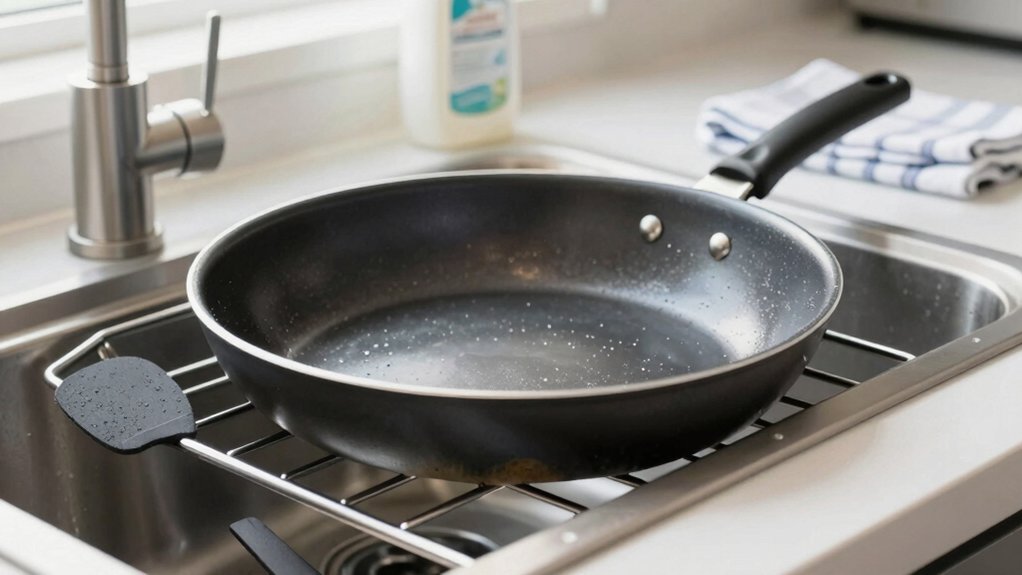
You Can Usually Wash Nonstick Accessories in the Dishwasher, But Rinse or Wipe Off Stuck Food and Excess Salt First to Prevent Abrasion and Chemical Wear.
Skip the Dishwasher’s Heated-Dry Cycle and Open the Door Afterward to Vent Steam; High Heat and Prolonged Drying Can Weaken Coatings, Cause Discoloration, and Warp Metal.
Air-Dry or Towel-Dry with a Soft Cloth Instead.
Hand-Wash Delicate Pieces When Possible; Keep Going to Learn Specific Temps and Care Tips.
Quick Overview
- Rinse or wipe off stuck-on food and excess salt before loading to prevent abrasion and detergent erosion.
- Avoid the dishwasher’s heated dry cycle for nonstick pieces to prevent coating breakdown and warping.
- Many hard-anodized and ceramic nonstick items tolerate dishwasher cleaning; however, check manufacturer temperature limits first.
- Air-dry by opening the door after the final rinse or towel-dry with a soft, lint-free cloth to protect the finish.
- When in doubt, hand-wash with mild detergent and a soft sponge to maximize nonstick lifespan.
Max Temp Tolerance Table
How hot can you safely run nonstick cookware? You’ll check the max oven and temp tolerance for each material before use. Know that traditional PTFE pans tolerate lower oven temps than ceramic or hard-anodized models. Dishwasher cycles speed coating wear.
Use the table below to visualize common limits and choose hand washing when longevity matters.
| Material | Typical Max Oven | Notes |
|---|---|---|
| Traditional nonstick | 300–500°F | Lower tolerance; avoid prolonged high heat |
| Hard-anodized | 400°F | Mid-range tolerance; often dishwasher-safe |
| Ceramic/Thermolon | 400–600°F | Higher tolerance; watch smoke point (≈450–500°F) |
Rinse Before Dishwasher Loading
Because food residue and salt-detergent interactions speed nonstick wear, always rinse pans before loading them into the dishwasher. A quick rinse or wipe removes stuck-on particles and excess salt that would otherwise abrade or chemically attack the coating during wash cycles. You should rinse before dishwasher loading every time, even for pans labeled dishwasher-safe, to limit abrasive action and chemical erosion.
Use lukewarm water and a soft cloth or brush to dislodge crumbs and salt traces. Don’t rely on the machine to remove hardened bits that force harsher cycles or stronger detergent exposure. Treat your nonstick gently: a little prep extends life and keeps cooking performance consistent.
- Relief: knowing you’re protecting a favorite pan
- Prudence: avoiding premature wear
- Satisfaction: preserving smooth release
Avoid Heated Dry Cycle
Don’t use the heated dry cycle for nonstick accessories because the high heat can accelerate coating breakdown and cause warping or heat stress.
Heated drying also promotes residue and film buildup from detergents that dull the surface and reduce nonstick performance. Instead, choose air-dry or towel-dry methods to protect the coating and maintain shape.
Why Avoid Heated Dry
Why should you skip the heated dry cycle for nonstick cookware? You should avoid that setting because heated dry exposes coatings to extended high temperatures, increasing heat stress that speeds breakdown.
Even dishwasher-safe nonstick can suffer microscopic changes when repeatedly subjected to sustained heat, reducing slickness and lifespan. You’ll also risk warping lightweight pans and loosening bonded layers as thermal expansion and contraction occur.
Choosing air-dry or opening the door after the final rinse prevents that concentrated heat exposure. Hand drying with a soft cloth removes remaining moisture without stressing the surface.
When you want to preserve nonstick performance, skip heated dry; use gentle detergents; and favor cooler cycles or manual washing to minimize cumulative thermal and chemical wear.
Damage To Nonstick Coating
How much damage can the heated dry cycle do to a nonstick coating? You’ll accelerate deterioration when you expose pans to that prolonged high heat. Heated dry combines temperature, detergent residue, and steam; these factors together weaken the nonstick coating’s bond and finish.
Over repeated cycles, you’ll notice loss of release, discoloration, and tiny flakes or pitting that reduce performance. To avoid dishwasher damage, skip heated dry and choose a cooler rinse or let items air dry outside the machine. When manufacturers label a piece dishwasher safe, follow their temperature limits; otherwise, hand wash with a soft cloth and mild detergent.
Being cautious preserves the coating’s life and keeps food release reliable without risking premature failure.
Warping And Heat Stress
Ever notice your pan sitting unevenly after a dishwasher cycle? That’s often from heat stress and rapid cooling. You should avoid the heated dry cycle because repeated high temperatures warp thin or layered nonstick pans, creating permanent cupping or uneven cooking surfaces.
Warping risks rise when metal expands unevenly around rivets, handles, or layered cores. To protect your cookware, run a no-heat or air-dry setting; or better yet, hand wash and towel dry. If a manufacturer labels a model dishwasher safe, still skip heated drying to prolong shape and coating life.
Inspect pans after cleaning for any distortion. Even slight warping can change heat distribution and shorten the pan’s useful life.
Residue And Film Buildup
A cloudy film or sticky residue can form on nonstick surfaces after dishwasher cycles, especially if you use the heated dry setting. You’ll want to avoid that because heat speeds chemical reactions between detergent and the coating that leave stubborn deposits. You’ll notice residue buildup as dull patches, reduced release, or a greasy feel that won’t rinse away.
To prevent film formation, skip high-heat cycles and choose mild detergents when the manufacturer allows machine washing. Inspect pieces after each wash and rewash by hand if you spot cloudy areas. Gentle scrubbing with a soft sponge and warm soapy water usually removes light deposits. Treat recurring buildup as a sign the dishwasher isn’t suitable for that item to protect the coating long term.
Alternative Drying Methods
Because high heat speeds coating breakdown and can leave cloudy residue, skip the heated-dry cycle and use gentler options: open the dishwasher door after the final rinse to let steam escape and air dry. Towel-dry nonstick pieces immediately with a soft microfiber or lint-free cloth, or place items on a dish rack in a well-ventilated spot to finish drying naturally.
For alternative drying, don’t stack wet items; separate lids and pans so air circulates. If you towel-dry, blot instead of rubbing to avoid abrasive friction. When you use a rack, position nonstick surfaces facing up to shed water. These small steps protect coatings, reduce spotting, and keep your nonstick care routine effective without exposing items to the high temperatures that speed deterioration.
Frequently Asked Questions
Can I Use Metal Utensils With Dishwasher-Safe Nonstick Pans?
You can sometimes use metal utensils with dishwasher safe nonstick pans, but you should be cautious. Even dishwasher-safe coatings like SteelShield™ or Stratanium+ tolerate metal better; yet repeated scraping can scratch or reduce nonstick life.
Prefer silicone-wrapped or wooden utensils for routine cooking, and reserve metal for stirring when necessary. Hand wash when possible to preserve the coating, and follow the manufacturer’s guidance to avoid premature wear or flaking.
Do Dishwasher Detergents Void the Manufacturer Warranty?
Yes, using harsh dishwasher detergents can void a dishwasher warranty if the detergent effects cause damage that the manufacturer excludes. You should check your dishwasher warranty terms and your cookware’s care instructions. If the warranty forbids certain detergents or requires specific cycles, follow them.
Keep records, use recommended cleaners, and avoid abrasive packs to reduce risk. When in doubt, contact the manufacturer for clarification before you run a load.
Are Ceramic Nonstick Accessories Dishwasher-Safe Long Term?
Yes, many ceramic nonstick accessories are dishwasher-safe, but you shouldn’t assume long-term ceramic durability. You’ll preserve lifetime maintenance by hand washing when possible; avoid harsh detergents and high-heat cycles.
If the manufacturer explicitly rates dishwasher use, you can occasionally run it; yet expect faster wear over repeated cycles. Treat dishwasher cleaning as convenience, not routine care, to protect coating performance and extend usable life.
How Often Should I Replace a Dishwasher-Washed Nonstick Pan?
You should replace a dishwasher-washed nonstick pan every 1–3 years. Replace it sooner if you notice flaking or persistent discoloration concerns. Check coating integrity regularly. If food sticks, peels, or the pan shows heat resistance loss or warped spots, retire it immediately.
To prolong life, rinse off trapped salt/detergent, avoid high-heat cooking, and hand wash when possible. Keep a backup so you can swap pans at the first sign of failure.
Can I Stack Nonstick Pans Together in the Dishwasher?
You shouldn’t stack nonstick pans together in the dishwasher. You risk scratching or chipping coatings as water pressure and detergent force them together.
Instead, use two word discussion ideas like “separate racks” and “gentle cycle.” Place pans upright or on different levels, and avoid overcrowding.
Follow manufacturer dishwasher safety labels; use mild detergent, and consider hand washing to extend coating life. This reduces abrasion and prolongs nonstick performance.
Conclusion
You can safely use the dishwasher for many nonstick accessories if you check the max temperature tolerance table first and rinse off food and grease before loading. Skip the heated-dry cycle to avoid damaging coatings, warping thin parts, and building cloudy residue from detergent and heat.
Instead, air-dry or towel-dry items promptly to prevent spotting and extend the life of the nonstick surface. When in doubt, hand-wash to be cautious and protect your cookware.