
Deep Fryer Oil Types and Smoke Points
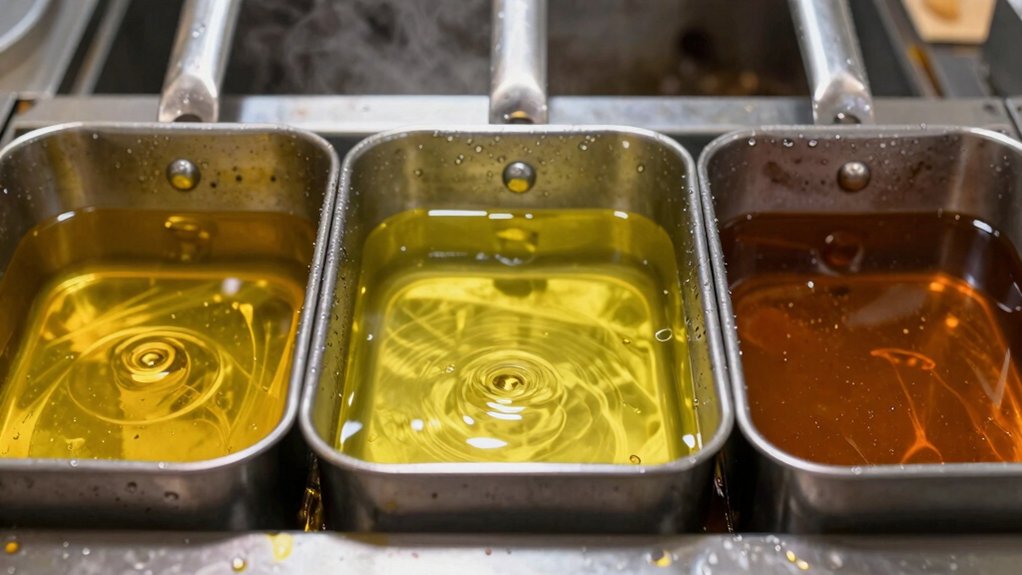
For deep frying you’ll want a refined, high-smoke-point oil (refined avocado, safflower, peanut) so the oil won’t break down at 350–375°F and form off-flavors or harmful compounds. Refined oils have impurities removed and higher smoke points. Extra virgin olive oil is flavorful and healthy raw but less heat-stable.
Filter oil after use; watch for darkening, foaming or rancid smells. Store cool and dark. Keep going to get filtering, reuse limits, and storage tips.
Quick Overview
- Choose refined high-smoke-point oils (refined avocado, safflower, peanut) for deep frying to prevent smoking and off-flavors.
- Refined oils have impurities and free fatty acids removed; this raises smoke points and heat stability.
- Typical smoke points: refined avocado ≈ 520°F (271°C), refined peanut ≈ 450°F (232°C).
- Use refined olive oil for frying up to about 375–400°F. Reserve extra virgin olive oil for finishing or low-heat uses.
- Extend oil life by filtering after use, storing cool and dark, and discarding when dark, rancid, foamy, or fast-browning.
Smoke Points by Oil Type
Why does smoke point matter when you fry? You need oils that stay stable at high heat to protect flavor and your health. Choosing refined high-smoke-point options improves deep frying safety and reduces harmful breakdown products. Use oils like refined avocado, safflower, or refined peanut for consistent results.
| Oil (refined) | Typical Smoke Point |
|---|---|
| Avocado | 520°F / 271°C |
| Peanut | 450°F / 232°C |
Evidence shows oil refinement impact raises smoke points by removing free fatty acids and impurities; this increases thermal stability. Pick neutral, refined oils for long fry cycles. Avoid unrefined varieties that degrade earlier. This practical approach minimizes oxidation, keeps food tasting clean, and supports safer commercial and home frying practices.
Olive Oil—Refined Vs Extra Virgin
How should you choose between refined olive oil and extra virgin olive oil for frying? You’ll weigh refined vs extra virgin on health and performance: extra virgin gives antioxidants and robust flavor but lower smoke point. Refined removes impurities, raises smoke point, and tolerates higher heat.
- Consider temperature: Use refined for frying near 375–400°F because its higher smoke point reduces harmful breakdown. Avoid extra virgin at those temps.
- Prioritize flavor versus heat tolerance: Pick extra virgin for finishing or low-heat sautéing to preserve polyphenols and taste. Pick refined when neutral flavor and stability matter.
- Health balance: Refined still retains monounsaturated fat and is safer for deep frying. Extra virgin is healthier raw but less heat-stable.
Reusing Oil: Filtering Frequency
You should filter fryer oil after every shift or whenever you notice off-odors, excessive darkening, or foaming. These indicate lipid breakdown and potential health risks.
Compare fine mesh strainers, paper filters, and centrifuge or cone filtration by effectiveness and cost to pick one that fits your volume and safety needs. Store filtered oil in airtight, cool, dark containers and limit reuse based on food type and total fry hours to safely extend oil life.
How Often To Filter
When should you filter fryer oil to keep food safe and flavors clean? You should filter daily in high-volume operations and after each batch of batter or breadcrumb heavy items to reduce particulates that accelerate rancidity and off-flavors.
For moderate use, filter every 2 to 3 fry cycles; for low use, filter weekly. Regular filtering lowers recycling costs by extending oil life and reduces hazardous waste disposal frequency, improving kitchen safety and compliance.
Use a fine mesh or paper filter at operating temperature to remove solids and moisture. Cool and store oil in a clean, airtight container away from light.
Track fry time and oil color with simple logs. Discard when degradation markers or rancid odor appear, even if filtering has been routine.
Signs Oil Needs
Why should you watch for visual, olfactory, and performance changes in fryer oil? Because those fry oil indicators—darkening color, rancid or acrid smell, excess foaming, or quicker food browning—signal reduced oil stability and higher levels of polar compounds linked to health risks.
You should track frequency of use, food types fried, and temperature exposure; each raises degradation rates. Check oil before each shift: skim particles, note odor, and test clarity and smoking behavior during a short heat-up. If oil smokes below expected smoke point, foams excessively, or imparts off-flavors, discard or recondition per safety protocols.
Regular monitoring lets you filter only when needed, preserving oil life while minimizing contaminants and protecting food quality and consumer health.
Filtering Methods Compared
Because oil quality directly affects food safety and flavor, establishing a consistent filtering routine is essential for any fryer operator. Filter daily for high-use fryers or after each shift when frying batter-heavy or breaded items. Filter less often (every few days) for light-use or single-product operations.
You should compare cloth bag, paper, and centrifugal filters: cloth captures large particles and is reusable; paper removes finer particulates but clogs faster; centrifugal systems extend life by removing both solids and water. Match filtration frequency to load, food type, and oil chemistry. Oils with higher natural antioxidants withstand longer cycles.
Monitor color, odor, and free fatty acid tests to set limits. Proper, regular filtering reduces off-flavors, slows oxidative breakdown, and protects consumer health.
Storage Between Uses
Filtering removes particulates and water that accelerate oil breakdown, but how you store filtered oil determines how long that cleaned oil stays safe and usable. When you filter, cool oil to below 140°F, strain into clean, airtight containers and label with date and oil type. Store in a cool, dark place: heat and light speed oxidation. Follow storage tips like using food-grade containers and avoiding plastic that imparts odors.
For operational control, separate oil by batch handling: keep oil from different cook cycles distinct to track usage and discard timing. Do not top off indefinitely; cumulative food debris and polymerized compounds raise health risks. Inspect for off-odors, foam, or excessive darkening. Discard when quality indicators appear.
Extending Oil Life
How often should you filter fryer oil to keep it safe and effective? You should strain oil after each day’s use in commercial settings and at least every 4–6 hours of continuous frying to remove food particles that accelerate oxidation and hydrolysis.
For home use, filter after each session and store covered and cool. Use fine mesh or paper filters and discard oil when it smells off, foams, or darkens excessively. If you’re using oil blending to balance cost and stability, monitor blended batches closely since mixed chemistries change degradation rates.
Regular filtering reduces off-flavors and supports food safety. Periodic testing (look, smell, simple test strips) guides replacement. Filtered oil preserves intended flavor infusion and reduces harmful breakdown products.
Frequently Asked Questions
How Do Oil Blends Affect the Flavor of Different Foods?
Oil blends let you tune flavor pairing and frying oil crispness. You’ll keep neutral notes by using canola or soybean with a small peanut fraction, or add corn for slight sweetness that complements doughs.
You’ll preserve texture influence by choosing higher-stability blends to maintain crisp crusts during long frying. You’ll also reduce off-flavors and oxidized compounds. This improves health outcomes by extending oil life and lowering harmful breakdown products.
Can Oil Type Influence Fry-Cooked Food Crispness?
Yes, oil type influences crispness. You’ll get crisper results with oils that have higher smoke points and lower viscosity; they transfer heat faster, reducing sogginess.
Using oil blends balances flavor control and frying performance; you’ll preserve texture without overpowering taste. For health-focused frying, pick stable, neutral oils (or blends) and keep fryer temps steady. That maximizes crispness while minimizing oil degradation.
What Disposal Methods Are Safest for Used Fryer Oil?
You should cool used oil, strain solids, then choose recycling options like municipal grease recycling or commercial grease collectors: that’s the safest disposal.
For small amounts, seal in a sturdy container and put it in regular trash per local rules; don’t pour down drains. Follow local hazardous-waste guidance, wear gloves, and clean spills promptly to prevent slips and contamination.
These steps protect health, plumbing, and the environment.
Do Any Frying Oils Pose Allergy Risks for Customers?
Yes, some frying oils pose allergy risks. You should distinguish allergen-free frying from allergen cross-contact. Shared oil can transfer peanut or nut proteins; this can cause reactions even if the food itself is nut-free.
You’ll face allergen labeling challenges in restaurant fried foods because cross-contact is hard to eliminate. Follow strict segregation, train staff, document procedures, and clearly communicate limits to customers to reduce health risks and liability.
How Does Ambient Kitchen Temperature Affect Oil Degradation?
Higher ambient kitchen temperature speeds oil degradation rate by raising oil temperature between uses and accelerating oxidation. You’ll see oil viscosity changes, darker color, and off-flavors faster. You’ll need to shorten oil reuse cycles, monitor free fatty acids, and filter more often to limit health risks.
Warmer rooms can make bland flavor neutralized by developing rancid notes. So, keep storage cool, use lids, and control fryer heat to protect oil quality and safety.
Conclusion
You’ve learned which oils handle high heat and when to choose refined over extra-virgin olive oil for frying. Filter oil after each use if you cook frequently, or every 2–3 uses otherwise. Toss it when it smells off, foams, darkens, or smokes below its expected point.
Use fine mesh or cheesecloth; cool and store oil airtight in a dark spot. Prefer oils with higher smoke points to limit harmful oxidation and protect your health.