Deep Fryer Cleaning and Degreasing Guide
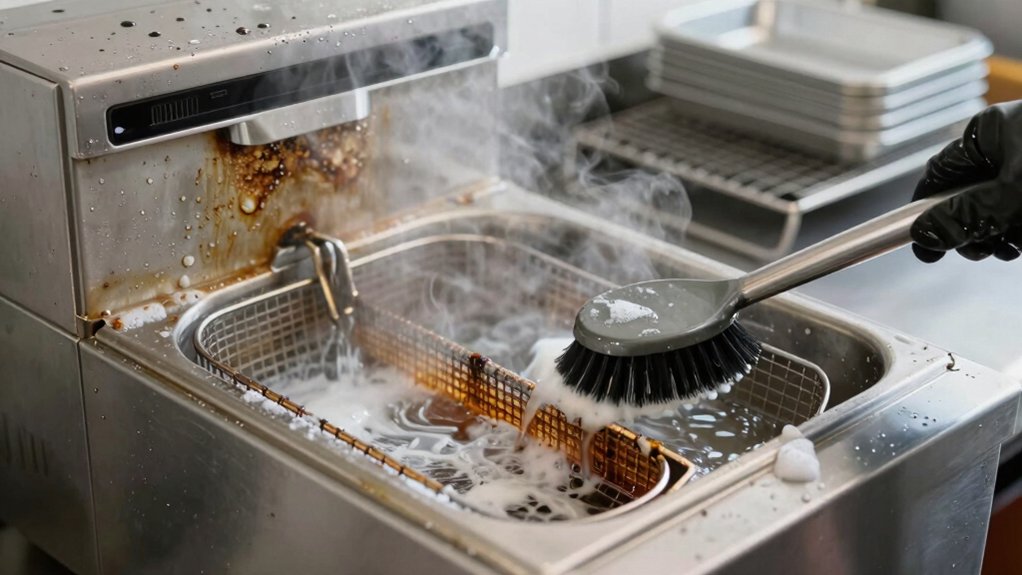
You’ll clean and degrease a deep fryer safely by cooling oil, isolating power with lockout/tagout, and draining or filtering used fat according to smoke-point and color. Inspect cords, GFCIs, and grounding before work.
Match mesh openings and wire diameter to particle size: use 20–60 mesh for routine filtering; 100–200 for polishing. Swap or backflush screens after boil-outs. Use stainless materials, document cadence and replacements, and dispose solids per regs.
Quick Overview
- Cool and power-isolate the fryer; follow lockout/tagout and wear PPE before any cleaning or maintenance.
- Filter or replace oil when dark, odorous, or after exceeding safe smoke-point exposures.
- Use proper mesh sizes: 20–60 mesh for routine filtering and 100–200 mesh for final polishing.
- Clean and inspect stainless screens and elements after each boil-out. Replace warped, corroded, or stretched meshes.
- Maintain auditable logs of oil checks, filter changes, and material specs to meet safety and disposal rules.
Oil-Breakdown Temperature Chart
Why does oil fail during frying? You’ll exceed oil smokepoints when temperature climbs past an oil’s stable range, causing smoke, off-flavors, and faster free fatty acid buildup. Monitor temps, keep oil within 350–375°F, and never let it spike above the listed smoke point.
| Oil | Smoke Point °F | Suitability |
|---|---|---|
| Refined Avocado | 520 | High |
| Canola (refined) | 400–446 | High |
| Coconut (unrefined) | 350 | Low |
Procedure: Check thermometer before each batch. Lower heat if you see smoke, and replace oil showing dark color or odd odor.
Prioritize deep fry safety: Cool oil before draining, follow disposal rules, and use appropriate PPE when handling hot fat.
Electrical Safety Checklist
After checking oil temperatures and handling hot fat safely, you’ll need to verify the fryer’s electrical integrity before any cleaning or maintenance. Confirm power is isolated, unplug cords or shut breakers, and post lockout tags.
Inspect cords, plugs, and control panels for damage, burns, or melting. Verify grounding protocols are intact and bonding connections are secure to reduce electrical fire safety risks. Test GFCI or RCD devices and confirm they trip properly; replace if faulty. Ensure heating elements are cool and dry before re-energizing.
- Isolate power and apply lockout/tagout.
- Visually inspect wiring, plugs, and panels for damage.
- Verify grounding protocols and continuity with a tester.
- Test protective devices (GFCI/RCD) and document results.
Filter Mesh Sizing Guide
Choose filter mesh based on the particle size you need to trap, matching mesh opening sizes and wire diameter to balance filtration with flow rate. Pick corrosion-resistant materials or coated meshes to withstand oil and cleaning chemicals. Follow a regular cleaning schedule to prevent clogging and maintain safe oil circulation.
Inspect mesh integrity after each boil-out. Replace any warped or thinning screens to avoid contamination or flow restriction.
Mesh Opening Sizes
How fine should your fryer filter mesh be to protect oil quality and prevent clogs? You’ll choose mesh openings that balance particle capture with flow rate: finer meshes trap crumbs and carbon, reducing oil breakdown and aiding degreasing techniques. However, they can slow filtration and clog faster.
For routine filtering, use 20–60 mesh (moderate fineness) to remove most solids without excessive resistance. For final polishing before storage, switch to 100–200 mesh to catch fine particulates that accelerate rancidity. Inspect and backflush or replace meshes regularly during maintenance cycles to avoid pressure buildup and heat-related hazards.
Always follow safety steps: power off, let oil cool, and dry components before removing or handling filter screens.
Wire Diameter Choices
Why does wire diameter matter when you’re selecting filter mesh? It controls strength, clogging risk, and particle retention. Choose thicker wire diameter for heavy-duty frying where debris is coarse; it resists bending during routine handling and hot liquid flow.
Use finer diameter meshes when you need to trap small particulates; however, expect faster fouling and more frequent cleaning. Check fryer screen tags for material grade and recommended mesh life; they’ll note stainless types and max temperature. Inspect tags after each boil-out and rinse cycle to confirm integrity.
Replace screens showing kinks, corrosion, or stretched wire. When you change mesh, follow safety protocols: power off, allow oil to cool, drain and dry components before reassembly.
Flow Rate Considerations
After you’ve checked mesh integrity and wire diameter, consider how filter mesh sizing affects flow rate through your fryer’s circulation and filtration system. Choose a mesh that balances particle capture with pump capacity. Too fine a mesh will reduce flow rate; this risks overheating and inefficient oil turnover.
Measure pump output and calculate expected restriction. Consult manufacturer specs to avoid overtaxing seals. During cleaning cadence, inspect for clogging after each use or at scheduled intervals: daily for high-volume operations and weekly for light use. Backflush or replace elements when you observe a measurable drop in flow or rising oil temperature.
Always power down and allow oil to cool before handling filters. Follow disposal rules for trapped solids.
Material And Coatings
Materials and coatings affect filter performance and longevity, so choose meshes that resist corrosion, abrasion, and oil chemistry common in your fryer. Pick stainless grades (304 or 316) for general oil safety and salt tolerance. Use coated meshes only after verifying coating compatibility with your oil type and cleaning chemicals.
Match mesh thickness and weave to appliance ratings for temperature and flow; undersized meshes clog, and oversized ones let debris pass. Follow lubrication guidelines for moving filter frames: use food-grade lubricants and avoid contaminating filter surfaces. Inspect coatings for flaking before reinstallation; replace any mesh showing pitting, delamination, or compromised welds.
Document material specs and replacement intervals to meet appliance ratings and safety audits. This practice reduces downtime and cross-contamination risks.
Cleaning And Maintenance
How should you size and maintain filter mesh to keep fryer oil clean and equipment safe? Choose mesh based on particle size: 20–40 mesh (coarse) for large crumbs, 60–120 mesh (fine) for small particulates and extended oil life.
Install a primary coarse screen and secondary fine mesh to protect pumps and valves. Inspect filters daily during peak service and follow a maintenance cadence: clean coarse screens each shift, backflush or ultrasonically clean fine mesh weekly, and replace damaged mesh immediately.
Always power off and wait for oil to cool to safe handling temperatures before servicing filters. Dispose of captured solids per local regulations. Document oil safety checks and filter actions in your maintenance log to ensure consistent, auditable care.
Frequently Asked Questions
How Should I Dispose of Large Volumes of Used Cooking Oil Locally?
You should contact local recycling centers or waste haulers offering disposal options for large volumes. They’ll advise on approved drop-off sites or scheduled pickup. Use sealed, labeled containers and cool oil completely for safe volume handling. Avoid drains.
Some municipalities or biodiesel firms accept bulk oil; get permits if required. Keep records, follow local regulations, and consider licensed professional services for large or frequent disposals to ensure environmental compliance and safety.
Can I Use Dish Soap Instead of Commercial Degreasers for Boil-Out?
You shouldn’t use dish soap as the primary boil-out; it’s a poor boil-out alternative for heavy grease. Instead, turn off power, cool oil, remove parts, scrape, and rinse first. For serious buildup, use a high-alkaline commercial degreaser at recommended dilution and simmer safely.
You can use dish soap for soaking removable parts or light routine cleaning. However, rely on proper commercial solutions and thorough neutralizing rinses to ensure safety and grease removal.
What Personal Protective Equipment Is Essential During Deep Cleaning?
You need appropriate PPE: choose chemical-resistant glove selection (nitrile or neoprene) rated for hot alkalis, long-sleeve aprons, and heat-resistant gloves for draining.
Wear splash goggles and a face shield. Use respiratory protection (P100 or N95 with organic vapor cartridge if fumes) when boiling or using strong degreasers.
Don’t skip non-slip footwear or hearing protection around noisy equipment. Ensure PPE fits, is inspected, and you follow donning/doffing and decontamination procedures.
How Long Should I Wait After Cleaning Before Refilling With Fresh Oil?
You should wait until the fryer is completely dry before refilling with fresh oil. This typically occurs after all drying and air-dry time, cooling wait is finished, and debris removal has been confirmed. That usually means several hours to overnight to ensure no moisture remains.
Follow oil reuse timing by only adding new oil after all buildup prevention steps, neutralization, and multiple rinses are complete. Additionally, removable parts must be fully reassembled and dry.
Is Vinegar Safe for All Fryer Interior Materials?
Yes, vinegar is generally safe for most fryer interior materials when used properly. However, you should check manufacturer guidance first. You will dilute or heat vinegar per protocol and apply it for the recommended time. Then, rinse thoroughly.
Avoid prolonged exposure on sensitive finishes or electronic components. Neutralize and perform multiple cold-water rinses. Dry completely and only refill with oil once every surface and removable part is bone-dry to prevent contamination or corrosion.
Conclusion
You’ve now got the essentials to keep your deep fryer safe, efficient, and long-lived. Follow the oil-breakdown temperatures, pick filter mesh and wire sizes that match your flow and debris, and choose durable materials or coatings.
Always run the electrical safety checklist before cleaning. Use the right flow procedures when degreasing. Clean, inspect, and replace parts on schedule. Don’t shortcut safety; proper maintenance prevents fires, equipment failure, and costly downtime.