Convection Toaster Oven Fan Settings Explained
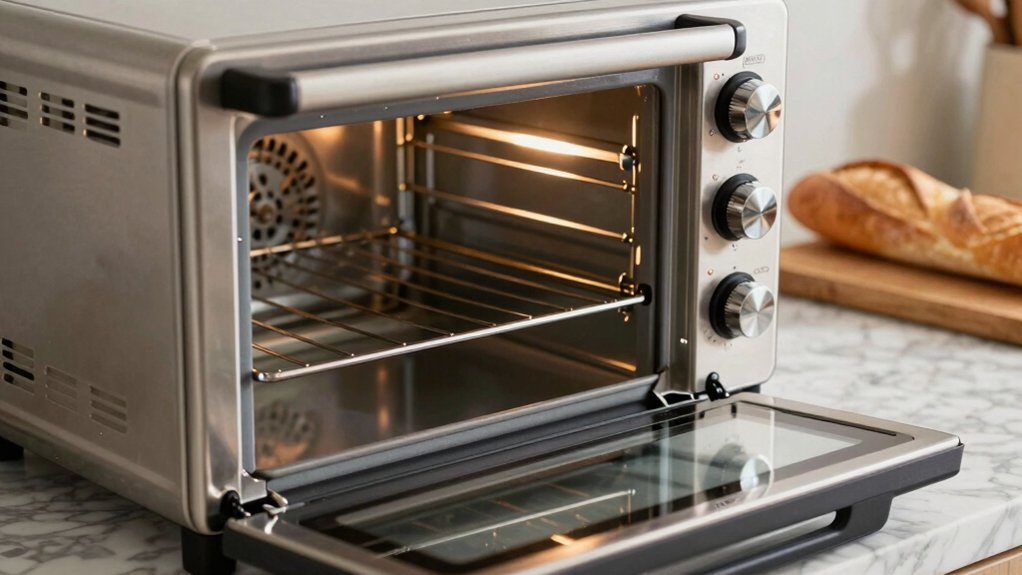
In a convection toaster oven, you control heat with the thermostat and distribute it with the fan. Match fan speed to the food: lower airflow for fragile, moist items to prevent drying; higher airflow for breads, fries, and fast browning.
Typical small ovens run 1500–3000 RPM. Pod or basket fryers spin faster. Inspect filters monthly, clean fans every 3–6 months, and follow bearing lubrication guidance. Keep going and you’ll get practical settings, maintenance tips, and troubleshooting.
Quick Overview
- The convection fan circulates hot air for faster, more even cooking than static heat.
- Use convection at lower temperatures or shorter times; typically, reduce 25°F (15°C) or shorten cook time 10–25%.
- High fan speeds brown and crisp surfaces quicker; however, they can dry delicate foods or blow around light items.
- For best results, place heating elements close to the fan and use probe thermometers to adjust for airflow effects.
- Clean and inspect the fan, filter, and bearings regularly (every 1–6 months) to maintain performance and prevent noise.
Fan Speed Comparison Chart
How fast should a convection toaster oven’s fan spin to deliver even, quick cooking? You should expect 1500–3000 RPM as the typical range; that gives consistent airflow for faster, more even results without tangential speculation or irrelevant discussion.
Use the table below to compare common fan contexts:
| Appliance | Typical RPM | Notes |
|---|---|---|
| Toaster oven convection | 1500–3000 | Standard range across models |
| Basket-style air fryer | 3000+ | Higher airflow per volume |
| Full-size convection oven | 1000–2500 | Larger chamber, different dynamics |
| Pod-style air fryer | 2500–3500 | Rapid preheat and high circulation |
Choose models with heating elements near the fan for efficient heat transfer. The motor power-to-volume ratio determines real-world airflow performance.
Temperature vs Airflow Specs
Why does balancing oven temperature and fan airflow matter for convection cooking? You need both temperature accuracy and airflow uniformity to get predictable results: the thermostat sets heat while the fan distributes it. If one outpaces the other, you’ll get uneven browning or undercooked centers.
- Picture a steady 350°F with gentle airflow wrapping pans in even heat, producing uniform rise and crust.
- Imagine high-velocity airflow with a thermostat lagging; surfaces brown fast while interiors lag, risking dryness.
- Visualize precise temperature control paired with consistent low-speed circulation for delicate bakes that need moisture retention.
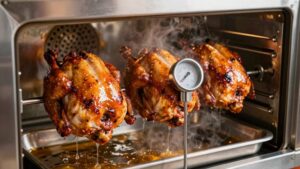
Measure with a probe thermometer and visual checks. Adjust settings based on observed temperature accuracy and airflow uniformity to match recipe goals.
Interior Fan Maintenance Schedule
You should follow a simple maintenance schedule to keep the interior fan reliable and efficient: clean accessible fan blades every 1–3 months. Inspect any filters or vents monthly, and perform a deep-clean plus bearing check every 6–12 months.
Lubricate bearings only if your manual specifies serviceable bearings; many modern units use sealed motors that don’t require oiling. Expect fan replacement after roughly 5–10 years of regular use or sooner if you detect persistent noise, wobble, or reduced airflow.
Cleaning Frequency Guide
Anyone using convection regularly should set a simple maintenance schedule for the interior fan: inspect for grease and debris every 1–2 months with typical home use. Clean the fan and surrounding chamber every 3–6 months or sooner if you notice smoke, odors, reduced airflow, or uneven cooking.
Check the fan blades and motor housing for sticky buildup that alters convection sound or creates vibration. Remove deposits with a degreasing wipe or mild solvent following manufacturer guidance. Verify baking rack stability and correct rack positioning after cleaning to prevent rattles and airflow disruption.
If you cook fatty foods often or run high-temperature broils, shorten intervals to monthly cleaning. Keep records of inspections and cleanings so you can correlate maintenance with performance and extend fan service life.
Filter Inspection Intervals
How often should you check the interior fan filter? Check it every 1–3 months under normal home use and monthly if you cook frequently or produce grease and crumbs. Evidence shows routine inspection prevents airflow restriction that degrades convection performance and temperature consistency.
Prioritize inspections after noticing reduced browning, longer cook times, or unusual fan noise. This feature prioritization ties inspection frequency to real-world signs rather than fixed calendars alone. When you inspect, look for residue, discoloration, and pinhole clogs.
Document condition and replace or clean per manufacturer guidance. Maintain subtopic relevancy by linking inspections to cleaning frequency and operational tests, not lubrication tasks. Record intervals and outcomes to refine your schedule based on actual oven use and environment.
Lubrication And Bearings
After inspecting filters for buildup and airflow issues, check the interior fan bearings and lubrication to prevent wear that degrades performance. You should follow manufacturer-recommended lubrication procedures: use the specified food-safe lubricant, apply sparingly to the bearing race, and avoid contaminating motor windings or heating elements.
Inspect bearings for noise, wobble, or increased current draw; these are measurable indicators of bearing wear that precede failure. Schedule visual and functional checks every 3–6 months under normal use. Increase frequency in heavy-duty or commercial settings. If you detect persistent noise or play after proper lubrication, replace the bearing assembly rather than repeatedly lubricating a worn part.
Record maintenance actions and measurements to track trends and justify replacements based on evidence.
Deep-Clean Procedures
When should you schedule a deep clean of the interior fan? You should plan a deep clean every 6–12 months; sooner if you use the oven daily or cook fatty foods often.
Inspect the fan quarterly for grease, food particles, or dust buildup. Evidence shows buildup reduces airflow and heating consistency. For a proper deep clean, disconnect power, remove accessible guards and fan blades per the manual, and use a degreasing solution and soft brush to avoid damaging bearings. Rinse components thoroughly, dry completely, and reassemble; checking for smooth rotation.
Document each fan maintenance session with date and findings. Regular records help identify accelerated wear and inform earlier intervention when performance drops.
Replacement Timeline Estimates
You’ve just completed regular inspections and deep cleans, so it’s time to consider how long the interior fan should last and when to plan replacement. Expect most convection toaster oven fans to perform reliably for 5 to 10 years under normal household use; heavy use or high-heat commercial-style baking can shorten life toward the lower end.
Build quality, operating temperature, and debris accumulation drive wear, so track hours of use if possible. Add fan checks to your maintenance schedule: visual inspection, noise screening, and airflow measurement every 6 to 12 months. If you detect persistent wobble, grinding, reduced airflow, or motor overheating, schedule replacement promptly.
A documented replacement timeline aligned with your maintenance schedule minimizes downtime and prevents heat-distribution failures.
Frequently Asked Questions
Can Convection Fan Damage Delicate Pastries Like Soufflés?
Yes, convection fans can harm delicate pastries like soufflés if you don’t adjust technique. You’ll need timing precision and reduced temperature to prevent over-browning and collapse.
Convection airflow can strip moisture; therefore, prioritize moisture retention by lowering heat about 25°F (or shortening time ~25%). Use protective covers or water baths and check early.
With care, you’ll keep soothing textures and rise without the fan ruining delicate pastries.
Can Fan Settings Affect Toaster Oven Noise Levels for Kitchens?
Yes, fan settings can change toaster oven noise levels in kitchens. Higher speeds boost airflow and audible whirr; lower speeds or turning convection off reduce noise, aiding noise reduction.
You’ll also need gentler fan use for delicate pastry handling to avoid drafts that can disturb soufflés or fragile pastries. Choose lower settings, shorter fan intervals, or conventional bake when quiet operation and careful pastry handling matter most.
Do Fan Speeds Change Energy Consumption Significantly?
Yes, higher fan speeds increase power draw modestly; however, they don’t change total cooking energy dramatically because heating elements use most energy. You’ll get high efficiency when the fan shortens cook time, especially if you lower temperature appropriately.
If you’re noise conscious, higher speeds are louder. Therefore, balance speed and run-time. Overall, expect small energy differences; optimizing temperature and time yields the biggest savings.
Can the Convection Fan Spread Odors Between Dishes?
Yes, the convection fan can spread odors between dishes, creating odor transfer concerns and potential cross dish contamination. You should avoid cooking strongly scented foods together. Lingering smoke or grease can circulate and settle on other items.
To minimize risk, cook pungent dishes separately; clean the oven and crumb tray frequently; use ventilation; and allow time for odors to dissipate before baking neutral-flavored foods.
Are Fan Settings Adjustable During Preheat Without Restarting?
Yes, you can usually adjust fan settings during preheat without restarting. Check your manual for preheat timing and specific fan control during preheat; some models auto-enable convection or lock controls.
If your oven allows manual toggling, change fan mode or turn it off mid-preheat, and the unit will continue warming using the new setting. Always monitor temperature displays and follow manufacturer guidance for safe, consistent results.
Conclusion
You’ve seen how fan speed, airflow and temperature interact to affect cooking performance and energy use. Follow the maintenance schedule: clean fans and filters, inspect bearings, and lubricate where recommended to preserve airflow and oven lifespan.
Deep-cleans and timely part replacement prevent efficiency loss and uneven heating. Stick to the suggested inspection intervals and replacement timelines, and you’ll keep your convection toaster oven safe, predictable and performing close to its original specifications.