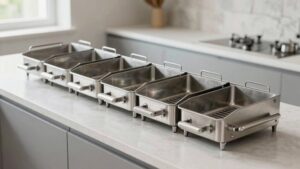
Contact Grill Vs Grill Pan Vs Griddle Differences
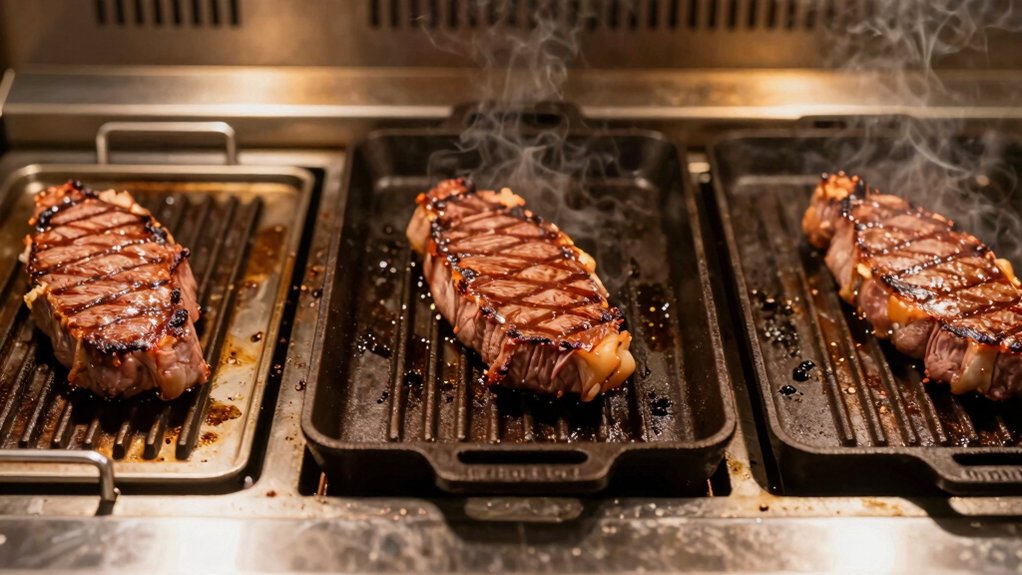
You’ll notice big performance differences: a contact grill presses and chars quickly for crisp sears and low capacity. A griddle gives you a broad, flat heat plane for even browning and batch cooking. A grill pan adds ridged marks and concentrated flavor but holds fewer pieces.
Use higher heat and quick presses on contact grills; keep griddles steady for uniform color; tilt grill pans to drain fat. Keep going to learn care, temp tricks, and seasoning.
Quick Overview
- Contact grills press food between hot plates for quick, marked sears, but they have low cooking capacity.
- Griddles provide a wide, flat heat plane for high-capacity cooking and even browning across many pieces.
- Grill pans sit between both: the ridged surface gives grill marks, but they are limited by pan size and medium capacity.
- Material matters: thick steel or cast iron griddles retain heat and resist warping better than thin nonstick contact plates.
- Technique differs: contact grills need rotation or pressing. Griddles rely on even contact and layout. Grill pans benefit from tilting to drain fat.
Cooking Surface Size Comparison
How much you can cook at once depends on the surface you pick: Contact grills squeeze two hot plates together for quick, pressed results, but they only handle a few items at a time. Griddles give you a broad, flat heat plane that sears and browns many pieces simultaneously. You’ll notice contact grills force rotation and individual attention; they’re perfect for paninis and single steaks.
Griddles let you lay out pancakes, eggs, and multiple proteins, giving even browning and predictable sear. Grill pans fit between—limited by pan size and ridges. Consider material durability and nonstick performance when choosing size: A wide steel griddle holds heat and resists warping. A coated contact grill gives easy release but has a lower lifespan.
| Surface | Capacity |
|---|---|
| Contact Grill | Low |
| Griddle | High |
| Grill Pan | Medium |
Temperature Settings Cheat-sheet
You’ve picked the right surface for the batch size; now match heat to the job. Feel the sizzle, watch color change, and use four heat settings as your map: low for gentle finishes, medium-low for eggs and delicate fish, medium-high for searing, and high for quick char. Adjust by sound and smoke; don’t rely on numbers alone. Preheat thoroughly so the surface responds predictably.
Rotate and press lightly on contact grills. Use the weight of the pan for even contact on griddles. Tilt grill pans to drain fat.
- Anticipation: low, slow browning, tender texture.
- Satisfaction: medium-low, gentle crust, soft interior.
- Excitement: medium-high, audible sear, caramelized edges.
- Thrill: high, instant char, bold flavor.
Keep maintenance tips in mind to preserve even heat.
Cleaning & Seasoning Tips
You’ll start by building a hard, glossy seasoning layer with oil and heat so food releases and flavor improves.
For daily care, wipe warm oil and crumbs with a soft brush or cloth. Use a gentle scraper or coarse salt and a towel for stubborn residue. Keep pans dry; oil lightly after cleaning. Stick to non-abrasive tools to prevent rust and preserve the surface.
Seasoning Basics Explained
A few straightforward steps will keep your grill pan, griddle, or contact grill performing and tasting great: clean while it’s warm but not hot. Scrub away stuck bits with a stiff brush or chainmail scrubber for cast iron; then dry completely and apply a thin layer of high-smoke-point oil to seal the surface. You’ll feel the metal smooth and smell the faint nutty oil as it polymerizes.
Ignore common seasoning myths that say you must bake layers until you’ve built a black mirror. Practical seasoning focuses on even, thin coatings and heat to bond oil. Adjust seasoning frequency by use: heavy frying needs more often, light use less. After each cook, reapply a whisper of oil while the surface is warm to maintain nonstick and flavor.
Removing Stubborn Residue
When food carbonizes and won’t budge, let the surface cool slightly. Then use hot water, a stiff brush or chainmail scrubber, and firm pressure to loosen residue while you can still feel residual heat. For cast iron, avoid soap and immediately dry and oil to prevent rust.
Work in short bursts: pour steaming water, scrub across ridges or flat planes, and lift flakes with a spatula’s edge. You’ll smell caramelized sugars and see dark fragments dislodge. For stubborn spots, simmer water on the griddle or heat the contact grill briefly to loosen carbon, then scrub.
Don’t wander into unrelated topics like appliance repair; focus on tactile technique and timing. This subtopic relevance keeps your tools effective and seasoning intact.
Daily Cleaning Routine
How often should you wipe down your grill surface? You should include quick wipes in your daily routine: immediately after the unit cools but is still warm, scrape loose crumbs with a spatula. Then wipe with a damp microfiber cloth to lift oils and smoky residue.
For contact grills, open the plates and run a soft brush along grooves. For grill pans, tilt to drain and catch fat, then wipe. For griddles, push scraps to the grease channel and mop up.
Follow a simple maintenance schedule: brief wipe after each use, deeper scrub every few uses, and a light oiling of seasoned surfaces weekly. Use tactile checks—smooth, slightly oiled, no sticky spots—before storing.
Preventing Rust Spots
Looking to keep rust off your grill surface? You’ll feel the grit lift as you follow simple rust prevention techniques: Wipe after each cook while the metal’s warm, dry thoroughly with a towel, and coat lightly with neutral oil to block moisture. Store in a dry spot or under a breathable cover; humidity is the enemy.
If small spots appear, act fast with targeted rust removal steps. Scrub gently with a coarse pad or steel wool, rinse, dry, then re-season immediately by heating and rubbing oil into the metal until it smokes faintly. For cast-iron griddles or grooved pans, work oil into grooves with a paper towel.
Repeat prevention often; your touch and routine keep surfaces smooth, aromatic, and rust-free.
Safe Cleaning Tools
Which tools should you trust to clean and season your grill or griddle without harming the surface? Use a stiff nylon brush on nonstick or enameled surfaces and a brass-bristled brush for cast iron or steel; avoid steel wool on coated pans. A plastic scraper lifts stuck bits from a warm flat griddle. A wooden spatula works for gentle scraping on a contact grill.
For seasoning, have a lint-free cloth or paper towel and a high-smoke-point oil. Incorporate these safe cleaning tools into your daily cleaning routine: scrape, brush, wipe, oil. You’ll feel the surface smooth and smell the oil as it bonds. Rinse minimally, dry thoroughly, then heat briefly to set the seasoning and prevent rust.
Frequently Asked Questions
Can I Use Cast Iron Contact Grills Safely on Induction Stovetops?
Yes, you can use cast iron contact grills safely on induction stovetops if the grill has full flat contact and is induction compatible. You’ll feel solid weight and hear steady sizzle. Preheat gently to avoid thermal shock and warp.
Use medium heat; flip or press carefully. Protect the cooktop from scratches with a cloth or silicone pad when moving. Clean and dry thoroughly to prevent rust.
Do Grill Pans Produce Smoke Comparable to Outdoor Grills?
No, grill pans can produce noticeable grill smoke, but not quite like outdoor grills. You’ll smell intense sear aromas and fat-burning smoke when sugars and juices hit hot ridges. Use high heat for char; however, you’ll need strong indoor ventilation to avoid lingering haze and alarms.
Tip: Pat meats dry, trim excess fat, and preheat the pan to minimize smoking while maximizing those savory Maillard flavors.
Which Option Is Best for Making Smash Burgers Consistently?
Use a griddle for consistent smash burgers: You’ll press burgers flat, hear that immediate sizzle, and get even browning across the whole patty. The smash burger technique thrives on full-contact griddling.
Pan searing vs griddling favors the latter for uniform crust, faster moisture loss, and room to smash multiple patties. You’ll flip once, finish with cheese, and enjoy a thin, crispy edge and juicy center every time.
Can I Bake With a Griddle or Contact Grill in an Oven?
Yes, you can do baking in the oven with many griddles and some contact grills. You’ll feel the metal warm evenly. A cast-iron or oven-safe steel griddle in the oven holds steady heat for crusty breads or roasted veggies.
Don’t put electric-contact grill units in the oven unless the manufacturer approves. Preheat the griddle in the oven for consistent browning. Use mitts for hot handles, and monitor time to avoid overbrowning or warping.
Are There Battery-Powered Portable Contact Grills Available?
Yes, you can get battery powered portable contact grills. You’ll feel the hiss as they press and sear. However, battery models usually deliver lower sustained heat than mains units.
Choose ones with induction safe cast iron plates or detachable cast iron on induction options if you plan indoor stovetop integration. Use firm pressure, preheat fully, and flip quickly to maximize Maillard color while conserving battery life for even, tasty results.
Conclusion
You’ll pick the right tool by sensing how you want food to cook: the contact grill presses and sears both sides fast. The grill pan gives those charred ridges and smoky aroma on a stovetop. The griddle delivers even browning and crisp edges across a wide surface.
Match temperature control to thickness; season and clean promptly with gentle abrasives and oil. Keep metal dry — you’ll get reliable sear, smoke, and texture every time.