Cleaning Tools Safe for Nonstick Cookware
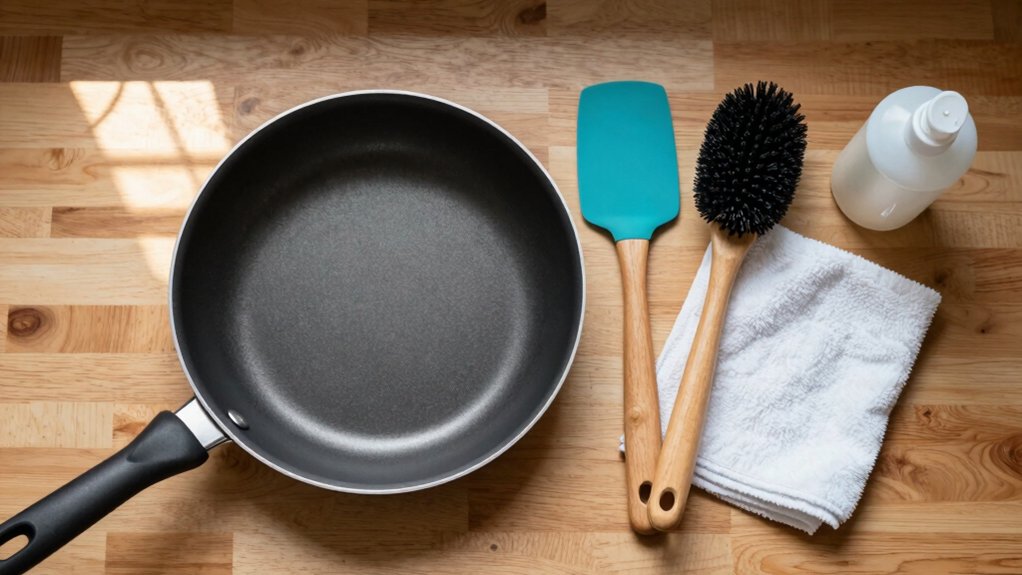
You should only use soft, nonabrasive scrubbers and cleaners rated for nonstick coatings to avoid irreversible damage. Use soft sponges, nylon brushes, or mild abrasive pastes for stuck food; avoid steel wool, coarse pads, and harsh powders unless a manufacturer specifically allows them.
Follow the cookware’s temperature and oven limits. Don’t preheat empty pans, and remove noncompatible lids or handles for high heat. Continue for specific scraper, brush, and temperature guidance to protect your cookware and warranty.
Quick Overview
- Use non-scratch sponges or soft microfiber cloths for routine cleaning to protect standard PTFE coatings.
- For stuck-on food, use a nylon brush or mild abrasive paste; avoid metal bristles and harsh powders.
- Never use steel wool or coarse abrasives unless the pan is explicitly rated for reinforced carbon and coarse scrubbing.
- Let pans cool, then wash with warm soapy water. Avoid high-temperature scrape or scouring immediately after cooking.
- Follow the manufacturer’s scrubber rating and update cleaning procedures if you observe coating wear or damage.
Nonstick Scrubber Compatibility Chart
Wondering which scrubbers you can safely use on your nonstick pans? You need a clear compatibility chart to guide nonstick safety decisions. Match scrubber types to coating: gentle nylon sponges, delicate-care pads, and nylon brushes are approved for standard PTFE coatings. Coarse salt or mild abrasive pastes suit reinforced carbon or textured commercial finishes.
Avoid steel wool and aggressive scouring pads on standard nonstick. Always verify manufacturer metal-utensil or abrasive tolerances before proceeding.
| Scrubber Type | Recommended Use |
|---|---|
| Non-scratch sponges / Delicate care | Standard PTFE, routine washing |
| Nylon brush / Mild abrasive paste | Stubborn residue, reinforced coatings |
| Steel wool / Coarse abrasives | Only for specified reinforced carbon pans |
Top-safe Scrubber Ratings
The compatibility chart gives a quick overview, but when you choose a scrubber, you need a concise rating system that matches scrubber aggressiveness to specific nonstick finishes. You’ll use ratings to protect nonstick quality and standardize your cleaning routine: Gentle (safe for all coatings), Moderate (for durable ceramic or reinforced layers), and Avoid (abrasive tools that risk permanent damage).
Apply ratings based on material, fiber stiffness, and real-world testing under typical household conditions. Record outcomes and update ratings if a finish shows wear. For consistent maintenance, train anyone who cleans your cookware to follow the ratings and the routine steps for cool pans and mild soap. Use ratings to reduce subjective choices and extend coating life.
- Gentle: nylon, soft sponge
- Moderate: soft-bristled scrub
- Avoid: steel wool, scouring pads
Manufacturer Temperature Limits
Check each manufacturer’s stated maximum safe temperatures before using or cleaning nonstick cookware. This ensures you don’t exceed oven or stovetop limits. Pay attention to separate ratings for handles, lids, and the nonstick coating itself. Confirm compatibility with your heat source (gas, electric, induction).
When in doubt, follow the lowest listed temperature to protect the coating and prevent tool or handle damage.
Maximum Safe Temperatures
How hot can you safely use nonstick cookware before the coating degrades? You should follow manufacturer max temp limits printed in manuals or on cookware bases; they define safe operating ranges and heat source compatibility (gas, electric, induction). Typically, manufacturers set a ceiling; often 400–500°F (204–260°C) is the range above which coatings can break down, release fumes, or delaminate.
You’ll use low-to-medium heat for most tasks and avoid dry heating empty pans at high settings. If you need searing temperatures above specified limits, choose stainless steel or cast iron instead. Always verify the specific model’s limit; never exceed it, and allow pans to cool before cleaning to prevent thermal shock that can compromise the nonstick surface.
Oven Use Limits
Wondering how hot you can safely place nonstick cookware in the oven? Check the manufacturer’s temperature limit stamped on the pan or in its documentation before any oven use. You should follow that maximum precisely: many nonstick coatings tolerate 350–500°F, but specific limits vary.
Exceeding the rated temperature risks coating breakdown, toxic fumes, and voided warranties. Also, confirm heat source compatibility; some coatings and handles aren’t rated for broilers or direct flame. If you need higher heat, use oven-safe alternatives specified by the maker.
When in doubt, lower the oven setting, monitor cooking closely, and avoid preheating an empty nonstick pan. Always prioritize the manufacturer’s oven use guidance over general advice.
Handle And Lid Ratings
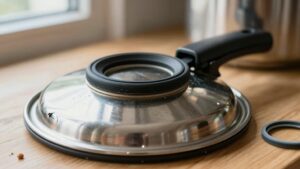
Why does the handle or lid rating matter for safe oven use? You must check manufacturer temperature limits before using nonstick cookware in the oven. Handles and lids often have lower heat tolerances than the pan body; ignoring handle compatibility can melt, warp, or release harmful fumes.
Verify lid compatibility too: glass lids may tolerate lower temperatures than metal, and seals or knobs can be the weak link. Follow stated maximum temperatures. If limits aren’t printed, consult the manual or maker’s website. When you need oven use beyond rated temps, swap to oven-safe replacements or remove non-compatible lids and handles.
Prioritize ventilation and allow components to cool fully before cleaning to preserve ratings and coating integrity.
Nonstick Coating Specs
When should you check a nonstick coating’s temperature limits? You check them before first use and whenever you change cookware, heat source, or cooking method. Manufacturers publish maximum safe temperatures to prevent coating breakdown; you must follow those limits precisely. Verify compatibility standards printed in manuals or on labels, and document any deviations for warranty purposes.
Use low-to-medium heat when instructions recommend it, and avoid prolonged empty-pan heating. If markings conflict between pan and stove, defer to the pan’s nonstick coating specifications. Train anyone who uses your cookware to respect temperature caps and to cool pans before cleaning. Regularly inspect surfaces for discoloration or flaking; those signs indicate exceeded limits and potential safety or performance loss.
Heat Source Compatibility
How should you match your nonstick cookware to different heat sources? You should check manufacturer temperature limits before use; exceeding them degrades coatings and voids warranties. On electric, ceramic, and gas ranges, operate at low-to-medium settings unless the maker specifies higher safe temperatures.
For induction, confirm the pan’s magnetic base and stated heat tolerance to ensure cookware compatibility. Avoid broiling or open flame unless the label permits it. When using ovens, follow the maximum oven-safe temperature precisely and never preheat empty nonstick pans.
If labels are missing, assume conservative limits (around 260–280°C/500–536°F is unsafe) and keep heat moderate. Regularly document your cookware’s stated limits to maintain safety and coating longevity.
Frequently Asked Questions
Can I Use Metal Utensils Briefly on Nonstick Pans?
You shouldn’t. Using metal utensils risks scratching and permanently damaging the nonstick coating, even if only briefly. You should rely on nylon, wooden, or silicone tools designed with appropriate heat resistance to tolerate cooking temperatures safely.
If you absolutely must use metal once, keep contact minimal and test the pan afterward. Otherwise, avoid metal entirely to preserve performance. Follow low-to-medium heat and hand-wash gently to extend coating life.
Are Ceramic Scrubbing Pads Safe for Coatings?
You shouldn’t rely on ceramic pads for coating safety; they can be too abrasive for many nonstick finishes. You’ll want to choose non-abrasive sponges or nylon/silicone tools instead.
If you test a ceramic pad, try it on an inconspicuous spot with gentle pressure first. Stop if you see dulling or scratches. Follow manufacturer guidelines and stick to mild soap, low heat, and hand washing to preserve the coating longer.
How Often Should I Replace Nylon Utensils?
You should replace nylon utensils every 6–12 months depending on use and visible wear. Inspect regularly for melting, deep scratches, discoloration, or warping. Those signs mean immediate replacement.
Follow manufacturer guidelines for replacement frequency and consider nylon durability: high-heat or heavy use shortens lifespan. If you see damage that could compromise nonstick coatings, swap them out sooner to meet safety and performance standards and avoid causing scratches.
Can I Season Nonstick Cookware Like Cast Iron?
You generally shouldn’t season nonstick cookware like cast iron. Seasoning nonstick coatings can break down or create uneven surfaces. You can do a light oil rub occasionally; however, avoid high-heat baking meant for cast iron.
Don’t assume seasoning prevents damage from metal utensil use. Avoid metal altogether to protect the coating. Follow manufacturer instructions, use low-to-medium heat, and prefer nylon, silicone, or wooden tools to preserve nonstick performance.
Are Silicone Handles Dishwasher-Safe Over Time?
Yes, most silicone handles are dishwasher-safe, but silicone longevity can be affected by repeated dishwasher impact. You should use low-heat cycles and gentler detergents to reduce gradual wear. Additionally, avoid high-temperature drying.
Inspect handles periodically for cracks, hardening, or discoloration; replace them if they show deterioration. For maximum lifespan, hand-wash with mild soap and warm water, which minimizes chemical and heat exposure that accelerates aging.
Conclusion
You’ve seen which scrubbers, handles, lids, and coatings meet safety standards and which don’t. Now follow the specs. Always match scrubber abrasiveness to the coating rating; stay under the manufacturer’s maximum and oven limits; and verify heat-source compatibility before use.
When in doubt, choose silicone or nylon tools and keep temps conservative. Doing so will minimize wear, prevent coating breakdown, and keep your nonstick cookware performing safely and predictably.