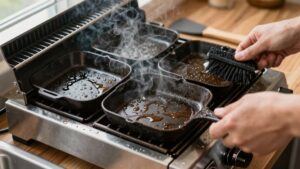
Air Fryer Stainless Steel Basket Care
You’ll keep your air fryer’s stainless-steel basket crisp and long-lasting by cleaning promptly, matching tools to the finish, and avoiding heavy abrasives. Use soft sponges, nylon brushes, and mild detergent for bare stainless; be gentler with PTFE or ceramic coatings and avoid scouring pads.
Soak stubborn grease and use baking-soda paste if needed. Rinse and dry thoroughly, and inspect welds and coatings before high-heat use. Continue below to get specific tips on temps, coatings, and safe cleaners.
Quick Overview
- Confirm the basket’s material and maximum temperature from the manual before high-heat use or cleaning.
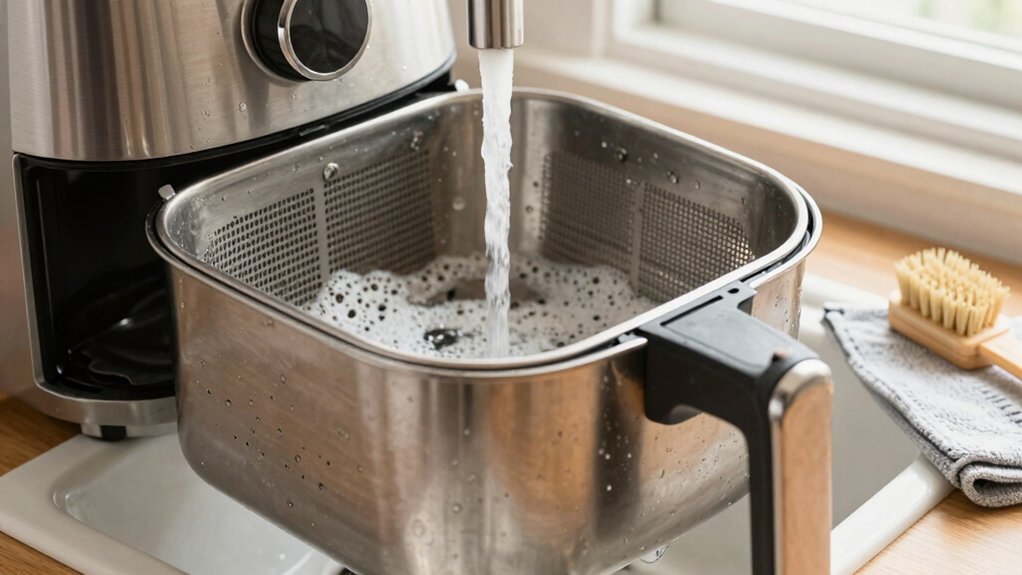
- Clean stainless baskets with mild dish soap, soft sponges, and warm water; avoid abrasive pads.
For stuck-on grease, soak in hot soapy water or use a baking soda paste before gentle scrubbing.
Inspect welds, rivets, and handles regularly for damage that reduces high-heat safety.
Dry thoroughly after washing and store dry to prevent corrosion and prolong finish life.
Mesh vs Solid Comparison
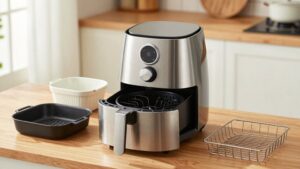
Wondering which basket fits your cooking style? You’ll pick mesh for crisping and small items, or solid for sturdy, juicy foods. Mesh gives superior airflow and even browning; however, it needs more mesh cleaning to remove trapped grease. Solid or perforated bases offer solid support for pizza, brie bites, and roasts. Though airflow drops, crumbs can accumulate.
| Type | Strength | Cleaning note |
|---|---|---|
| Mesh | Maximum airflow, crisping | Scrub fine mesh; dishwasher-safe |
| Solid/Perforated | Solid support, drip control | Trap grease; deeper cleaning needed |
| Hybrid | Balance of both | Mesh + tray aids drip management |
Measure fit, note material (stainless steel), and choose by food type and cleaning willingness.
Max Temp Limits Checklist
How hot can you safely run your stainless steel air fryer basket? You should know the basket tolerates high heat; however, you’ll check limits by manufacturer specs, component seams, and any handled coatings. Do not confuse this with an irrelevant topic or start an unrelated discussion about oven racks. Focus on the basket itself.
Verify the maximum declared temperature in your manual and avoid sustained operation above that number. Inspect welds, rivets, and handles before high-heat cycles; degraded joints lower safe temperatures.
When testing higher temps, run short intervals and monitor for discoloration, smoke, or warping. Stop immediately if observed.
Follow this checklist to prevent damage and keep performance predictable.
Coating Compatibility and Abrasives
Check the basket’s coating type: bare stainless, ceramic, or nonstick. Before choosing cleaners or tools, avoid abrasive pads and harsh chemicals that can scratch or strip coatings. Instead, use soft sponges, nylon brushes, or baking soda paste for tough spots.
For long-term care, rinse thoroughly after any cleaner and dry completely. Occasionally rub a thin layer of cooking oil to preserve protective finishes.
Coating Types Overview
What coating does your air fryer basket have, and how will that change the cleaners and tools you use? Identify common coating types: bare stainless, nonstick PTFE, ceramic, and enamel. For bare stainless, use mild dish soap, soft sponges, and stainless cleaners; avoid chemical strippers.
For PTFE nonstick, choose gentle detergents, soft cloths, and avoid high-alkaline products that degrade the layer. Ceramic coatings tolerate slightly stronger cleaners but still need non-abrasive tools to preserve texture. Enamel surfaces benefit from pH-neutral cleaners and soft brushes to prevent chipping.
Keep a two-word discussion ideas list—compatibility chart—near your cleaning station so you match cleaner to coating quickly. Regularly inspect coatings and switch to milder methods as wear appears.
Abrasive Cleaning Risks
Why would you risk ruining the finish by reaching for heavy abrasives? You’ll strip coatings, expose bare metal, and shorten the basket’s life. Understand abrasive risks: gritty cleaners and metal pads create micro-scratches that trap grease, foster corrosion, and make future cleaning harder.
Match your cleaning method to the coating. Coated interiors resist mild scrubbing; stainless finishes tolerate gentle cleaners. Prioritize scratch prevention by using nonabrasive agents and controlled pressure. Avoid anything labeled “scouring” or metal. If stubborn residue remains, soak longer or use baking soda paste to lift debris without aggressive rubbing.
Inspect the surface after cleaning. Dull spots or lines signal damage and need for gentler care. Preventative care beats repair: protect finishes, reduce replacements, and maintain safe cooking surfaces.
Safe Scrubbing Tools
When choosing scrubbing tools, think about the basket’s coating and match your tool to the finish so you won’t create scratches or remove protective layers. You’ll balance material compatibility versus cleaning power: soft sponges, microfiber cloths, and nylon brushes work on most stainless finishes without abrasion.
For textured or baked-on grime, use a soft-bristled brush or a toothbrush to reach crevices while avoiding metal scouring pads. Avoid steel wool and metal brushes that will score the surface and shorten basket life.
When you select tools, weigh safety considerations and material compatibility together. Choose nonmetallic, nonabrasive options for coated baskets and reserve firmer tools only for uncoated stainless. Test an inconspicuous area first.
Chemical Compatibility Tips
You’ve picked tools that won’t scratch the finish; now pay similar attention to cleaners and abrasives so you don’t damage coatings or bare stainless. Use mild dish soap or stainless-steel-specific cleaners; they remove grease without stripping protective coatings.
Avoid bleach, oven cleaners, or acidic concentrates that can pit stainless or lift nonstick layers. Skip abrasive powders and metal scouring pads; those aren’t just harsh, they’ll abrade finishes and expose raw metal. Test any new product on a hidden spot first and rinse thoroughly to prevent residue affecting taste.
If someone suggests extreme chemicals, treat it as an irrelevant topic or unrelated discussion and decline. When in doubt, choose gentle, nonabrasive agents and soft cloths to preserve appearance and safety.
Long-Term Coating Care
Start by matching cleaners and tools to your basket’s coating so you don’t inadvertently wear it away. Identify whether your basket has bare stainless, a nonstick layer, or a specialty finish, and choose mild dish soap or stainless-steel-specific products accordingly. Avoid abrasive powders, metal scouring pads, and wire brushes that abrade coatings and shorten care longevity.
Use soft sponges, nylon brushes, or microfiber cloths for regular cleaning and a baking soda paste for stuck-on residue; rinse thoroughly afterward. Periodically inspect the coating for thinning, scratches, or flaking. Once compromised, stop using harsh cleaners and consider manufacturer-recommended repair or replacement.
Consistent, appropriate cleaning and gentle tools will preserve the long-term coating and maximize your basket’s performance.
Frequently Asked Questions
Can I Use My Stainless Basket in the Oven or Toaster Oven?
Yes, you can use your stainless basket in an oven or toaster oven if it’s rated oven-safe by the manufacturer and has no plastic parts. Check the manual, temperature limits, and handle materials first.
Avoid dishwasher detergents that wear beforehand; hand-wash with mild soap to preserve finish. Place the basket on a stable rack, avoid direct flame, and monitor food closely.
Let it cool before cleaning and store dry to prevent rust.
Will Dishwasher Detergents Damage the Finish Over Time?
Yes, dishwasher detergents can harm finish durability over time. With dishwasher safe concerns, repeated exposure to harsh detergents, high heat, and abrasive cycles can dull or pit stainless steel and strip protective oils.
You should hand-wash with mild soap, a soft sponge, and rinse promptly to preserve the finish. If you must use a dishwasher occasionally, choose a gentle cycle and mild detergent; remove items promptly to minimize long-term wear.
How Do I Restore Shine on a Heavily Stained Basket?
You can restore shine by soaking the basket in hot, soapy water for 30–60 minutes. Scrub gently with a soft sponge; then apply a baking soda paste to stubborn stains. Rinse thoroughly, dry, and then buff with a stainless steel cleaner or a thin layer of cooking oil.
Two word discussion ideas: “surface polishing” and “stain removal.” These restoration techniques are methodical, practical, and prevent further damage when done regularly.
Can I Use Lemon Juice to Remove Discoloration and Odors?
Yes, you can use lemon juice for discoloration and odor removal. Mix equal parts lemon juice and warm water. Soak the basket for 15–30 minutes, then scrub gently with a soft sponge or toothbrush.
Rinse thoroughly with hot water and dry completely to prevent rust. For persistent stains, sprinkle baking soda before scrubbing. Do not use acidic soaks excessively; repeat monthly only as needed to protect the stainless steel finish.
Is It Safe to Cut Food Directly in the Air Fryer Basket?
You shouldn’t cut food directly in the basket. Direct heat safety and food contact hygiene matter: cutting in the basket risks scratching the stainless steel, trapping juices, and contaminating future meals.
Use a cutting board to avoid damaging the finish and to control cross-contamination. If you must trim small items in the basket, dry and sanitize it afterward. Inspect for scratches and reapply a thin oil layer to maintain non-stick performance and prevent rust.
Conclusion
You’ve learned how mesh and solid stainless baskets differ, what max temperatures they handle, and which coatings and cleaners to avoid. Stick to nonabrasive pads, mild detergents, and manufacturer recommendations. Rinse and dry thoroughly. Avoid high-heat or harsh chemicals, and replace damaged coated baskets promptly.
Follow this routine consistently and you’ll keep performance; prevent flaking; and extend lifespan: simple, methodical care that protects both your basket and your food.