Air Fryer Preheating When and Why
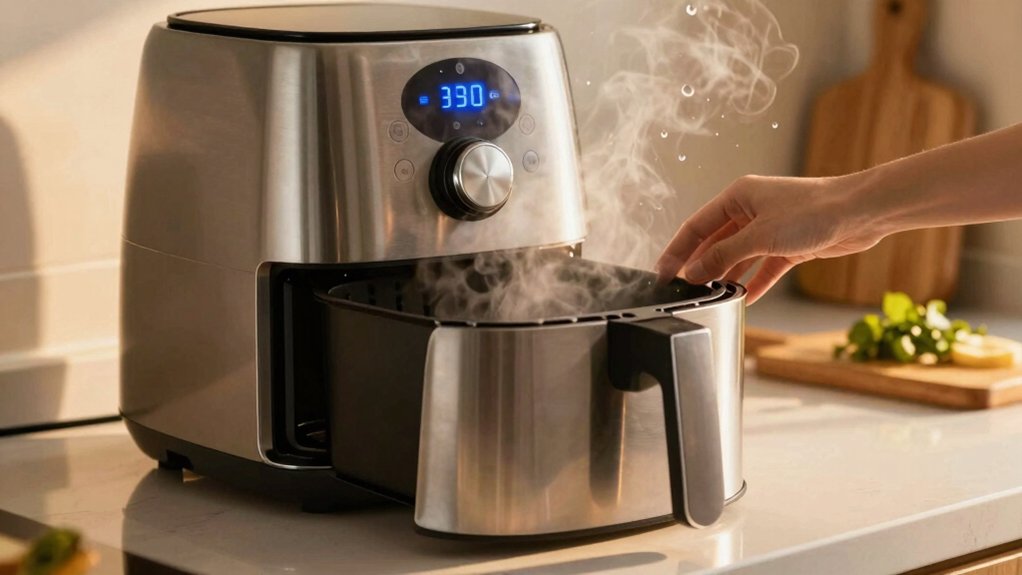
You should usually preheat your air fryer for 2–5 minutes so your food hits a hot surface, sizzles, and gets crisp edges instead of soggy ones. Use higher temps (375–400°F) for fries and proteins; slightly lower for veggies or baked goods.
For many quick-frozen items, you can skip preheat to save time. However, expect a softer crust and add a minute or two. Arrange items in a single layer and shake once for even browning. More tips follow.
Quick Overview
- Preheat when you want immediate high heat for a crisp, browned exterior on fries, wings, thin fish, and fried items.
- Skip preheat for many rapid-cook frozen foods to save 2–5 minutes; expect slightly softer exteriors.
- Preheat 2–5 minutes at recipe temps (e.g., 350–400°F) for vegetables, proteins, and baked goods to improve texture and color.
- For thick roasts or bone-in cuts, use little or no preheat to avoid over-crisping the outside before the center cooks.
- Always arrange a single layer with space between pieces and shake or flip halfway for even browning whether preheated or not.
Preheat Time by Food Type
Wondering how long to preheat for different foods? You’ll base times on size and texture to balance preheat efficiency and crisp tradeoffs. Use the quick table to scan common items.
| Food Type | Preheat? | Typical Time |
|---|---|---|
| Fried items | Yes | 2–5 min |
| Proteins (thin) | Yes | 3–5 min |
| Veg/Delicate | Sometimes | 2–3 min |
For fries, wings, and thin fish, you’ll get immediate sizzle and a crunchy crust. Pat dry, single layer, shake halfway. For thick roasts or bone-in cuts, you’ll skip or use short preheat to avoid over-crisping while retaining juiciness.
Frozen snacks benefit most from preheat; faster crisp, less oil. Watch your model: small baskets heat quicker; adjust a minute or two for optimal results.
Preheat Temp & Time Chart
How hot and how long should you preheat your air fryer for different foods? You’ll match preheat temperature and time selection to food size and texture so you get even heat and the right crisp. Feel the warmth; hear the fan. Short bursts suit small items; longer heat helps dense cuts.
- Vegetables: 350°F — 3 minutes for tender edges and caramelized surfaces.
- Frozen fries / nuggets: 400°F — 4–5 minutes to jump-start crisping.
- Chicken breasts / thicker proteins: 375–400°F — 5–7 minutes to seal juices and brown.
- Baked goods: 325–350°F — 3–5 minutes for steady rise and even crumb.
Use these as starting points and tweak for your model.
Rapid-Cook Frozen Foods Exception
If you’re cooking rapid-cook frozen foods, You can usually pop them in straight from the freezer without preheating for maximum convenience. Expect slightly softer interiors and a bit less blistered crisp than preheated runs. However, shorter cook times than fresh items will keep them hot and ready fast.
Arrange pieces in a single layer with space between for even airflow and the best surface crunch.
Frozen Foods Directly From Freezer
Ever grabbed a bag of frozen fries or nuggets and wondered whether you need to preheat the air fryer? For many rapid-cook frozen foods, you don’t. Manufacturers design them to crisp from freezer to basket. You’ll notice the frozen texture loosens as hot air hits ice crystals; that quick blast helps create a golden, crunchy exterior.
Shake the basket halfway so heat reaches all sides and avoid overcrowding for even color and crunch. Use minimal oil; a light spray improves browning and mouthfeel without sogginess because air fryers need less oil than deep frying. Still, check package instructions and your manual. Times assume either preheat or direct-from-freezer cooking, so adjust a minute or two for your model.
No Preheat For Convenience
Wondering whether you can skip preheating for convenience? You can often do so. For rapid-cook frozen snacks, such as fries, nuggets, and fish sticks, air fryers reach working heat quickly; thus, the preheat necessity drops.
You’ll save 2 to 5 minutes and get hot, crisp results by simply placing a single layer into the cold basket and adding a minute or two to the cook time. Be mindful of convenience tradeoffs: skipping preheat can slightly soften the initial exterior and lengthen cooking by a bit, but it rarely ruins small frozen items.
Use a light shake halfway to promote even color and check doneness sooner than the package suggests. For everyday grab-and-go meals, no-preheat is a practical, sensory-friendly shortcut.
Texture And Crisp Tradeoffs
How crispy do you want the outside to be? You’ll notice immediate texture tradeoffs when you preheat: a hot chamber seals surfaces faster, giving a snappy crust and pronounced crunch. If you skip preheat, items heat more slowly and can emerge limp. Crisp vs. soggy becomes a real choice.
For rapid-cook frozen foods, you can often skip preheat without losing much crispness because their coatings are engineered to blast-crisp at high heat. Still, a brief preheat intensifies browning and reduces chewiness. Use a single layer, shake mid-cycle, and monitor color and sound: a brittle snap and golden hue tell you it’s done.
Trust your senses to balance speed and texture every time.
Timing Shorter Than Fresh
Why will some frozen foods cook faster than their fresh counterparts? You’ll notice frozen fries, nuggets, or breaded fish often crisp up quicker because they’re par‑fried, dehydrated, and chilled: their exterior is primed to brown. That changes the preheating necessity. Many of these items do fine without a full preheat because they hit high surface temperature rapidly.
In practice, you’ll hear the sizzling sooner and see a crunchy edge while the interior finishes hot. That contributes to the temperature debate: do you drop heat a bit to avoid overbrowning or keep it high for speed? Start at the package temperature, watch and shake midway, and trust short cook times. Frozen rapid‑cook items are engineered to take less time than fresh.
Tray Arrangement Matters
Where should you place items on the air fryer tray to get the best results? You want a thoughtful tray arrangement so hot air hits every surface. Lay pieces in a single layer with a little space between them; crowded food steams instead of crisps.
For rapid-cook frozen foods you can be a bit more forgiving; small fries or nuggets tolerate slight overlap because they release moisture and cook quickly. However, still avoid dense stacks. Feel for even contact: the exterior should dry and brown, not stay soggy. If items vary in size, put larger pieces toward the basket edge where airflow is stronger and flip halfway.
Good tray arrangement means sharper texture, louder sizzle, and predictable timing every batch.
Frequently Asked Questions
Can I Preheat an Air Fryer With Parchment Paper Inside?
No, you shouldn’t preheat an air fryer with parchment paper inside. Preheat parchment can lift with airflow, touch the heating element, and create a fire hazard; so parchment safety matters.
You should heat the empty basket. Then add parchment and food once it’s hot. You’ll feel the fan hum and smell warm air; that’s when you’ll lower in your food, keeping edges weighed down so the paper won’t flutter.
Does Preheating Increase Energy Use Significantly?
No, preheating energy use is minimal; you won’t spike your bill. You’ll use a couple extra minutes of power to heat that small cavity, so preheating efficiency is high compared with ovens.
You’ll feel the warm, dry air ready to crisp food faster, which can save energy overall by shortening cook time. Use preheat selectively for big or crispy items to balance preheating energy and cooking efficiency.
Can I Preheat a Toaster Oven-Style Air Fryer the Same Way?
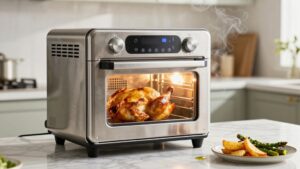
Yes, you can preheat a toaster oven–style air fryer the same way: set temperature, run 3–5 minutes, then add food.
Don’t fall for preheating myths that claim huge energy savings; the energy impact is small because these units heat fast. You’ll notice the air smelling warm and the basket crisp-ready.
Use manufacturer guidance; avoid parchment during preheat and arrange food in a single layer for best, evenly browned results.
Will Preheating Harm Non-Stick Coated Baskets?
No, preheating won’t usually harm non-stick coated baskets if you follow guidelines. You’ll protect non-stick durability by avoiding excessive temperatures and limiting preheating duration to the manufacturer’s recommendation: typically 2–5 minutes, up to 5–7 at 400°F.
You’ll also avoid metal utensils and abrasive scrubs. Let the basket cool before washing. Do that, and the coating will stay smooth, glossy, and responsive to touch and scent.
Should I Preheat When Using Oil Spritzes or Marinades?
Yes, you should usually preheat when using oil spritzes or marinades. The preheating effect gives an immediate sizzle, locking flavor and creating crisp, caramelized surfaces instead of soggy ones.
Lightly spritz or pat marinade off excess. Then add food to a hot basket so oil vapor sears quickly. You’ll notice better color, crunch and aroma. Skip preheat only for tiny fast snacks or delicate reheats.
Conclusion
You’ll usually preheat your air fryer for a few minutes depending on the food: shorter for delicate items; longer for thicker cuts. This way, you get that crisp exterior and hot, tender interior.
For many frozen convenience foods, you can skip preheat; however, raw or thicker pieces benefit from it. Arrange trays so air flows freely; crowding cuts crispness.
Trust shorter times than an oven and adjust by feel: sizzling, golden edges, and fragrant steam.