Air Fryer Cleaning Steps
Unplug your air fryer and let it cool.
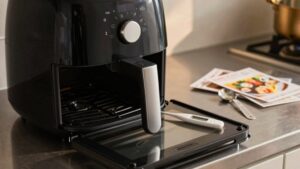
Then remove the basket and pan; avoid metal tools that can nick the nonstick coating.
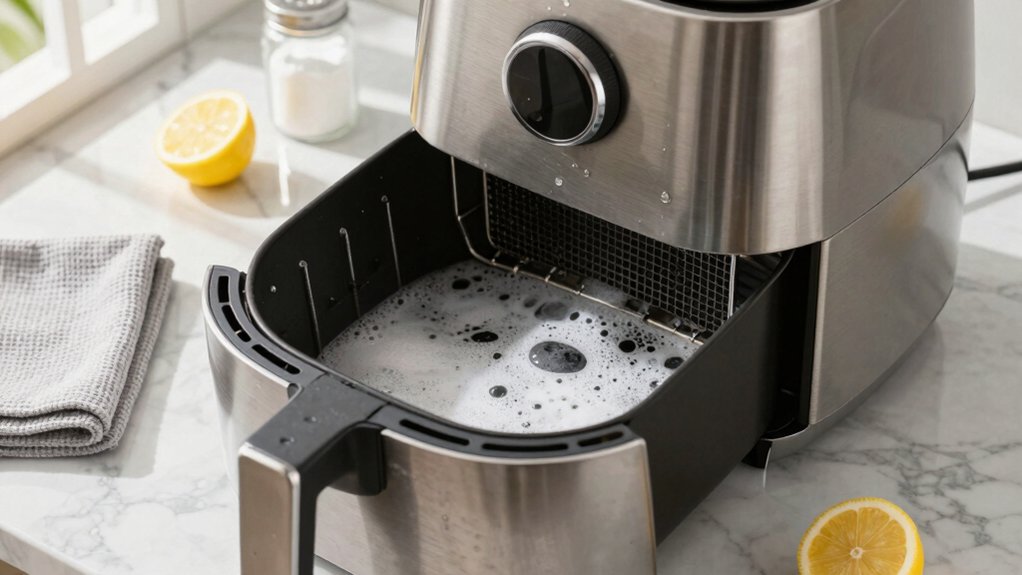
Wash the basket and pan with warm, soapy water and a soft sponge.
Soak to loosen stuck bits and use a nonabrasive scraper if needed.
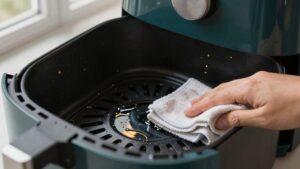
Wipe the interior and heating element gently, dry completely, and reassemble.
Check and replace filters on schedule or when airflow or odors drop.
Keep going to learn filter types, intervals, and disposal steps.
Quick Overview
- Unplug and cool the air fryer fully before cleaning to avoid burns and electrical hazards.
- Remove the basket and tray. Soak briefly in warm soapy water to loosen stuck-on food.
- Wash the nonstick basket and accessories with a soft sponge and mild detergent; avoid steel wool.
- Wipe the interior and heating element gently with a damp cloth. Dry completely before reassembly.
- Inspect and replace filters per schedule or when airflow, odors, or discoloration indicate clogging.
Basket Capacity & Temp Ranges
Want to know which air fryer size fits your kitchen and cooking needs? You’ll get a clear subtopic overview that ties capacity to safe operation and temperature performance benchmarks. Choose compact for 1–2 people, mid-size for families of 3–4, and large or dual-basket for bigger households or entertaining.
Match capacity to typical batch sizes to avoid overcrowding, which reduces crisping and raises cooking time. Observe temp ranges (80–200°C / 180–400°F). Never use excessive settings that stress components. Verify drying and seating after cleaning before powering on.
| Size | Who it’s for | Emotion |
|---|---|---|
| Compact | 1–2 people | Cozy confidence |
| Mid | 3–4 people | Practical relief |
| Dual/Large | 5+ people | Controlled readiness |
Nonstick Basket Care Tips
How should you treat a nonstick basket to keep its coating effective and safe? You’ll handle it gently, prioritizing the nonstick coating and coating durability. After each use, unplug and cool the fryer. Then remove the basket. Use a soft sponge with mild dish soap or a food-safe cleaner; avoid steel wool and abrasive pads that’ll scratch the surface and reduce coating durability. For stuck-on bits, soak in warm soapy water briefly. Then lift residue with a non-abrasive scraper. Dry thoroughly to prevent corrosion under the coating.
- Never use metal utensils that can nick the nonstick coating.
- Limit high-heat preheating that may degrade the coating.
- Store baskets separately to avoid scratches.
- Inspect regularly for peeling or flaking.
- Replace basket if coating is compromised.
Filter Replacement Schedule
You should replace the air fryer’s filter on the manufacturer-recommended schedule, typically every 6–12 months or sooner in high-use settings. Use only compatible replacement types. Watch for reduced airflow, persistent odors, visible clogging, or discoloration as signs it needs changing.
Follow a step-by-step replacement procedure that powers down the unit, removes the old filter, installs the new one securely, and tests airflow. Dispose of used filters per local regulations; some are recyclable or require waste-hazard handling. Wear gloves to avoid contact with trapped grease and contaminants.
Recommended Replacement Interval
When should you replace your air fryer’s filters to keep performance optimal and hazards minimal? Replace disposable or charcoal filters every 3–6 months with regular home use; replace them sooner if you cook greasy foods frequently. Permanent or washable filters should be inspected monthly. They should be replaced every 12–18 months or per manufacturer guidance.
Don’t treat filter replacement as an irrelevant topic or an unrelated aspect of maintenance. It directly affects airflow, odor control, and fire risk. Always power down and unplug before swapping filters. Wear gloves if filters are greasy, and follow the model-specific part number to ensure fit.
Keep replacement dates in your maintenance log. Use only manufacturer-approved or equivalent-grade filters to maintain safety, performance, and warranty compliance.
Signs Of Clogging
During routine checks, look for reduced airflow, persistent cooking odors, excessive smoke, or longer-than-normal cook times. These signs indicate your air fryer’s filter is clogged and needs attention. If you see any, power down and unplug before inspecting.
Remove the basket and filter area. Then visually check for grease seals, compacted crumbs, or dark residue that cause airflow restrictions. Don’t fall for clogging myths that say scent alone proves filter failure; verify physical blockage and fan performance. If cleaning the filter and surrounding ducts doesn’t restore normal airflow, schedule replacement per the recommended interval.
Always wear gloves, work in a ventilated space, and confirm the unit is dry before reassembly to prevent electrical hazards.
Compatible Filter Types
Which filter fits your air fryer depends on its model and intended use. You should check the manufacturer’s specs for HEPA-style, activated carbon, or simple mesh grease filters; each controls different particulates and odors.
Replace disposable activated carbon cartridges on the schedule in the manual to prevent odor retention and dust buildup that can impair airflow. Reusable mesh filters can be rinsed and inspected weekly during deep cleaning. Replace them if you see corrosion, tears, or persistent staining.
Note warranty terms: using non-approved filters or skipping replacements can void coverage. Keep a dated log of filter changes and inspections so you can prove maintenance if a warranty claim arises.
Prioritize safe handling: unplug before servicing filters.
Replacement Procedure Steps
After checking your air fryer’s filter type and service intervals, set a clear replacement schedule based on manufacturer guidance and usage intensity. Record dates, runtime hours, and visible wear to trigger replacement procedure actions.
Inspect filters monthly for buildup, damage, or odor; increase frequency in heavy-use kitchens. When replacement is due, power down and unplug the unit. Allow it to cool, and remove the filter per manual instructions.
Follow steps for how to fit the new filter: orient correctly, seat securely, and verify seals. Run a short test cycle to confirm airflow and no unusual noises. Dispose of the old filter following local regulations (see next section). Log the change and note the next scheduled replacement.
Proper Disposal Methods
When it’s time to replace filters, dispose of the old units in a way that protects staff, the environment, and local waste regulations. You should first bag used filters in heavy-duty, sealed plastic to contain grease and particulates. Label bags with date and filter type if required by your facility.
Follow local disposal methods: some jurisdictions treat grease-laden filters as non-hazardous solid waste; others require specialized recycling or hazardous-waste pickup. Coordinate with your waste management provider to confirm collection schedules and documentation.
Wear gloves and a mask during handling. Store sealed bags in a ventilated, designated area away from food prep. Keep replacement records and receipts to demonstrate compliance. Regular, documented disposal prevents contamination, regulatory fines, and safety incidents.
Frequently Asked Questions
Can I Put the Air Fryer in My Dishwasher?
You can often put removable baskets and trays in the dishwasher, but check your manual first for dishwasher safety and coating warnings. Non-removable parts and the main unit must never go in the dishwasher.
Use top-rack placement for coated parts to protect finishes, and choose a mild cycle to avoid damage. Dishwasher cleaning doesn’t guarantee removal of baked-on grease; therefore, follow occasional manual deep-clean steps to maintain safety and performance.
How Do I Remove Burnt-On Grease From Heating Element?
You’ll power down and unplug the unit. Let it cool, then gently remove loose debris from the burnt-on heating element using a soft brush or non-abrasive scraper.
Dampen a cloth with food-safe cleaner or diluted baking soda paste and wipe the element carefully, avoiding excess moisture. Rinse the cloth and repeat until clean. Then dry thoroughly and inspect.
Don’t use steel wool or harsh chemicals that could damage the heating element.
Are Replacement Baskets Available for Discontinued Models?
Yes, you can often find replacement baskets for discontinued models. Check manufacturer websites, authorized parts dealers, and reputable third-party suppliers for replacement parts that match model numbers.
Inspect dimensions and attachment points before buying to ensure safe fit; incompatible parts can create hazards. Keep receipts and verify return policies. If unsure, contact customer support with your serial/model info so they can confirm compatibility and recommend safe alternatives.
Can I Use Aluminum Foil or Parchment Paper Inside?
Yes, you can use aluminum foil or parchment paper, but follow foil safety and parchment options carefully. You’ll want to place foil only on the basket bottom, not blocking airflow, and secure edges so it won’t contact the heating element.
Use perforated parchment liners or cut parchment to fit for even cooking. Do not use foil with acidic foods. Always verify your air fryer manual first and avoid covering vents to prevent fire hazards.
Will Cleaning Void My Air Fryer Warranty?
Cleaning generally won’t void your warranty if you follow the manufacturer’s cleaning policies and use recommended methods; thus, warranty impact is minimal when you comply. You should avoid harsh chemicals, abrasive tools, and unauthorized repairs. Document your cleaning (dates, products used) and keep receipts.
If a defect arises from improper cleaning, the warranty may be denied. When in doubt, consult the warranty terms or contact the manufacturer for clarification.
Conclusion
You’ve now covered how capacity and temperature affect cleaning, how to protect nonstick baskets, and when and how to replace filters safely. Stay detail-oriented: inspect filters for clogging signs, swap them on the recommended schedule, and use only compatible types.
Follow the step-by-step replacement and dispose of old filters per local guidelines to avoid hazards. By keeping these practices consistent, you’ll maintain performance, prevent odors and fire risks, and extend your air fryer’s lifespan.