Air Fryer Capacity Guide Quarts to Servings
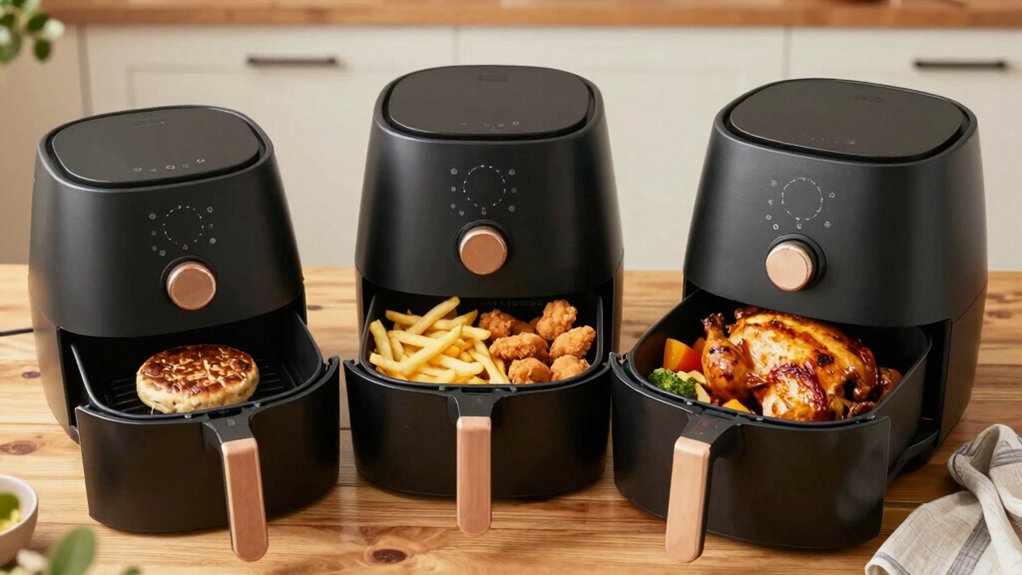
Pick an air fryer by matching quarts to portions: 1–2 qt fits one or two people and a single thin layer.
3–5 qt handles three to four with light stacking allowed.
6+ qt lets you crisp larger batches for families or guests.
Don’t crowd the basket or rack; leave gaps so hot, dry air browns edges and keeps centers from steaming. Flip or batch-cook for even crunch, and scroll on to get tips for spacing, racks, and safety.
Quick Overview
- 1–2 quart models suit one to two people; they are best for small portions and single thin layers.
- 3–5 quart units serve three to four people; they allow light stacking for small items.
- 6 quarts and larger handle family meals or entertaining with staggered pieces and minimal overlap.
Always leave space around items for hot air circulation to ensure even browning and efficient cooking. Use racks sparingly; flip/rotate batches and avoid overfilling to prevent soggy centers and longer cook times.
-Quart Servings Breakdown
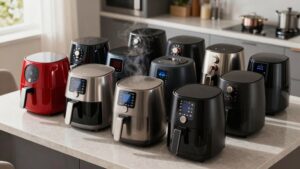
Wondering which size fits your meals best? You picture sizzling fries and a whole chicken. You choose capacity by servings. A 1–2 quart model suits one or two, compact and efficient.
A 3–5 quart unit handles three to four people; it provides enough space for sides and a main without crowding. Six quarts and up lets you entertain; it crisps larger batches. Match volume to typical portions so hot air circulates and textures stay right.
Don’t treat this as an unrelated topic to cooking technique. The basket size changes how you arrange food and how crispness develops. Below is a simple emotional snapshot to help you feel the fit.
| Size | Servings |
|---|---|
| Small | 1–2 people |
| Medium | 3–4 people |
| Large | 4+ people |
Max Fill-To-Rack Capacities
How full should you load the basket or rack before performance suffers? You’ll want a clear margin so hot air can circulate. Overfilling raises the duty cycle, forces longer runs, and reduces energy efficiency. Aim to leave space around pieces so edges brown and steam escapes. Trust visual cues: food shouldn’t touch the heating element or crowd the rack.
- A single chicken breast with 1 inch of air around it
- Fries spread in a single, airy layer, not piled
- Veggie chunks spaced so you can see metal between them
- A small tray of wings with room for flipping
- A ramekin nestled without blocking airflow
If you need more food, batch cook rather than cram.
Layering and Stacking Limits
Don’t pile food so high that hot air can’t circulate. You’ll end up with soggy, unevenly cooked results. Keep gaps between pieces and limit layers to what your model’s basket or rack can handle to protect texture and guarantee safe, even cooking.
If you need more volume, use the rack for single even layers or cook in batches rather than stacking items tightly.
Air Fryer Stack Limits
When you layer or stack food in an air fryer, you need to leave space for hot air to circulate so items crisp evenly. Overcrowding traps moisture, lengthens cook times, and produces uneven browning. Stack limits depend on basket size and food shape: A 1–2 quart holds a single thin layer. A 3–5 quart tolerates light stacking for small items, and a 6+ quart lets you stagger pieces with minimal overlap.
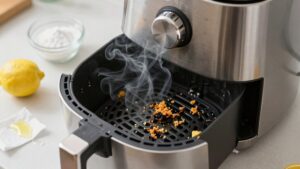
Use racks or reversible trays sparingly; each added layer reduces direct airflow and alters texture. Flip and rotate for even color and crunch. Beyond cooking, consider non-cooking topics like cleaning access and appliance aesthetics. A tidy, well-arranged basket looks better and makes oil-splatter cleanup faster.
Heat Circulation Importance
You already know that overcrowding stalls browning and lengthens cook times, so think of circulation as the engine that makes air frying work. You should layer sparingly: single layers crisp fastest; thin stacks can work only if airflow reaches each piece. When you pile food, hot air routes around edges, not through centers, producing soggy middles and uneven color you can smell before you see.
Leave gaps, use racks designed for your basket, and rotate trays for even tactile feedback: lift a corner to test readiness. This isn’t about recipes; no recipe focus here; it is about airflow mechanics and energy saving tips. Cook efficiently in one well-ventilated batch rather than two crowded ones to save time and power.
Food Safety Spacing
Although it’s tempting to pile food in to save time, keep items in a single layer or in thin, spaced stacks so hot air can reach every surface and cook food safely and evenly. You’ll feel the difference as crisp edges and even browning replace soggy, underdone centers.
Space proteins and vegetables so air circulates; leave at least a finger’s width between pieces or stack no more than two thin layers with a small gap. Avoid treating layering like submenu topics where irrelevant discussion masks the essentials: spacing controls temperature transfer and pathogen kill-rate. Use a light touch: fewer items per batch, brief shaking or turning, and visual checks.
That practical restraint keeps texture bright and food safe.
Basket Vs Rack Use
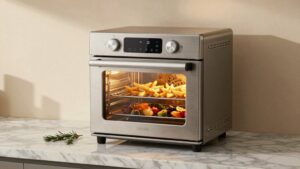
Good spacing sets you up to choose between basket and rack setups with confidence. You’ll notice basket sizing dictates how much direct airflow reaches each piece; keep a single layer when crisp edges matter.
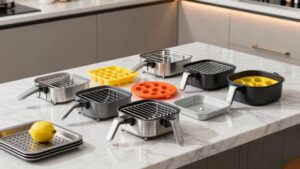
When you use a rack, confirm rack compatibility with your model and shelf positions so heat circulates evenly. Don’t stack too high; layered trays reduce turbulence and extend cook times. Visually scan gaps: you should see air paths around each item, not touching neighbors.
For mixed batches, put denser items lower and delicate ones on the rack to avoid sogginess. If you need volume, opt for larger capacity or dual-basket units rather than tight stacking; that preserves texture and shortens cooking time.
Layering Texture Effects
Layering food in the basket changes how crisp and evenly cooked each piece gets, so keep items in a single loose layer whenever texture matters. When you stack or crowd, steam builds and edges soften. You’ll lose contrast between golden exteriors and tender interiors.
Aim for consistent spacing so hot air sweeps each piece: that preserves layering texture and reduces reheating or extra batches. Balance servings with airflow: if you need more portions, cook sequential batches rather than piling. Use racks or perforated trays to add a second level only for items that tolerate gentler browning.
Trust your senses: listen for sizzle, watch color through the window, and feel for firmness when tongs lift a finished piece.
Frequently Asked Questions
What Size Air Fryer Is Best for a Studio Apartment?
You’ll want a small 1–2 quart model for a studio apartment. It’s compact, fits tight counters, and won’t overwhelm your space. Compact appliances like this heat quickly, use less energy, and crisp snacks or single meals perfectly.
You’ll notice faster preheat times and easy storage in a cabinet. Pick a model with simple controls and a removable basket so cleaning is quick and mess-free.
Can I Cook a Whole Chicken in a 5-Quart Air Fryer?
Yes, you can cook a whole chicken in a 5 quart air fryer if it’s a small bird (about 3–4 pounds). You’ll get crisp, golden skin and juicy meat when you don’t overcrowd the basket.
Pat the chicken dry, season well, and allow space for hot air to circulate. Roast at 360–380°F, checking the internal temp reaches 165°F at the thickest part. Rest before carving for best texture.
Are Dual-Basket Models Better for Meal Prepping?
Yes, dual basket models really help meal prep. You’ll cook two foods at once without flavor transfer, keeping textures crisp and aromas distinct. You’ll prep portions faster; stagger timings; and avoid batch-cooking. The separate baskets make rinsing and loading simpler. You’ll notice even browning when you don’t overcrowd.
For consistent, efficient meal prep, a dual basket air fryer gives you versatile control and better results.
How Do Litres Convert to Quarts for International Buyers?
1 Litre equals about 1.057 quarts, so you’ll multiply litres by 1.057 for quick litre conversions; divide quarts by 1.057 to get litres.
International buyers will appreciate rounding: 5 litres ≈ 5.3 quarts, 4.3 quarts ≈ 4 litres. Use this tactile rule of thumb when sizing purchases.
Feeling the scale between numbers helps to match baskets and recipes, ensuring the capacity you pick cooks evenly and crisply.
Does Air Fryer Capacity Affect Energy Usage?
Yes, air fryer capacity affects energy usage and overall cooking efficiency comparison. You’ll notice smaller units heat faster and use less energy for tiny meals, while larger baskets need more power but cook bigger batches more efficiently per serving.
You’ll smell food sooner in compact models; larger machines hum longer. Match capacity to meal size to cut runtime, save energy, and get crispier, evenly cooked results without wasted power.
Conclusion
You’ve got the scoop: match quart size to servings, don’t overfill, and keep food spaced so hot air can circulate and brown things evenly. Use a rack when you need layers, but mind stack limits and texture changes. Crispy bottoms won’t stay crisp if you pile items.
Trust spacing for safety and even cooking; if things touch, they steam not crisp. Work in a single layer where possible and savor the difference.