Air Fryer Basket Vs Tray Differences
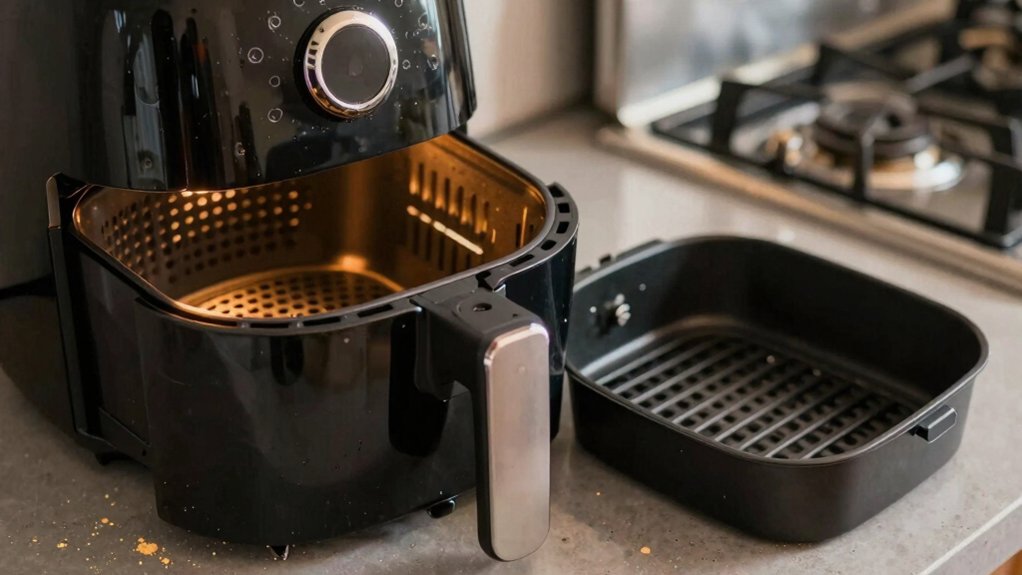
You’ll notice basket-style air fryers concentrate hot air in a compact chamber, so they crisp faster and need shaking. Hole size matters: small ≤2 mm holds crumbs; large 6–8 mm boosts airflow for thicker cuts.
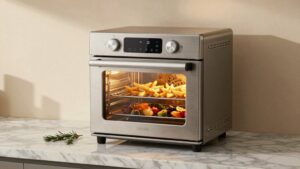
Oven-style tray units spread airflow over larger batches, cook more evenly but slower, and often require flipping. Clean baskets and trays after cooling; soak stuck-on bits and use nonabrasive tools to protect nonstick finishes. Keep going to get practical tips and hole-size guidance.
Quick Overview
- Baskets concentrate airflow through perforated mesh, giving faster, more intense crisping in a compact chamber.
- Oven-style trays/racks distribute airflow over larger areas, which is better for batch cooking and layered items.
- Baskets need shaking during cooking to equalize heat; trays usually require flipping for even browning.
- Hole size matters: small holes retain crumbs, medium balance crisping, and large holes boost airflow but can drop small pieces.
- Baskets favor speed and smaller batches. Trays prioritize capacity and even cooking for larger volumes.
Airflow Pattern Comparison
How does airflow differ between basket and oven-style air fryers? You’ll notice baskets use perforated mesh so air flows around and beneath food, and you can shake to equalize heat.
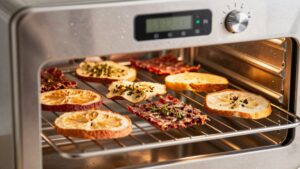
Oven-style units use metal racks or perforated trays; you flip items for even browning. Compact chambers in baskets speed temperature rise; larger oven spaces spread airflow, slowing cooks but handling more volume. That clears common airflow myths and temperature legends about one type being universally better: each trades speed for capacity.
Keep vents and perforations unblocked for reliable convection. Quick reference:
| Feature | Basket vs Oven |
|---|---|
| Air movement | Concentrated (basket) vs distributed (oven) |
| User action | Shake vs flip |
Basket Hole Size Guide
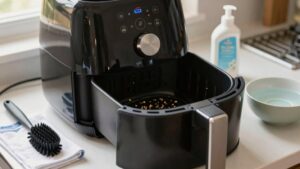
Wondering which hole size fits your cooking style? You’ll pick based on food size, airflow needs, and cleanup preferences. Smaller basket perforations keep crumbs in, improve support for small items, and give slightly less direct crisping. Larger holes boost airflow and faster browning; they let small pieces fall through and can transfer mess to tray racks below.
- Small holes (≤2 mm): best for fries, diced veggies; keeps bits from slipping.
- Medium holes (3–5 mm): balanced crisping and drainage for chicken wings, fillets.
- Large holes (6–8 mm): aggressive airflow for thicker cuts; watch for debris.
- Mesh or hybrid: combines support and airflow; pairs well with tray racks.
Match hole size to ingredient and you’ll optimize results.
Cleaning and Care Tips
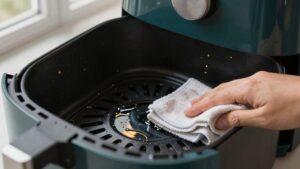
Check removable baskets and trays regularly for stuck food and coating wear, so you can spot problems early. If bits are baked on, soak parts before scrubbing; use nonabrasive tools to protect finishes and nonstick coatings.
After washing, dry every piece thoroughly and avoid metal scrubbers to preserve the coating and prevent rust.
Remove And Inspect Regularly
Want a faster, trouble-free clean? Remove components right after cooling to prevent baked-on residue. You’ll pull out baskets, removable racks or trays and visually inspect corners, vents, and heating elements for food, grease, or damaged nonstick coating.
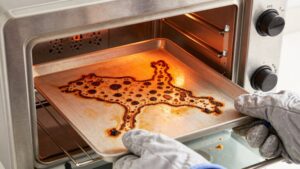
If parts are labeled dishwasher safe, load them alone or with light items to avoid abrasion; run a gentle cycle. For baskets, check the handle and perforations for trapped crumbs; for trays, scan rack joints where grease hides. Don’t ignore scorch marks or warped metal; those reduce performance and can spark odors.
Regular removal and inspection preserves airflow, maintains crisping consistency, and extends appliance life. Replace worn seals or damaged racks promptly to keep safe, efficient operation.
Soak Before Scrubbing
Why not let stubborn grease loosen before you scrub? You should soak before tackling baked-on food: fill a basin with warm water and a mild degreaser, then let the basket or tray sit for 10–20 minutes. That softens residues so you remove them with less effort and less risk of damaging coatings.
For perforated baskets, position them so water flows through holes; for trays, ensure water reaches corners and racks. Follow scrubbing guidelines: target softened spots first, use short, controlled strokes, and rinse frequently to check for remaining debris. This approach saves time, preserves nonstick surfaces, and reduces elbow grease.
After soaking and light scrubbing, dry parts thoroughly before reassembling or storing to prevent corrosion and odors.
Use Nonabrasive Tools
How should you clean without damaging coatings? Use nonabrasive tools: soft sponges, nylon brushes, and silicone-tipped utensils to protect nonstick surfaces on both baskets and trays during cleaning and care. You’ll avoid metal scouring pads or steel wool that strip coatings and shorten appliance life.
For stuck-on residue, soak briefly (as covered previously); then apply gentle circular strokes. Nylon bristles reach perforations in baskets without deforming them, while silicone scrapers clear tray corners safely. Pay attention to seams, handles, and rack mounts where grease accumulates. A soft brush plus mild detergent removes buildup without aggressive abrasion.
Treating parts gently preserves airflow holes and nonstick performance so your unit cooks consistently and lasts longer.
Dry Thoroughly After Washing
Where should you focus when drying air fryer parts after washing? Focus on seams, perforations, and handle joins: these trap water and invite corrosion or odors. For baskets, tilt and let residual droplets run toward the opening. For trays and racks, lay flat so vents drain.
Use quick-drying drying methods: air-dry on a rack for 10 to 20 minutes, then inspect for damp spots. Employ towel techniques for tight areas: wrap a microfiber or lint-free towel around a thin utensil to reach holes and crevices. Pat surfaces rather than rub aggressively to protect finishes.
Reassemble only when totally dry to prevent steam buildup during the next use. Regular, deliberate drying preserves performance, prevents rust, and keeps flavors clean.
Maintain Nonstick Coating
A few careful habits will keep your air fryer’s nonstick coating performing and extend its life. Use a gentle maintenance routine: wash with warm, soapy water and a soft sponge after every use. Avoid metal utensils and abrasive pads. Never stack cookware inside the basket or on trays while wet.
For stubborn residue, soak briefly rather than scrub. Inspect coating regularly for chips; stop using damaged pieces to prevent food contamination. When drying, towel-dry and air for a few minutes to eliminate trapped moisture.
Choose storage solutions that prevent scratches—individual sleeves, soft liners, or vertical storage that keeps baskets separate. These steps preserve performance, simplify cleaning, and protect your appliance investment over time.
Frequently Asked Questions
Which Fits Better in Small Apartment Kitchens: Basket or Tray?
Basket fits better in small apartment kitchens. You’ll prefer basket efficiency and space optimization: baskets occupy minimal counter space, preheat fast, and deliver consistent crisping for single meals. You’ll get quicker cooks, easier cleaning, and simple dumping of snacks.
Trays offer more functions and capacity but demand larger footprints. Choose a basket if you need compact, speedy air frying. Pick a tray only if you regularly cook larger or varied dishes.
Can I Convert a Basket Model to Use Trays?
Generally you can’t fully convert a basket model to use trays because convertible compatibility is limited by cylindrical vs rectangular dimensions. You can, however, check accessory compatibility: some manufacturers sell tray inserts or multi-level racks designed for specific basket models.
Verify exact model specs and mounting points before buying. If no official accessories exist, adapters aren’t recommended; they’ll compromise airflow, cooking performance, and safety. Choose a tray-style unit for true tray functions.
Do Baskets Make Noise Compared to Tray Ovens?
Yes, baskets can make some basket noise, but it’s usually minimal. You’ll hear brief fan hum and occasional rattling when food shifts during shaking.
Tray ovens produce more pronounced tray vibration and deeper fan tones because of larger chambers and moving racks. You’ll notice tray vibration more with heavy loads or loose racks. If noise matters, choose a basket model for quieter, quicker cycles and better vibration control.
Which Option Uses More Electricity per Cook Cycle?
Trays generally use more electricity per cook cycle than baskets because their larger chambers need more energy and longer run times. Though noise levels are similar, you’ll pay more for oven-style trays when roasting or baking big batches. Baskets heat quickly and use less power for small meals.
If you want efficiency and lower running cost, pick a basket. Choose a tray only if you need capacity and multifunctions despite higher electricity usage.
Are Baskets Safer With Children Around Than Tray Ovens?
Yes, baskets are generally safer with children around. You’ll find basket safety higher because compact, cylindrical chambers keep hot surfaces and steam more contained; this reduces accidental contact. Their child-friendly design often includes single-handle access, quicker cool-down, and smaller footprints that stay off counters.
You’ll still supervise, but baskets typically lower burn and tip risks compared with larger tray ovens that expose wider hot surfaces and doors.
Conclusion
In choosing between an air fryer basket and a tray, think about airflow needs and cleanup. Baskets give stronger circulation and crisper results for fries and wings. Trays suit sheet-style items and make flipping easier. Check hole size to balance crisping and small-food loss.
Clean regularly: soak, use nonabrasive tools, and dry fully to protect coatings. Pick the design that matches what you cook most. You’ll get better, more consistent results.