
Countertop Oven Cleaning Guide for Racks and Glass
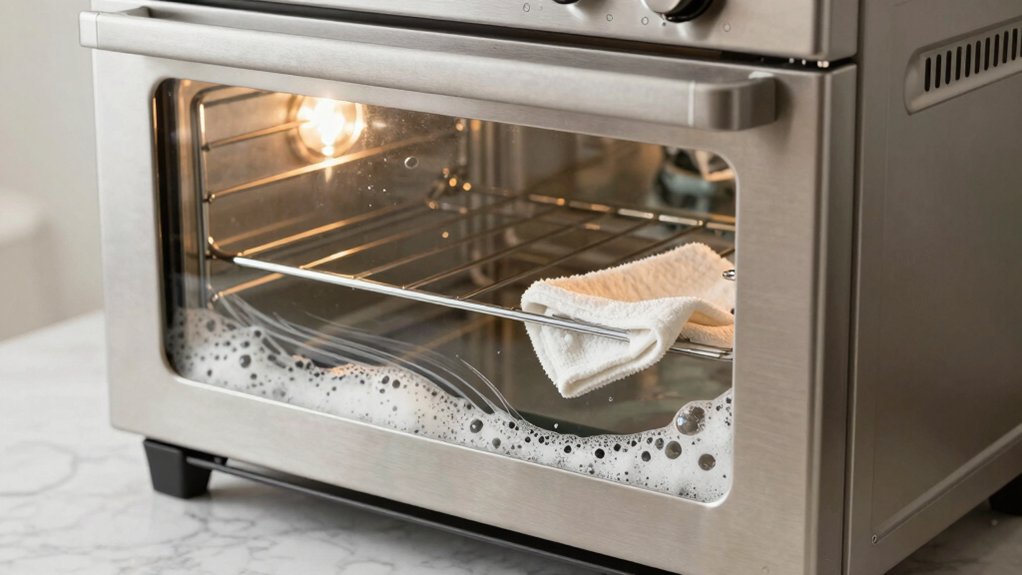
You’ll protect racks and glass by staying within your oven’s temperature limits (typically 450–550°F), removing turntables, and avoiding abrupt cooling. Use only non-abrasive cleaners rated for glass and stainless; test a small hidden spot first and skip steel wool or harsh scouring pads.
Apply a mild paste or vinegar solution, let it sit, then soften grime with a plastic scraper and microfiber cloth. Rinse and dry completely to prevent streaks and thermal shock.
Continue for step‑by‑step tips.
Quick Overview
- Check rack and door max temperature ratings (typically 450–550°F) before using hot-clean cycles to avoid damage or glass failure.
- Remove racks and turntables before heating. Preheat small units slowly to reduce ±50°F temperature variation and thermal shock.
- Use non-abrasive cleaners (mild dish soap, vinegar, baking-soda paste) and soft tools (microfiber, nylon brush, plastic scraper) for glass and racks.
- Test any cleaner on a small hidden spot. Wait five minutes, inspect for clouding or residue, then proceed if no damage appears.
- Rinse thoroughly with plain water and dry completely to prevent streaks. Avoid abrasive pads or steel wool on glass and stainless steel.
Rack & Glass Temperature Limits
Wondering how hot your countertop oven’s racks and glass can safely get? You should test rack performance against the oven’s max. Many models reach 450–550°F, with some like the CPG unit at 536°F and KoolMore at 550°F. Expect ±50°F variation and slower preheats in small units.
For glass safety, tempered dual-pane doors tolerate high temps; however, follow manufacturer broil limits: Oster broil 500°F. Preheat fully before assessing. Use a clamp thermometer on the rack and ignore the ready bell. Remove turntables for accurate readings. Keep glass cool-to-touch warnings in mind and avoid thermal shock during cleaning.
| Component | Max temp |
|---|---|
| Oster rack | 450–500°F |
| KoolMore rack | 550°F |
| CPG rack | 536°F |
| Tempered glass | up to 550°F |
Max Temp for Glass
You’ve already seen typical rack limits and manufacturer broil specs, so now focus on the glass: Most tempered, dual-pane oven doors are rated up to roughly 500–550°F. However, the safe working temperature depends on the manufacturer’s specification and the door’s construction (single vs. dual pane, presence of low-emissivity coatings, bonded seals).
- Check the manual or label for the stated max temp and any cautions about rapid temperature changes.
- Inspect door type: Single-pane glass tolerates less thermal stress than tempered, insulated assemblies.
- Consider coatings and seals: Low-emissivity layers and bonded seals can degrade below the glass limits if overheated.
- When cleaning, avoid heating cycles above the specified max temp and let the door cool slowly to prevent thermal shock.
Avoid Abrasive Oven Cleaners
Don’t reach for abrasive cleaners or steel wool pads that can scratch glass and strip protective coatings. Test any cleaner on a small, hidden spot first. Use soft scrubbing tools—microfiber cloths, plastic scrapers, or soft brushes—to remove grime.
Rinse all surfaces thoroughly after cleaning to remove residue and prevent streaks or chemical damage.
Choose Non-Abrasive Cleaners
When cleaning your countertop oven, choose non-abrasive cleaners to protect glass and metal surfaces from scratches and chemical damage. Use non-abrasive cleaners labeled safe for glass and stainless steel, avoiding powders, steel wool, or caustic oven sprays that etch finishes.
You’ll prepare by wiping loose debris. Then, apply a mild cleaner or a baking soda paste to soiled areas; let it sit to loosen grime. Work with a soft microfiber cloth, nylon brush, or plastic scraper to remove residue without scraping surfaces. Rinse thoroughly with plain water and dry to prevent streaks and spotting.
For routine maintenance, keep glass-safe methods like vinegar solutions and mild dish soap on hand to reduce buildup and limit the need for stronger products.
Test Cleaner On Glass
Before using any cleaner on your oven glass, test it on a small, inconspicuous corner or the inside edge to confirm it won’t dull, etch, or leave a residue. Apply a drop, wait five minutes, then wipe and inspect under good light.
Next, choose your mild solution: diluted vinegar, a baking-soda paste, or a commercial non-abrasive product. Note the label instructions. Put on gloves, apply the cleaner sparingly, and blot rather than rub to avoid streaking.
After five minutes, re-inspect for clouding, microscopic scratches, or residue using an angle of light. If the sample passes, proceed to clean the full glass using the same product. If not, discard it and select an alternative to protect glass safety.
Avoid Steel Wool Pads
Why risk scratching the glass or stripping protective coatings with steel wool? You should avoid abrasive pads because they create micro-scratches that weaken glass and dull metal finishes.
Inspect the door and racks first; choose nonabrasive methods for grease and baked-on food. If labels mention coatings, don’t use steel wool as a shortcut: it removes protective layers and accelerates corrosion.
For persistent spots, let a baking soda paste sit to soften residue. Then lift gently with a plastic scraper and microfiber cloth. Rinse thoroughly and check for damage under bright light. Wear gloves while handling residues. Document any scratches so you can monitor spread over time. Following this reduces long-term wear and keeps door visibility and rack integrity intact.
Use Soft Scrubbing Tools
How should you tackle stuck-on grime without risking damage? Use soft scrubbing motions with gentle tools to remove debris without scratching glass or coating. Start by applying your chosen cleaning paste or solution. Then, work in small sections, keeping pressure even and controlled.
A microfiber cloth, soft nylon brush, or flexible plastic spatula will lift residues; avoid steel wool, metal scouring pads, and abrasive powders that etch surfaces. For racks, prefer a nonmetallic scrub pad and repeat short passes rather than one aggressive stroke.
Inspect progress frequently and reapply cleaner when friction increases. These soft scrubbing techniques prolong finish life, prevent micro-scratches, and reduce the need for intensive repairs. Clean thoroughly but patiently for best results.
Rinse Thoroughly After Cleaning
Want spotless, residue-free results? Rinse thoroughly after every cleaning step to remove soap, baking soda paste, and any cleaner residue that can burn or streak. Start by flushing racks and glass under warm running water, using a soft cloth to wipe corners and seals.
If you used a commercial product, test the cleaner on a small hidden area first to confirm it rinses away without damaging finishes. For soaked racks, lift and drain; then spray or dunk repeatedly until water runs clear. For glass, use a damp microfiber to remove streaks, then a final wipe with clean water.
Dry parts completely before reassembly to prevent water spots and trapped moisture that causes odors or corrosion.
Frequently Asked Questions
How Often Should Oven Racks Be Soaked for Deep Cleaning?
You should soak racks for deep cleaning every 3–6 months depending on use and buildup. If you cook greasy or frequent meals, soak racks every 3 months. For lighter use, every 4–6 months suffices.
Between deep cleaning, spot-clean monthly to prevent heavy residue. When you soak, use hot soapy water or dishwasher soap. Let them sit several hours, then scrub, rinse, dry, and reinstall for best results.
Can I Clean Racks in the Dishwasher Safely?
Yes, you can usually clean racks in the dishwasher, but check manufacturer guidance first. For dishwasher safety, remove heavy grease and loose debris. Pre-soak stubborn spots and space racks so water circulates.
Follow rack cleaning etiquette: avoid overcrowding, use a strong detergent, and skip dishwasher use for warped or coated racks that might peel. Dry thoroughly and inspect for remaining residue before reinstalling.
What’s the Best Way to Remove Rust From Oven Racks?
Use a wire brush or steel wool to remove loose rust. Then soak racks in hot water with dish soap and a cup of vinegar to loosen stubborn spots.
Scrub with baking soda paste, rinse, dry thoroughly, and buff with a light oil coat to inhibit moisture. For long-term rust prevention, keep racks dry; avoid prolonged soaking, and reapply a thin oil layer after cleaning.
Repeat as needed.
Can I Use Lemon Instead of Vinegar for Glass Cleaning?
Yes, you can use lemon instead of vinegar for glass cleaning. You’ll find lemon a mild, natural glass cleaner substitute that cuts grease and leaves a fresh scent.
Mix lemon juice with water in a spray bottle, spray, let sit briefly, then wipe with a microfiber cloth. For tougher grime, add baking soda to make a paste first.
Consider lemon alternatives like diluted alcohol or commercial glass cleaners for streak-free results.
How Do I Prevent Streaks on the Oven Glass?
You avoid streaks by cleaning with the right technique: Wipe glass in circular motions, then finish with vertical or horizontal strokes until dry. Use a baking soda paste for grime; rinse thoroughly.
Then spray vinegar or lemon solution and wipe with a damp microfiber cloth. Buff immediately with a dry microfiber in one direction. These glass cleaning tricks reduce residue, remove streak-causing soap or grease, and leave a clear, streak-free finish.
Conclusion
Wrap up: Stick to your countertop oven’s temperature limits, and don’t exceed the glass’s max rating. Skip abrasive oven cleaners and steel wool pads that scratch or weaken surfaces.
Pick non-abrasive cleaners; test them on a small glass area first. Use soft scrubbing tools to remove grime. Rinse thoroughly to remove residue and avoid streaks or chemical buildup. Following these steps preserves your racks and glass, keeps them safe, and prolongs oven life.
Related reading: Toaster Oven Bakeware Materials Comparison covers this topic in detail.