Air Fryer Accessory Materials Heat Safety Guide
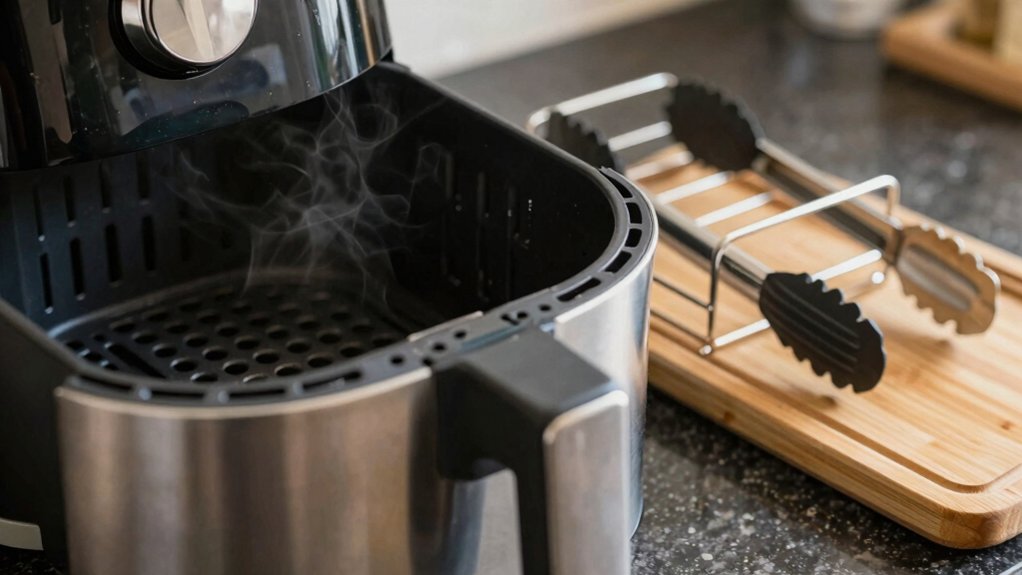
Pick accessories that match your air fryer’s top temperature and the material’s rated limit: stainless steel, aluminum, ceramic, heat-resistant glass, and FDA-approved silicone usually tolerate ~200°C (392°F). Most standard plastics don’t.
Use vented metal or ceramic for direct-basket cooking and silicone or glass for lower temperatures. Watch for flaking, discoloration, sticky surfaces, or smoke; those signal coating breakdown.
Replace damaged items and follow manufacturer care. Continue for specific temp limits and maintenance steps.
Quick Overview
- Match accessory material to your Air Fryer’s max temperature; ceramics, stainless steel, and heat-resistant glass are usually safe to ~200°C (392°F).
- Use FDA-approved, heat-rated silicone or vented metal for direct-basket cooking. Avoid standard plastics at high temperatures.
- Prefer vented metal or ceramic pieces for high-temp, direct heat to prevent warping, melting, or off-gassing.
- Watch for coating degradation: flaking, discoloration, increased sticking, smoky smells; stop using compromised pieces for food contact.
- Verify manufacturer temperature ratings and cleaning instructions. Hand-wash coated items and avoid metal scrubbers to extend safe life.
Material Melting Points Table
Why can’t I provide a complete melting-points table for air fryer accessories from the available sources? You’ll find general compatibility (silicone, metal, glass, ceramic) but not the quantitative melting point or thermal stability data needed for a reliable chart.
To make safe, evidence-based decisions, you need specific melting temperatures, degradation thresholds, and comparative stability—information absent from the search results.
| Material | Note |
|---|---|
| Silicone | Mentioned as heat-resistant |
| Metal | Listed as suitable (aluminum, stainless) |
| Glass | Heat-resistant glass cited |
| Ceramic | Recommended up to certain temps |
| Plastics | Warning: can melt, release chemicals |
Until you obtain precise thermal data from material specs or lab tests, avoid assuming safety based solely on compatibility statements.
Max Safe Temps by Material
Because different accessory materials respond to heat in different ways, you should match materials to the maximum temperatures your air fryer can reach and how you use the accessory. Use subtopic naming and safety labeling on packages to verify suitability: ceramics, stainless steel, and heat-resistant glass generally tolerate around 200°C (392°F). Silicone rated FDA-approved often holds similar temps. Standard plastics and non-rated liners fail well below that.
Check manufacturer guidance and test data rather than assumptions.
- Verify accessory max temp on safety labeling before use.
- Prefer vented metal or ceramic pieces for high-temp, direct-basket cooking.
- Use silicone mats or approved glass for indirect or lower-temp applications.
Follow evidence-based limits to avoid warping, toxic release, or fire risks.
Pfoa-Free Coating Temperature Limits
You should know that PFOA (perfluorooctanoic acid) was used in some nonstick coatings and is linked to health risks. This is why many modern coatings are labeled PFOA-free. Check manufacturer specs for typical temperature thresholds; most PFOA-free coatings withstand typical air-fryer temperatures but often list safe cooking ranges below their maximum degradation point.
Watch for flaking, discoloration, or sticking as signs of coating breakdown. Store and clean accessories per instructions to extend their safe life.
PFOA Meaning And Risks
Anyone handling nonstick-coated air fryer accessories should know what PFOA is and why its absence matters: Perfluorooctanoic acid (PFOA) is a synthetic chemical once used in manufacturing some nonstick coatings. It’s been linked to health risks and regulatory restrictions because it can persist in the environment and may bioaccumulate. Knowing PFOA meaning helps you evaluate labels that claim “PFOA-free.”
PFOA risks include potential reproductive, developmental, and liver effects observed in some studies, plus long environmental half-life. Manufacturers phased out PFOA after regulatory pressure; however, older or low-quality coatings might contain related substances. You should choose certified PFOA-free accessories, follow manufacturer temperature guidance, avoid scratched or degraded coatings, and replace compromised items to minimize exposure and contamination.
Typical Temperature Thresholds
How hot can PFOA-free nonstick coatings safely get before they start to break down? You should treat most PFOA-free coatings as stable up to roughly 260°C (500°F). However, subtopic nuance matters: formulations differ and degradation can begin at lower temperatures. Rely on equipment labeling for precise limits; manufacturers test specific coatings and list maximum safe temps.
In practice, avoid sustained exposure above 230–260°C to prevent discoloration, flaking, or vapors. If a coating shows bubbling, peeling, or unusual odors at normal use, stop using the accessory and replace it. For safe operation, pair this evidence-based threshold with accessory-specific guidance. Never assume universal resistance; check labels and product data sheets for the validated temperature ceiling for your exact accessory.
Safe Cooking Temperature Range
The safe cooking temperature range for PFOA‑free nonstick coatings generally tops out around 230–260°C (450–500°F). So, keep sustained heat below that window to avoid degradation or off‑gassing. You should operate accessories and surfaces at typical air fryer temperatures, usually below 200°C/392°F, to stay well inside the safe cooking temperature range and preserve coating integrity.
Short spikes above recommended settings during preheat are less risky than prolonged exposure; however, you shouldn’t rely on spikes routinely. Check manufacturer specifications for each accessory; many list a maximum working temperature and safe cook limits. If labels are absent, assume conservative limits near 200°C.
Follow proper airflow and avoid contact with heating elements to reduce localized overheating and protect PFOA‑free coatings.
Signs Of Coating Degradation
When a PFOA-free nonstick coating starts degrading, typically from sustained heat above about 200°C (392°F) or repeated spikes near its upper limit, you’ll see physical and performance changes: flaking or peeling of the coating, dulling or discoloration (browning or uneven patches), increased sticking of food, and smoky odors during use.
You’ll also notice coating cracking along edges or raised areas and progressive color fading that signals polymer breakdown. Performance signs include uneven browning, hotspots, and reduced release despite proper oiling.
These indicators are measurable: visible flakes, sticky residues after low-temperature cooks, and transient smoke at normal settings. If you observe multiple signs, stop using the accessory for food contact and replace it to avoid contamination and inconsistent cooking.
Storage And Maintenance Tips
Noting signs of nonstick coating degradation should prompt immediate changes in how you store and care for coated accessories. Proper handling helps prevent further heat damage and extends usable life. Store coated pieces separately or with protective padding to avoid scratches that accelerate wear. Keep them dry and at room temperature away from direct heat sources.
Follow maintenance labeling: use only recommended detergents, avoid metal scrubbers, and hand-wash when labels require it. Track PFOA-free coating temperature limits; most are safe below 200°C (392°F). Exceedance can break down surfaces and release chemicals. Inspect items regularly for flaking, discoloration, or sticky residues. Retire any with compromised coating.
Proper storage safety and strict maintenance labeling adherence reduce risk and extend safe use.
Frequently Asked Questions
Can I Use Silicone Mats Under the Air Fryer on the Countertop?
Yes, you can use silicone mats under the air fryer for countertop heat safety, provided the mat is FDA‑approved silicone and designed for high temperatures. You’ll place the fryer on a flat, well‑ventilated surface. Keep at least 5 inches clearance from walls, and ensure the mat doesn’t block vents.
Don’t rely on thin plastic; use a non‑slip, perforated or raised silicone mat to protect the countertop and reduce burn risk.
Are Magnetic or Adhesive Accessories Safe Around Vents?
No, you shouldn’t place magnetic or adhesive accessories over vents. Magnetic safety is compromised by heat: magnets can demagnetize and melt adhesives. The adhesive risk includes residue that blocks airflow and damages cord insulation near hot vents.
Blocking vents raises exterior temperatures and fire risk. Keep vents clear, use non-adhesive, heat-rated accessories positioned away from vents, and follow manufacturer guidance to ensure proper circulation and safe operation.
How Close Can Children Safely Be to a Running Air Fryer?
Keep children at least 5 inches away from the running air fryer, since exterior surfaces and vents can reach 180–232°F and cause burns or damage. For child safety, maintain appliance proximity rules: place the fryer on a stable, heat-resistant surface out of reach. Supervise kids, and never let them touch or lean over it while it runs.
Wait until the unit fully cools before allowing close access.
Do Nonstick Coatings Off-Gas When Overheated?
Yes, nonstick coating can off-gas if overheated. You should avoid overheating safety breaches by not exceeding manufacturer temperatures. Many PTFE-based coatings start degrading above ~260°C (500°F) and release fumes that can irritate lungs.
Use proper cookware rated for your air fryer; avoid empty preheating with coated surfaces, and ensure ventilation. If you smell acrid fumes, turn it off, ventilate the area, and let the appliance cool before handling.
Can I Leave Accessories Inside While Preheating Empty?
No, you shouldn’t leave accessories inside while preheating empty. For preheating safety, empty baskets or accessories can warp, overheat, or contact heating elements; that risks off-gassing or fire.
You must use only accessories with confirmed accessory compatibility and ventilation (slits/holes). Never preheat liners or small items alone. Always weigh liners with food, keep proper clearance, and follow manufacturer instructions to avoid damage and hazards.
Conclusion
You now know which accessory materials tolerate high heat and which need caution. Use the melting-point table and max-safe temps to match accessories to your air fryer’s settings. Choose PFOA-free coatings rated well above your usual cooking temperature.
Watch for flaking, discoloration, or odd smells as signs of breakdown. Clean, store, and replace items per manufacturer guidance. Following these evidence-based steps will keep your food safe and your accessories lasting longer.
Related reading: Air Fryer Troubleshooting Burning Food covers this topic in detail.