Immersion Circulator Troubleshooting Temperature Stability
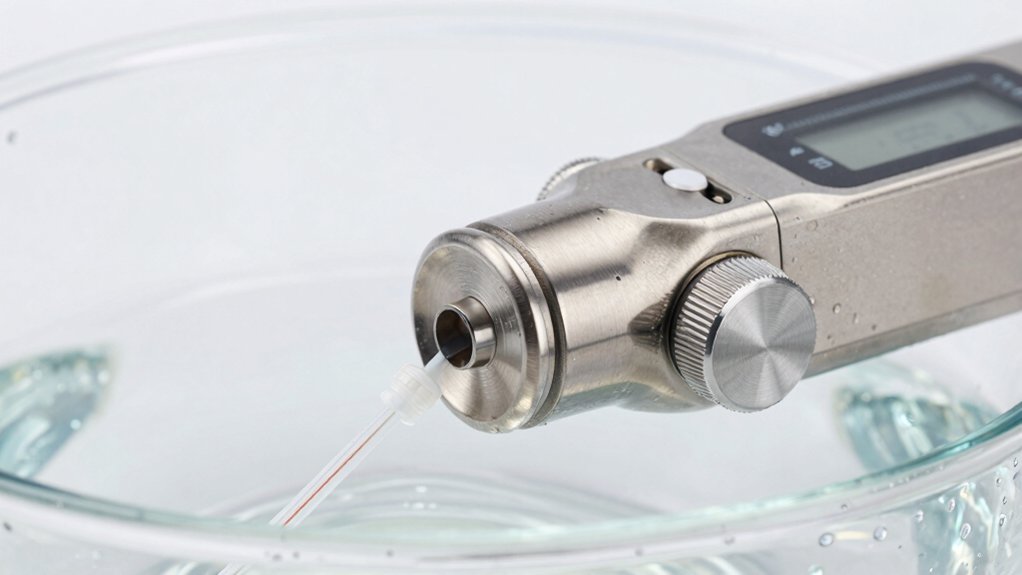
If your immersion circulator is unstable, check bath depth, probe placement, and unobstructed flow first. Shallow or undersized pots and a probe too close to the return flow cause large fluctuations and slow recovery.
Verify the probe depth (typically 50–75% of the fluid column) and confirm the unit’s minimum and maximum immersion marks to avoid false OTP or cutoffs.
Calibrate against a stable reference and document offsets; follow pot-compatibility specs and you’ll see why each change matters and where to go next.
Quick Overview
- Ensure bath depth meets the device’s minimum/maximum immersion specs for correct pump flow and thermal coupling.
- Place the temperature probe 50–75% down the fluid column, away from the return jet and vessel bottom.
- Use a stable reference thermometer at multiple setpoints (55–90°C) and recheck after 30–60 minutes for consistent offsets.
- Maintain recommended bath volume and unobstructed circulation. Small or shallow setups cause larger fluctuations and slow recovery.
- Inspect probe wiring, connectors, and OTP/max-immersion limits. Replace or consult service if overheating or false cutoffs occur.
Bath Depth vs Stability
Although many users focus on setpoint and controller accuracy, bath depth directly determines whether an immersion circulator can maintain its rated stability. You should ensure minimum immersion depth matches the device spec: for example, PolyScience MX needs 7.25″ (18.4 cm) and JULABO CORIO C needs ~6.53″ usable depth. Insufficient immersion reduces heat transfer area and circulation efficiency, degrading temperature stability.
| Model | Min Depth | Stability |
|---|---|---|
| MX | 7.25″ | ±0.07°C |
| CORIO C | 6.53″ | ±0.03°C |
| PolyScience sous vide alt | 6″ | ±0.1°C |
Maintain recommended bath volume and unobstructed flow to preserve thermal buffering. Shallow, small-volume setups exhibit larger fluctuations and slower recovery.
Sensor Calibration Quick-Checklist
How do you confirm your immersion circulator’s temperature readings are trustworthy? You run a targeted sensor calibration quick checklist to isolate sensor error and ensure control-loop accuracy. Use a stable reference and controlled bath conditions within your operating range (55–90°C). Avoid ice-bath checks unless validating 0°C. Verify probe placement and thermal equilibration time before logging readings.
- Compare circulator probe to a calibrated RTD or Thermapen at multiple setpoints and note offsets.
- Repeat measurements after 30–60 minutes stability; document drift and apply correction if consistent.
- Inspect probe wiring, connectors, and mounting; replace if resistance or intermittent readings occur.
Follow this checklist every two months or after mechanical shock to maintain ±0.2°C total accuracy.
Max Immersion Depth Limits
Check the unit’s maximum water line and position the probe at the manufacturer’s recommended depth so the sensor reads representative bath temperature without submerging the heater beyond its rated limit. You’ll also monitor unit overheat protection and safety cutoff thresholds. Excessive immersion in deep pots can trigger shutdowns or false OTP events.
Finally, match pot size to the circulator’s immersion range to ensure adequate flow and prevent localized overheating or insufficient thermal coupling.
Maximum Water Line
Why does the maximum water line matter? You must respect the manufacturer’s max immersion depth to maintain pump performance and thermal coupling; exceeding it causes cavitation, reduced circulation, and unstable control. This subtopic unrelated to probe placement clarifies limits so you avoid performance degradation.
Measure from the pump intake and follow the unit’s max mark. If unclear, consult specs or contact support. Overfilling increases hydrostatic pressure on seals and can trigger over-temperature protection or mechanical failure. Conversely, low volume reduces thermal mass and increases fluctuation; see discussion ideas in the container volume section.
For technical checks, monitor pump current and flow rate while changing level. A sudden drop or noise indicates the water line is too high or too low.
Recommended Probe Depth
Wondering where to place your temperature probe? You should insert the probe so its sensor tip sits well below the turbulent return flow and above the vessel bottom; typically 50–75% of the fluid column for standard bins. Maintaining consistent probe depth minimizes local gradients that skew readings and destabilize control loops. Respect the manufacturer’s maximum immersion depth to avoid sensor and wiring damage.
Set a documented calibration timing procedure: verify probe accuracy after any depth change and every two months within your operating range. Record depth, temperature, and time stamps during calibration to correlate drift with immersion conditions. If you adjust plumbing or volume, repeat calibration timing immediately.
Consistent probe depth and disciplined calibration timing preserve control precision.
Unit Overheat Protection
How deep should you immerse the circulator before the over-temperature protection and wiring limits become a risk? You should follow the manufacturer’s max immersion mark; exceeding it raises the chance that internal seals, wiring harnesses, and heat sinks operate outside design cooling parameters.
Treat immersion depth as a thermal and electrical limit, not an irrelevant concept or unrelated topic. Measure from the unit’s reference line to the liquid surface; maintain at or below that depth to keep convection around wiring and sensors predictable. If you must lower the unit deeper, consult the service manual for derating guidelines and verify cable entry seals and strain reliefs.
Document any deviations and monitor for early OTP indicators. Proactive limits reduce failure modes and preserve control stability.
Safety Cutoff Threshold
What depth should you maintain to prevent triggering the safety cutoff and stressing internal wiring? You should keep the waterline between the minimum and maximum immersion marks specified by the manufacturer: typically covering the heating element without submerging the control housing. Excessive depth can activate the safety cutoff and degrade temperature stability by altering convection patterns and increasing thermal load on internal wiring.
Measure immersion depth from the element base, not the top of the unit. Follow max immersion limits in the manual. If you need deeper containment, use an approved extension or larger vessel so the unit stays within its rated immersion range. Regularly inspect seals and cable entries for moisture intrusion that could provoke a safety cutoff.
Pot Size Compatibility
Why does pot size matter for immersion circulators? You must match pot size to the circulator’s rated immersion depth and volume capacity to avoid compatibility issues that degrade temperature stability. A too-small pot lacks thermal mass, causing rapid setpoint overshoot and ±>0.5°C fluctuations. A too-deep immersion beyond the unit’s max depth forces the pump to cavitate or reduces flow, producing uneven heating.
Verify manufacturer specs for maximum immersion depth, minimum water volume, and recommended container geometry. Use vessels with straight walls and sufficient surface area to promote return flow. If you encounter instability, test with a larger-volume, shallower container and confirm flow rate at the outlet. Addressing pot size and compatibility issues yields predictable heat transfer and tighter temperature control.
Frequently Asked Questions
Why Does My Circulator Trip Over-Temperature Protection Unexpectedly?
Your circulator trips because over-temperature protection senses unsafe heater conditions: this often occurs from low fluid level or blocked stirring mechanisms causing hotspots. Power supply stability issues or voltage dips can reset sensors, too.
Check fluid level. Confirm compatible fluid viscosity. Inspect impeller and tubing for flow restrictions. Verify stable mains power or isolate on a dedicated circuit.
Reset per manufacturer procedure and recalibrate at your operating temperature range.
Can Tubing Diameter Affect Temperature Hold at the Cook Vessel?
Yes, tubing diameter affects temperature hold at the cook vessel. If tubing diameter is too small, you’ll restrict flow, reduce heat transfer, and create thermal lag or uneven temperatures. You should use adequately sized, unobstructed tubing matched to your circulator’s flow specs to preserve stable heat transfer.
Check for blockages, sharp bends, or narrow fittings. Correcting those will improve circulation, reduce temperature swings, and maintain setpoint accuracy.
What Fluid Viscosity Is Required for My JULABO at Low Temperatures?
You need a low-viscosity fluid specified for your JULABO’s operating range, typically similar to water or light silicone oils under 10 cP at low temps. Check fluid compatibility with seals and pumps to avoid damage.
Monitor tubing pressure and pump head to ensure circulation. Seed particles and air removal improve heat transfer and prevent cavitation. Replace or filter contaminated fluids to maintain stable, efficient operation.
Why Do Small Bins Struggle to Maintain 185°F Setpoints?
Small bins struggle to maintain 185°F because limited water volume offers poor thermal buffer, causing thermal lag and amplified response to load changes. In small scale cooling or micro batch heating, you’ll see sensor drift and rapid heat loss to surroundings. Circulation becomes marginal and viscosity effects dominate.
You should maximize fill, optimize flow paths, use appropriate viscosity fluid, and verify probe placement and calibration to reduce oscillation and improve stability.
How Often Should I Recalibrate RTD Probes for Accuracy?
You should recalibrate RTD probes every two months to manage calibration cadence and detect probe drift. Perform calibrations at your operating range (55–90°C) using a traceable reference thermometer and ice/bo°C checks as supplementary.
Log offsets; replace probes showing systematic drift beyond ±0.2°C. Increase frequency if you cycle extremes, use aggressive fluids, or note unstable readings. That cadence keeps accuracy and troubleshooting efficient.
Conclusion
You’ve now seen how bath depth, probe placement, and sensor calibration directly affect temperature stability. Keep the immersion circulator’s water line within manufacturer limits; don’t exceed max immersion depth. Follow the quick-checklist to confirm sensor accuracy.
Verify pot compatibility and allow airflow for overheat protection. Note the safety cutoff threshold and respect it. These technical steps reduce oscillation and drift, ensuring reliable, repeatable temperature control for precise sous-vide or lab applications.
Related reading: Electric Skillet Temperature Settings Explained covers this topic in detail.