Sous Vide Time and Temperature Basics Explained
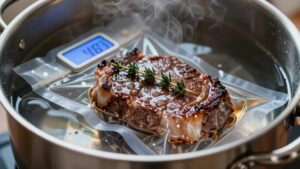
Sous vide lets you set a precise final temperature and hold meat long enough for pasteurization rather than guessing doneness. Match targets: steaks 120–144°F for rare to medium; pork and chicken 140–160°F balancing juiciness and safety; fish lower at 110–132°F.
Cook times vary by thickness—45 minutes to a few hours. Finish with a hot sear. Prevent punctures by trimming bones, double-bagging, and using puncture-resistant seals. More practical tips follow.
Quick Overview
- Match water temperature to desired final internal temperature to control doneness and texture precisely.
- Use time guidelines to reach pasteurization and tenderness; typically, 45 minutes to several hours depending on thickness.
- For steaks, aim for 120–128°F for rare, 129–134°F for medium-rare, and 135–144°F for medium. Then finish with a hot sear.
- For pork and poultry, choose 140–160°F, balancing juiciness and safety. Follow minimum time tables for pasteurization.
- Prevent bag punctures by trimming sharp edges, double-bagging fragile cuts, and using puncture-resistant sealing methods.
Temperature-by-Protein Quick Chart
Wondering which sous-vide temperatures and times match each cut? You’ll use a clear protein temperature pairing approach: pick the protein, match doneness targets, then choose the time range that ensures pasteurization without overcooking.
Below is a compact reference for common proteins and typical targets.
| Protein | Typical Temp (°F) | Time Range |
|---|---|---|
| Steak (standard) | 129–144 | 45 min–3 hrs |
| Filet/Top Sirloin | 120–156 | 45 min–4 hrs |
| Pork (1–2″) | 140–160 | 1–4 hrs |
| Chicken breast | 140–160 | 1.5–4 hrs |
Use the table to align temperature with doneness targets. Extend time for thicker or frozen cuts. Finish with a hot sear to develop crust.
Target Internal Temperatures Guide
Now that you’ve matched proteins to temperature and time ranges, you need specific internal targets to get the exact doneness and safety you want. Use target temperatures as your control points: they determine pasteurization and texture independently of cook time once minimums are met.
Refer to a concise doneness guide for common proteins and pick the temp that matches your texture goal.
- Steak: Choose 120–128°F for rare, 129–134°F for medium-rare, 135–144°F for medium; hold minimum time per thickness.
- Poultry/Pork: Target 145–160°F depending on desired juiciness versus firmness. Follow proven time tables for safe pasteurization.
- Fish/Veg: Use lower targets (110–132°F for fish, 183°F for vegetables) to preserve texture. Avoid overcooking.
Bag Puncture Prevention Tips
When you sous vide, preventing bag punctures is a simple safety and quality control step that reduces leaks and contamination. Use puncture-resistant bags, seal with a high-quality vacuum or double-seal technique, and double-bag fragile or bone-in items while removing sharp edges first.
Handle bags gently when submerging and retrieving to avoid accidental tears.
Avoid Sharp Edges
How can you prevent bag punctures that compromise a sous vide cook? Inspect each cut and trim or tuck bones, cartilage, and sharp bits so they don’t press against the bag. When placing food, orient sharp points away from the seal and toward the center of the vessel. Avoid edges where friction and movement concentrate.
Use padding—rolled parchment, trimmed cloth, or silicone mats—to create soft edges around potential puncture sites. Position vacuum seals and clips deliberately to keep stress off thin bag areas. Check for chips or rough surfaces on racks and immersion circulator clamps and smooth them before cooking.
Monitor the bath during long cooks and pause if bags shift against abrasive surfaces. These methodical steps reduce hole risk and preserve a safe, controlled sous vide environment.
Double Bagging Technique
Why not add a second layer of protection when a single bag might not be enough? Use a certified food-grade sous vide bag inside a secondary bag rated for heat; that combination increases double bag durability and reduces puncture risk from bones or hardware. Align seams and keep the inner bag centered to avoid rubbing against edges.
Remove excess air from both bags. Partial vacuum in the outer bag cushions thermal expansion without stressing seals. Clip the outer bag to the container to prevent full submersion and maintain consistent submersion safety; ensure clips don’t create pressure points on the inner bag.
Inspect both bags before and after cooking for microtears. If you see any compromise, discard contents or rebag before finishing.
Proper Sealing Methods
Want your bag to stay intact for the full cook? Use controlled sealing steps to prevent punctures. First, remove sharp bones or edges from contact points and trim protruding bones; this reduces stress on seams.
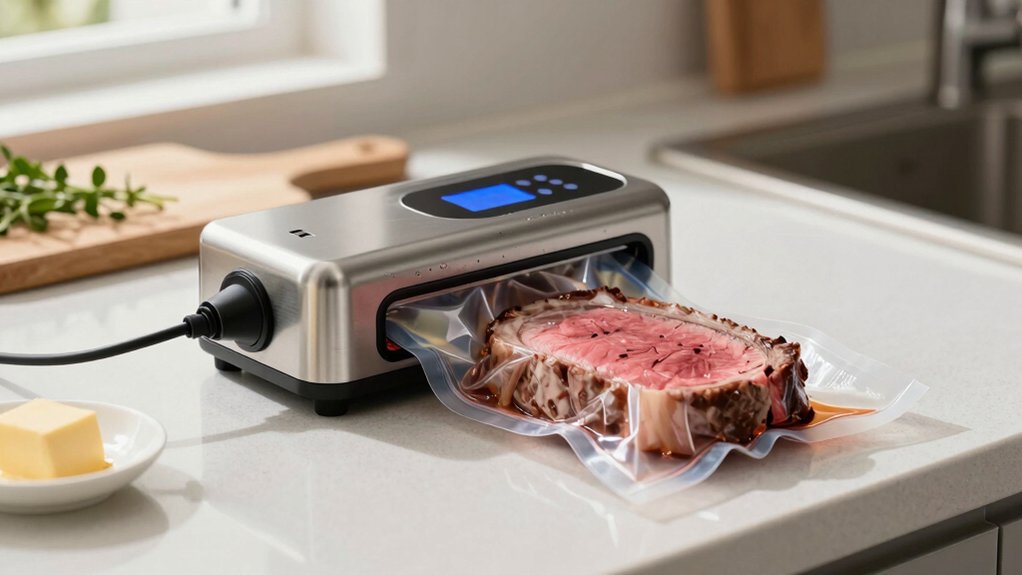
Next, choose an appropriate seal method: clamp-style or impulse sealer for consistent, even joins. Consider sealing alternatives like zip-lock with water displacement for short cooks. When using a vacuum sealer, test seals on empty pouches and inspect for channeling or wrinkles that create weak spots.
Employ vacuum accessories (hose attachments, roller clamps) per manufacturer guidance to avoid over-compression that can tear fragile proteins. Finally, perform a brief leak test in warm water before committing to long cooks. Repair or re-seal immediately if you detect air ingress.
Use Puncture-Resistant Bags
Which bags will survive long sous-vide cooks and sharp bones? You should choose puncture-resistant bags made from high-density polyethylene or multilayer nylon/PE laminates; studies and manufacturer specifications show higher tear strength and puncture resistance than single-layer plastics.
Inspect seams and select vacuum or heat-seal options rated for the cook temperature and duration to reduce failure risk. Use bag materials with sufficient thickness (measured in mils) for long cooks and when bones or shells are present.
Position food to avoid concentrated pressure points, and exclude sharp edges with bone guards or folded foil between food and bag. Monitor for early signs of leakage to prevent contamination. Proper material choice minimizes bag breaches and limits liquid migration that can compromise food safety and yield.
Careful Handling During Cooking
How do you keep bags intact during long sous-vide cooks with bones or shells present? Inspect and trim sharp edges, then wrap bones or shells in a thin layer of parchment or silicone before vacuuming to distribute pressure and prevent punctures. Use double-bagging with puncture-resistant outer bags for extended cooks. Submerge bags fully and clip them to the container sides so they don’t rub on hot elements or tank walls.
Maintain careful handling when transferring, turning, or finishing: lift bags by sealed edges. Avoid dragging and work over a clean surface. Follow sanitation practices: wash hands and tools before bagging, sanitize work areas, and discard compromised bags immediately. These steps reduce mechanical failure and food-safety risk during long sous-vide processes.
Frequently Asked Questions
Can Sous Vide Be Used for Canning or Long-Term Preservation?
No, you shouldn’t use sous vide for canning or long-term preservation. Sous vide temperatures and times don’t reliably reach the high heat needed to destroy botulism spores in low-acid foods. This means canning limitations make it unsafe for shelf-stable storage.
You can use sous vide to cook and then refrigerate or freeze foods for short- to medium-term use. However, follow tested canning or commercial sterilization methods for true long-term preservation.
How Does Altitude Affect Sous Vide Cooking Times?
Altitude impact is minimal on sous vide because water bath boiling point changes don’t alter stable bath temperatures. So, you won’t need major time adjustments for pasteurization.
You’ll make time adjustments mainly for lower atmospheric pressure affecting evaporation in uncovered setups or if you rely on local oven or boiler heating. For safety, follow established minimum times and temps for pasteurization. If unsure, add 10 to 15% extra time at high altitude as a conservative, evidence-based buffer.
Can I Sous Vide With Alcohol in the Bag Safely?
Yes, you can sous vide with alcohol in the bag safely if you control temperature and avoid open flames. You’ll dilute spirits or use wine sparingly. Alcohol won’t fully evaporate, but it can extract flavor.
Be cautious with long term canning; don’t can alcohol-infused sous vide products without proper sterilization. Altitude impact on boiling isn’t relevant to sealed sous vide, but adjust pasteurization time and temperature if you’re considerably high.
What Warranty or Safety Risks From Leaving a Precision Cooker Unattended?
You’ll risk warranty safety issues and unattended risks if you leave a precision cooker running without following manufacturer guidelines. Most makers void coverage for misuse, water damage, or prolonged dry-run operation.
Unattended risks include electrical faults, overheating, bag failure, and evaporation that exposes heating elements. Mitigate these risks by using a GFCI outlet, filling to recommended levels, securing lids, setting alerts/timers, and checking rope/cord condition to keep coverage and safety intact.
How to Adapt Recipes for Older or Less Tender Cuts?
You’ll extend time and lower temperature for old cuts, using tenderness tricks like long, low-temperature baths and pre-salting. Cook tough roasts 24–48 hours at 131–140°F for fork-tender results. Alternatively, you can cook them for 48–72 hours at 165°F for shredding.
Add enzymatic marinades (papaya/pineapple) sparingly. Use vacuum pressure with a light oil, and finish with a hot sear. Rest briefly so juices redistribute before serving.
Conclusion
You’ve now got the core sous vide rules: follow the temperature-by-protein chart, hit target internal temps, and prevent bag punctures. Use puncture-resistant bags, double-bag or seam-wrap sharp bones, and seal properly with a vacuum or high-quality ziplock squeeze method.
Handle bags gently when placing and removing them from the bath. These methodical steps reduce contamination and heat loss. They ensure consistent, safe doneness and repeatable, evidence-based results every time you cook sous vide.
Related reading: Slow Cooker Low Vs High Temperature Differences covers this topic in detail.