Toaster Oven Vs Convection Oven Differences
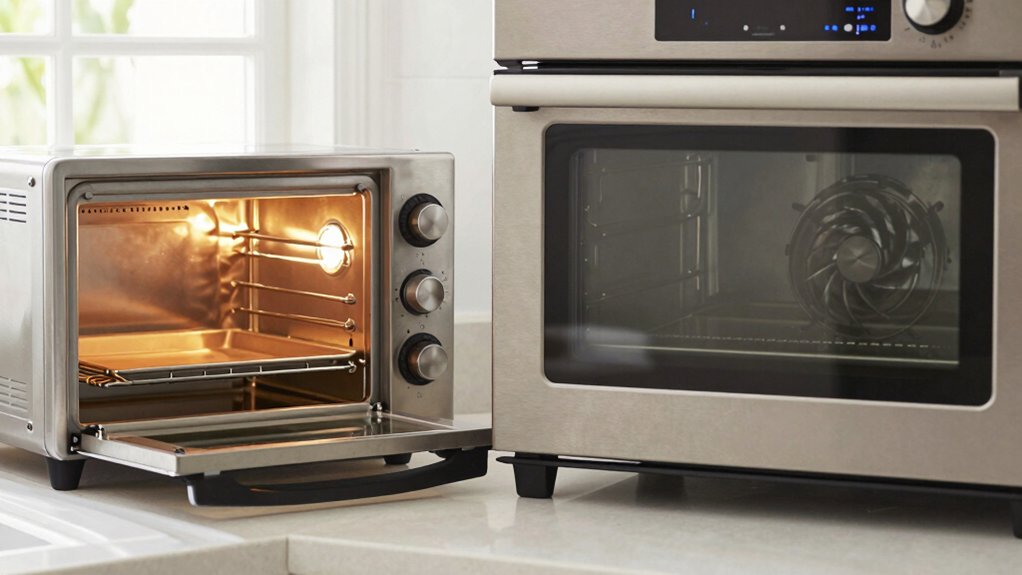
You’ll pick a Toaster Oven when you want a compact, quick option for small daily batches and limited cookware.
It’s typically smaller, heats fast, and has chrome wire racks.
You’ll choose a convection oven when you need larger capacity, multi-rack cooking, and more even, fan-driven browning at higher temperatures with stainless or enameled racks.
Rack count, interior clearance, and fan placement change results; so keep those factors in mind if you want more specifics.
Quick Overview
- Toaster Ovens are smaller with compact footprints (13×10–22×18 in) for 1–5 servings. They are ideal for daily small batches.
- Convection ovens are larger (17×12–20×24 in) and are designed for multi-rack cooking and larger batches (4+ servings).
- Convection uses a fan for faster, more even browning; while Toaster Ovens may have limited or no true convection airflow.
- Maximum temperature and fan placement matter: higher temps and proper airflow enable searing, broiling, and better crust development.
- Interior dimensions, rack positions, and clearance determine which bakeware fits and how airflow and browning perform.
Cooking Capacity Comparison
How much you can cook depends a lot on whether you pick a toaster oven or a convection oven. You’ll choose by matching capacity to meals: Toaster Ovens offer compact footprints (13×10 to 22×18 in) and maximize chamber volume for small batches. This is great for 1–5 people and 9×13 pans, highlighting toaster efficiency. Convection ovens have larger footprints (17×12 to 20×24 in) and multi-rack layouts. They serve 4+ with tall-food clearance, showing convection versatility.
| Feature | Toaster Oven | Convection Oven |
|---|---|---|
| Footprint | 13×10–22×18 in | 17×12–20×24 in |
| Volume/Servings | 0.3–1 cu ft / 1–5 | 0.3–0.88 cu ft / 4+ |
| Best use | Small daily batches | Even multi-rack cooking |
Max Temp, Airflow, Size
You’ve already matched capacity to meal size. Now consider how max temperature, airflow, and physical dimensions affect what you can actually cook. Know the max temp rating: higher temps let you sear, broil, or finish pizzas; lower limits restrict techniques.
Airflow determines browning and cook speed. Convection fans boost crisping but can dry delicate breads. Size matters beyond capacity: interior width, height, and door clearance dictate pan choice and placement.
- Check the listed max temp and whether broil reaches it consistently.
- Inspect fan placement and venting for true airflow patterns.
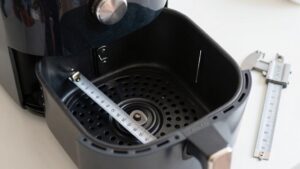
- Measure interior size for your tallest bakeware.
- Note exterior footprint if counter space is tight.
- Consider rack spacing needs without relying on the next topic.
Interior Rack Positions
Check the interior rack layout before you start cooking, because rack position options and the number of racks determine how much you can cook at once and where heat concentrates. Notice adjustable rack heights and different rack materials. Wider spacing and sturdier chrome or steel racks hold heavier pans and affect conduction.
Small changes in rack placement will shift browning and airflow; so position racks to match whether you’re roasting, baking, or reheating.
Rack Position Options
Where should you place your rack for the best results? You’ll pick positions based on food height, browning needs, and rack positioning to optimize airflow dynamics. Use the center for even baking and roasting; it balances top and bottom heat in a toaster oven and lets a convection fan circulate uniformly.
Move the rack higher for quicker browning or crisping, especially when broiling or finishing; however, watch for hot spots in smaller toaster ovens. Place it lower for slow roasting or when you need gentler bottom heat.
Leave adequate space around pans so air flows freely. Overcrowding blocks circulation and causes uneven cooking. Adjusting rack height is a simple control that yields predictable texture and color changes.
Number Of Racks
Most toaster and convection ovens offer two to three interior rack positions, and choosing the right one directly affects browning, airflow, and overall doneness. You’ll use higher rack placement for broiling or quicker, intense browning. You will use lower positions when you want gentler heat for thicker items.
With two racks, you’ll often stagger pans to preserve circulation; with three, you can cook multiple small batches but must monitor airflow and rotation. Pay attention to rack height relative to heating elements and the fan: too close causes scorching; too low yields underbaked centers.
When using convection, the fan helps even heat across all positions, so you can exploit middle racks for consistent results. Adjust placement deliberately to match food thickness and desired crust.
Adjustable Rack Heights
Adjustable rack heights give you control over browning, airflow, and cook time by letting you position food closer to or farther from the heating elements and fan. You’ll find that precise rack placement matters: higher positions accelerate browning and crisping; lower positions protect tops from overcoloring and focus heat on the bottom.
When using a convection setting, place racks to maximize unobstructed airflow around pans. Crowding racks reduces fan effectiveness and creates hot spots. In compact toaster ovens, adjustable rack height gives flexibility for taller dishes but limits simultaneous multi-rack use. In larger convection ovens, more positions let you stagger trays for even circulation.
Check clearances, rotate pans if needed, and use the lowest effective position to manage cooking time and finish.
Rack Material Differences
Rack material affects heat transfer, durability, and how evenly your food cooks. You’ll want to choose based on the type of oven and what you cook most.
In toaster ovens, chrome-plated wire racks heat quickly and promote airflow, making them good for broiling and toasting. Convection models often use heavier stainless-steel or enameled racks that resist warping under fan-driven circulation and repeated high-heat cycles.
If you bake sensitive items, note that darker, nonstick interior coatings absorb more heat and can speed browning. Lighter, reflective racks and coatings yield gentler, more even results.
Removable, sturdy racks also matter for safety and cleaning. Look for solid construction and coatings rated for dishwasher use. Match rack material to your cooking habits for consistent outcomes.
Rack Placement Impact
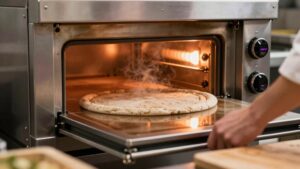
How high you place the rack determines browning, airflow, and cooking speed; so position it with the goal in mind. You’ll use higher racks for broiling or faster browning since proximity to the top element intensifies radiant heat. Lower racks suit slow roasting or delicate baking, reducing direct exposure.
In convection models, center placement maximizes fan-driven heat distribution and avoids hot spots. Check your oven’s rack capacity before loading multiple pans; overcrowding restricts airflow and negates convection benefits. When using pans with lips or sheet pans, leave space above and below for circulation.
Shift racks mid-cycle if one area is cooking unevenly; small adjustments often solve inconsistent browning without changing temperature or time.
Frequently Asked Questions
Can I Use Bakeware Designed for Full-Size Ovens in a Toaster Oven?
Yes, you can sometimes use full-size bakeware, but check toaster oven compatibility and bakeware sizing first. Measure your toaster oven’s interior and compare dimensions. Large pans can block airflow, touch heating elements, or cause uneven cooking.
Use rimmed sheets or pans slightly smaller than the oven cavity; avoid oversized heavy cookware and leave clearance for circulation. Convection settings may need time and temperature adjustments for consistent results.
Are Convection Toaster Ovens Noisier Than Conventional Toaster Ovens?
Yes, Convection Toaster Ovens are usually noisier than conventional toaster ovens because the fan adds audible airflow and motor sound. You’ll still get faster toasting speed and more even heat. However, expect a low hum or whir during operation.
Higher-end models run quieter; cheap ones can be louder. If noise matters, check decibel ratings or user reviews for convection noise before you buy.
Do Convection Ovens Require Specific Cookware Materials?
Yes, you do need to consider cookware compatibility for convection cooking. You’ll want low-sided, lightweight pans and rimless baking sheets so hot air circulates evenly. Metal pans (aluminum, stainless steel) conduct heat best.
Avoid tall, insulated or glassware that blocks airflow or slows heat transfer for best results. Nonstick works but may brown faster; reduce temperature slightly and monitor doneness.
Cast iron’s fine for roasting but can slow response time.
How Much Energy Does a Convection Toaster Oven Save Annually?
You can save roughly 10–25% on cooking energy with convection efficiency, translating to about 50–150 kWh annually for a typical household using a convection toaster oven moderately. That energy payoff depends on frequency, dish types, and preheat habits. Faster cook times and reduced preheat cut consumption.
Track your usage, reduce preheat, and use appropriate pans to maximize savings: you’ll see tangible reductions on your yearly energy bill.
Can I Use Parchment Paper or Silicone Mats With Convection Settings?
Yes, you can use parchment paper and silicone mats with convection settings, but take precautions. Cut parchment to fit without hanging over racks; weigh edges with food or pans, and avoid direct contact with heating elements.
Silicone mats tolerate convection heat well; ensure they lie flat and fit your tray. Reduce temperature per convection guidelines if a recipe calls for it. Monitor browning since faster air circulation can crisp edges sooner.
Conclusion
You’ll pick the right oven once you match cooking capacity, max temp, and airflow to how you cook. Convection ovens give higher temps, stronger circulation, and more consistent results for larger roasts or multi-rack baking. Toaster ovens work great for small batches, quick reheats, and limited counter space.
Pay attention to rack positions, adjustable heights, and material; they change browning and airflow. Choose based on dish volume and layout needs, not just labels.
Related reading: Air Fryer Toaster Oven Vs Convection Toaster Oven Difference covers this topic in detail.