
Waffle Maker Sticking Causes and Fixes
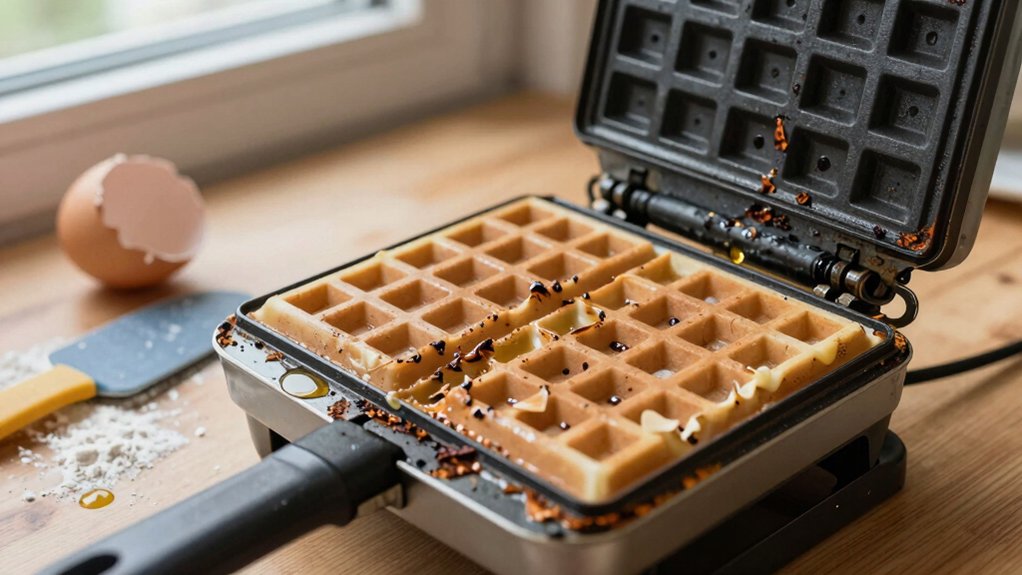
If your waffles stick, first check whether the grid is PFAS-coated or porous cast iron. Verified PFAS-free coatings (like Thermolon Volt) release reliably; raw cast iron needs seasoning.
Preheat fully, use a light smear of high-smoke oil, and pour a medium-thick batter with 10–15% fat. Build thin, polymerized oil layers on cast iron and maintain with light oiling and dry storage.
Follow these steps and you’ll prevent sticking. More practical tips follow.
Quick Overview
- Confirm coating type (PFAS-free Thermolon, cast iron, or unknown ceramic) since surface chemistry dictates release and care.
- Proper seasoning (multiple thin polymerized oil layers) fills pores and creates a durable nonstick barrier.
- Use high smoke-point oils (flaxseed, grapeseed, refined peanut) in thin coats and heat to polymerize between layers.
- Preheat fully; use a medium-thick batter (ribbon consistency, 10–15% fat) and oil lightly before each batch.
- Reseason or deep-clean when food begins to cling. Avoid metal tools or aerosol sprays that damage coatings.
Nonstick Coating Effectiveness Chart
Which coating will give you the most reliable waffle release? You should prioritize seasoned cast iron or verified PFAS-free ceramic like Thermolon Volt. Use evidence: cast iron yields durable seasoning; Thermolon releases cleanly without sprays.
Watch for coating degradation from metal utensils or abrasive cleaning. Demand PFAS transparency from manufacturers.
| Coating | PFAS Status | Practical Note |
|---|---|---|
| Thermolon Volt | Confirmed PFAS-free | Clean release; avoid metal |
| Pre-seasoned Cast Iron | PFAS-free (none) | Excellent when seasoned; needs care |
| Generic Ceramic | Unclear | Lack of third-party data; risk of degradation |
| Factory Cast Iron | PFAS-free (none) | Rougher surface; requires heavy seasoning |
| DuraCeramic/Bella | Unclear | Manufacturer disclosure incomplete |
Select based on verified chemistry, surface finish, and your willingness to maintain seasoning.
Ideal Batter Thickness Guidelines
How thick should your waffle batter be to get consistent release and texture? You want a measured range: not pourable like crepe batter, not doughy. Aim for medium-thick batter that spreads slowly but fills pockets under gravity. Control batter viscosity with batter-to-liquid ratio and monitor oil selection for surface interaction.
Target: batter that falls from a spoon in a thick ribbon after 2–3 seconds. Adjust: add 10–20% more liquid if it piles; add 5–10% more flour if it runs.
Fat: include 10–15% fat by weight (butter or neutral oil) to improve release and crust.
Procedure: preheat fully, oil lightly per greasing protocol, pour consistent volume, and note grid performance.
These steps reduce sticking while preserving crispness and interior tenderness.
Seasoning Cast-Iron Grids
You should season cast-iron grids to build a durable, polymerized fat layer that prevents sticking and fills microscopic porosity. Choose a high smoke-point oil; prepare and clean the grids thoroughly. Then apply thin, even coats and heat to polymerize each layer in sequence.
Maintain the seasoning by lightly oiling and heat-drying between uses. Reseasoning should occur when food begins to cling.
Why Season Cast Iron
Why season cast-iron waffle grids? You create a thin polymerized oil layer that fills microscopic pores, reducing batter adhesion and promoting even browning. Seasoning cast iron converts fats into a hard, food-safe barrier; studies and long-standing cookware practice show it improves release and corrosion resistance.
You’ll notice fewer stuck waffles, simpler cleaning, and prolonged grid life when seasoning is consistent.
Implement a methodical routine: clean residues while warm, apply a thin oil coat, and heat to polymerize. For maintenance between uses, wipe plates with a light oil layer and store dry; this prevents rust and maintains the seasoned surface. Regular, controlled seasoning beats aggressive scrubbing or nonstick sprays that cause tacky polymer buildup.
Choosing The Right Oil
Which oil should you pick for seasoning cast-iron waffle grids depends on smoke point, polymerization behavior, and the oil’s tendency to leave sticky residues. You’ll favor oils with high smoke points and proven polymerization: flaxseed, grapeseed, or refined peanut. These oils form hard, stable layers rather than tacky films.
Don’t assume any oil works; choosing oil irrelevant is a false notion when residue and durability matter. Check oil coating compatibility with food contact and temperature range. Avoid sprays and unrefined oils that degrade unevenly.
Apply a thin, even film, heat to just below the oil’s smoke point, then cool and repeat several times to build a durable seasoning. Evidence shows multiple thin layers outperform a single heavy coat.
Preparing The Waffle Grids
Ready to give your cast-iron waffle grids a durable, nonstick surface? Begin with clean, dry plates. Remove carbonized residue using a stiff brush and low water to avoid rust.
Apply a thin, even coat of high–smoke-point fat (clarified butter or lard) to all hollows and ridges. Place the closed iron on low heat and raise to medium for 10–15 minutes to polymerize the oil; this controlled heating minimizes polymerized-oil tackiness that causes long-term buildup.
Cool, wipe excess, and repeat three cycles for an initial seasoning layer. Monitor for preheating issues: inconsistent heat during seasoning yields uneven layers and increases later batter stickiness.
After seasoning, store dry and reapply a light oil before first use to protect the surface.
Layering And Heating Process
With the cleaning and initial polymerizing steps complete, you’ll build durable layers by applying thin, even coats of a high-smoke-point fat and heating them to bond with the iron surface. Use a lint-free cloth to spread oil under light layering pressure so each coat sits uniform without pooling.
Place the closed iron in a preheated oven or on the element. Run controlled heating cycles at or just below the fat’s smoke point, and cool between cycles to let the polymer layer harden. Repeat 4–6 cycles, inspecting visually for a continuous, satin sheen. Track temperature and time; consistent heating cycles produce cross-linked polymer films that resist batter adhesion.
This methodical approach minimizes sticky residues and extends cast-iron grid life.
Maintenance Between Uses
How should you care for cast-iron waffle grids between uses to preserve their seasoning and prevent sticking? Follow a concise maintenance routine: after each use, while still warm, wipe grids with a paper towel to remove loose crumbs. Then apply a thin layer of high smoke-point oil and wipe off excess.
Implement a strict cleaning schedule: clean gently every use and deep-clean monthly or after residue build-up. For stuck residue, warm the iron, pour a small amount of oil to soften deposits, and scrape with a wooden or plastic tool. Avoid detergents and metal scrapers that strip seasoning.
After cleaning, heat briefly to polymerize the oil layer and cool closed. Record observations (sticking, smell, discoloration) to adjust frequency and oil choice empirically.
Frequently Asked Questions
Why Does the First Waffle Always Stick More Often?
The first waffle sticks more because the iron isn’t fully preheated and lacks fresh surface lubrication; thus, batter bonds to plates. You’ll often see a sticking issue when the nonstick coating is cool, damaged, or fouled by polymerized oils from prior sprays.
Don’t use safety spray: it builds tacky residue. Preheat thoroughly, oil plates with high smoke-point fat before the first batch, and discard or feed the initial waffle to reset the surface.
Can I Use Cooking Spray Safely on Nonstick Plates?
You shouldn’t use nonstick spray; it creates tacky residue and speeds coating wear. Instead, follow maintenance steps: brush a thin layer of neutral oil or melted butter on plates before heating, preheat fully, and wipe warm residue with a soft cloth or plastic scraper.
For damaged coatings, contact the manufacturer. Safety concerns include polymerized oils and overheating; therefore, use high–smoke–point fats sparingly and avoid aerosol sprays to prolong nonstick life.
How Do I Remove Burnt Batter Without Scraping Coating?
You gently loosen burnt batter by heating the iron slightly, applying a thin film of oil, and letting it sit. Then, wipe with a soft cloth; this softens carbonized residue without scratching. Avoid metal scrapers to protect nonstick coating safety.
If residue persists, use warm water and a soft toothbrush after unplugging and cooling slightly. Repeat oiling and brief heating cycles; they’ll lift stubborn bits while preserving the coating’s integrity.
Is Electric Waffle Maker Temperature Inaccurate Over Time?
Yes, an electric waffle maker’s temperature can become inaccurate over time. You should suspect thermostat drift, sensor failure, or plate warping after years of use.
Verify accuracy with an infrared thermometer or thermal probe at several points. Compare readings to the control setting. If you find variance beyond manufacturer tolerance, recalibrate if possible; replace the thermostat; or retire the unit, especially when plate warping causes uneven heat distribution.
Can I Fix a Warped Waffle Iron Plate at Home?
Yes, you can attempt warped plate repair with home fixes, but results vary. First, unplug and cool. Then, remove plates per manufacturer instructions.
Assess warping; mild bends can be gently reshaped using padded clamps or a rubber mallet over a flat anvil. Reinstall and test for even contact and heat. If the coating is cracked or warping is severe, replacement or manufacturer repair is safer and more reliable.
Conclusion
If your waffle maker’s sticking, don’t guess: use evidence-based fixes. Match batter thickness to your model and check the nonstick chart. Thinner batters and damaged coatings cause adhesion. Season cast-iron grids with a high-smoke-point oil to build a protective layer; reapply after heavy use.
Preheat fully, oil sparingly, and avoid acidic batters that degrade coatings. With methodical prep, correct oil choice, and routine maintenance, sticking becomes preventable, not inevitable.
Related reading: Griddle Seasoning Vs Nonstick Care covers this topic in detail.