Waffle Maker Doneness Control Explained
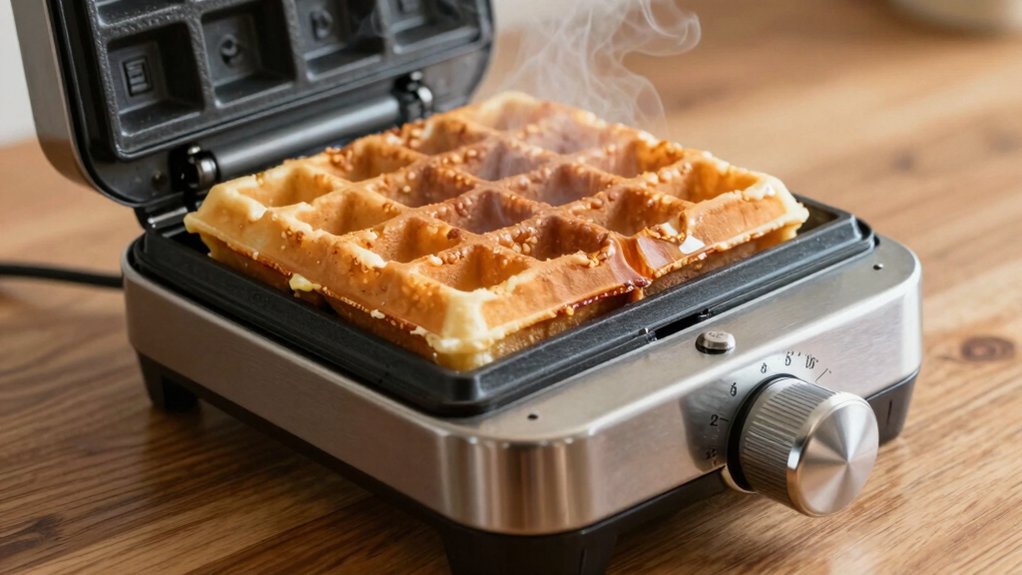
You can control waffle doneness by matching the browning dial and temperature to batter thickness and run time. Lower settings (300–350°F) give tender, lightly browned centers.
Mid settings (375–425°F) yield golden, crisp exteriors with fluffy insides.
High settings (450–500°F) produce pronounced crunch and deep color.
Preheat for approximately 3 minutes and watch steam, color, or indicator lights for doneness.
Also, check wattage, voltage, and circuit capacity to ensure consistent performance; more details follow.
Quick Overview
- Use the dial or preset to match browning levels: low for light, high for crisp, and mid for balanced golden waffles.
- Preheat about 3 minutes and watch for steady steam or indicator lights or beeps to signal doneness.
- Time guidelines: baseline 4–6 minutes for standard batters; longer for thicker mixes or higher crispness.
- Higher temperature (375–500°F) increases surface crispness and browning while reducing interior moisture.
- Verify appliance wattage and household voltage (120V/230V) to ensure consistent heat and avoid circuit overload.
Browning Levels vs Time
How long should you wait for a specific shade? You’ll rely on browning timing cues more than fixed minutes: most dials (5–7 levels) change exterior crispness while steam, lights, or beeps indicate doneness.
Expect low settings to yield light, fluffy centers; high settings give golden-to-dark, crisp exteriors. Doneness variance comes from wattage, batter thickness, and rotating action. So, use indicators plus a baseline: 4–6 minutes for standard batters; longer for thick mixes.
| Factor | Effect |
|---|---|
| Dial level | Controls crust darkness |
| Steam indicator | Signals near-complete doneness |
| Beep/light | Confirms selected shade |
| Wattage | Affects preheat and speed |
| Batter thickness | Raises doneness variance |
Use these signals to match shade to texture precisely.
Temperature-to-Crispness Chart
Want crisper edges or a softer interior? You’ll use a temperature-to-crispness chart to match settings to texture. Exact temps map to outcomes so you can predict doneness talette results: lower temps favor tender centers; higher temps boost Maillard browning and surface crunch.
- 300–350°F: tender interior, light browning — use for delicate batters.
- 375–425°F: balanced crispness and fluffy inside — standard golden doneness.
- 450–500°F: pronounced crisp edges, deep color — for very crispy waffles.
Preheat 3 minutes; track steam cessation; and adjust within these ranges for consistent results. Evidence shows surface crispness increases with temperature while interior moisture drops. So, pick the range that matches your desired doneness talette.
Voltage and Wattage Limits
Check your waffle maker’s maximum wattage rating and match it to your household voltage to avoid underperformance or tripped breakers. You’ll also want to consider circuit breaker capacity and the appliance’s power cord rating, since high-wattage units can overload older wiring.
Finally, verify the model has thermal cutoff protection to prevent overheating if voltage fluctuations or sustained high loads occur.
Maximum Wattage Rating
Curious about why the wattage label matters? You’ll use the maximum wattage to match capacity and performance: higher maximum wattage usually means faster heat-up and stronger browning control. Lower wattage heats more slowly and limits peak crisping.
Check voltage limits stamped on the unit because wattage is meaningful only at the specified input voltage. Exceeding either can overload wiring or trip breakers. When selecting a model, compare rated maximum wattage to your typical cooking demands; heavy daily use benefits from 800–1500 W units. Occasional use can rely on 600–800 W.
Always respect the appliance’s voltage limits and manufacturer guidance to maintain thermostatic accuracy and avoid shortening component life or creating electrical hazards.
Household Voltage Variations
After you compare maximum wattage to your cooking needs, also confirm the household voltage where you’ll use the waffle maker: wattage ratings only mean what they do at the specified input voltage. You should check the label; North American appliances assume ~120 V. Many European models use ~230 V. Using a device on the wrong voltage reduces heating performance or damages the unit.
For accurate doneness control, match rated wattage to actual voltage so temperature settings and browning dials behave as intended. Include two word discussion ideas like “voltage safety” and “power limits” when planning purchases or travel adaptors. If you must convert voltage, use a proper transformer rated above the waffle maker’s maximum wattage to preserve function and avoid equipment failure.
Circuit Breaker Considerations
How will your home’s circuit capacity affect waffle-making performance and safety? You should check the circuit breaker rating for the outlet you plan to use and compare it to the waffle maker’s wattage. Typical residential breakers are 15A or 20A; a 1500W appliance draws about 12.5A at 120V, leaving limited headroom.
Maintain a safety margin by avoiding other high-draw devices on the same circuit during use to prevent nuisance trips or overheating. If your waffle maker lists higher wattage or you use multiple appliances, use a dedicated circuit or lower-power setting. Proper matching prevents breaker trips, voltage sag that can affect heating consistency, and reduces fire risk.
Consult an electrician if capacity is uncertain.
Power Cord Limitations
Just as circuit capacity affects whether a waffle maker can run safely, the power cord itself must match the appliance’s voltage and wattage demands. You should confirm the cord’s rated voltage and amperage match the waffle maker’s plate temperature and timer-driven heating cycles.
Undersized cords cause voltage drop under high current, reducing heat output and prolonging cook time; this changes doneness and stresses controls. Use cords with appropriate gauge and manufacturer-approved length. Longer, thinner cords increase resistance and heating losses.
Inspect cords for damage and avoid extension cords unless they’re heavy-duty and rated for the appliance’s wattage. If you see persistent underperformance or warmth at the plug, stop using the unit and replace the cord or consult a technician to prevent unsafe overheating or inconsistent browning.
Thermal Cutoff Protection
Why does thermal cutoff matter for your waffle maker? You rely on it to stop current when voltage spikes or wattage overloads push temperatures beyond safe limits. A thermal cutoff is a fixed-temperature device that opens the circuit, preventing overheating, fire, and damage to heating elements.
You’ll see manufacturers specify cutoff thresholds tied to safety compliance and regional electrical ratings. If your outlet or extension causes voltage fluctuations, the cutoff reacts faster than electronic controls; it provides a last-resort protective layer. Regularly inspect for discoloration or tripped cutoffs after abnormal operation. Replacement should follow manufacturer guidance to maintain safety compliance.
Understanding this limit helps you match appliance wattage to circuit capacity and avoid nuisance failures.
Frequently Asked Questions
Can I Use Frozen Batter or Pre-Made Mixes in This Waffle Maker?
Yes, you can use frozen batter and pre made mixes in this waffle maker. Thaw frozen batter in the fridge and stir before pouring to restore consistency. Adjust browning or temperature for desired crispness.
Pre made mixes work straight from the package; follow package ratios and the maker’s temperature/time guidelines (4–6 minutes). Use steam indicators and ready lights to avoid opening early. Nonstick plates help release waffles cleanly.
How Do I Clean Stubborn Batter From Non-Stick Plates Safely?
Wipe cooled plates with a soft, damp cloth to remove loose batter; don’t immerse unless removable. For stubborn batter, apply a paste of baking soda and water. Let sit for 10 minutes, then gently scrub with a soft nylon brush.
Use wooden or silicone tools to avoid scratching non-stick surfaces.
Safety tips: unplug before cleaning, avoid abrasive cleaners, and dry plates thoroughly to prevent corrosion. This ensures reliable cleaning methods for long-term use.
Will Waffles Stick if I Skip Oiling the Plates?
Yes, waffles can stick if you skip oiling plates, especially with older or damaged non-stick surfaces or high-sugar batters. You’ll generally avoid sticking with well-seasoned, high-quality non-stick plates and correct batter consistency, preheating, and proper cook times.
If you see batter residue, lightly oil or spray next time; or wipe plates gently after cooling. Regular maintenance preserves the coating and reduces waffle sticking over time.
Can I Bake Waffles in an Oven to Keep Them Warm?
Yes, you can keep waffles warm in a 200°F oven. Arrange cooked waffles in a single layer on a baking sheet so they stay crisp. Cover loosely if you need a softer texture.
Maintain batter temperature before cooking to ensure consistent doneness when you reheat or hold batches. Manage steam by leaving the oven slightly vented or using a rack so trapped steam doesn’t make waffles soggy. Check every 10 to 15 minutes.
Are Replacement Plates or Parts Available for My Model?
Yes, replacement parts are often available for your model. Check the manufacturer’s website for replacement parts and compatibility guidance using your model number. Authorized dealers and appliance parts retailers list compatible plates, hinges, thermostats, and drip trays.
If possible, choose OEM parts for best fit and safety; third-party options exist but verify measurements and mounting points. Keep your proof of purchase and serial number handy when ordering.
Conclusion
You now know how waffle doneness ties to time, temperature and power limits, so you can control browning reliably. Use the temperature-to-crispness chart and follow the maker’s maximum wattage and cord ratings to avoid overloads.
Remember household voltage differences and circuit breaker capacities will affect heating time. Thermal cutoff protection prevents overheating. Adjust settings incrementally, monitor results, and stay within electrical limits for consistent, safe, repeatable waffles.
Related reading: Stainless Steel Waffle Makers for covers this topic in detail.