
Deep Fryer Oil Temperature Chart
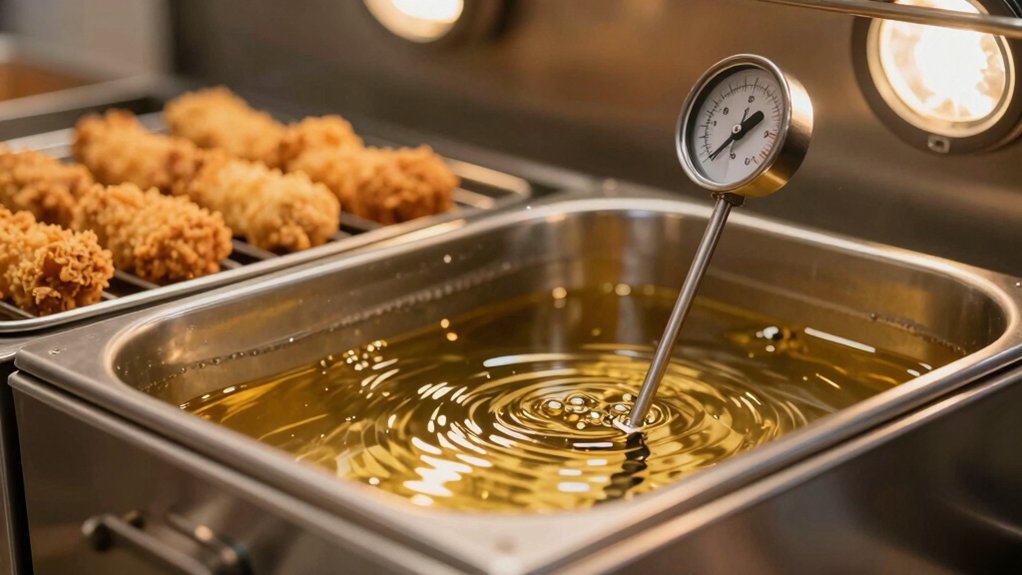
Use 320°F for two-stage fries (blanch then crisp), 350–375°F for most items, and 375–400°F for thicker chicken or fish so you seal without sogginess.
Keep oil below its smoke point: refined avocado, peanut, safflower, or rice bran stand up best. Filter oil daily to every few days depending on use. Watch for darkening, foaming, or off-odors as discard cues.
Keep a thermometer handy and you’ll learn how to match temps and oil life.
Quick Overview
- Common frying range is 350–375°F for most foods, balancing color, texture, and doneness.
- Fries benefit from two-stage frying: blanch at ~320°F; then crisp at ~356°F.
- Fish and chicken need higher heat, typically 375–400°F; this helps to seal and avoid soggy interiors.
- Choose oils with smoke points above your frying temperature (refined avocado, peanut, rice bran recommended).
- Monitor oil for darkening, foaming, or off-odors. Filter or discard accordingly to maintain quality.
Temperature by Food Type
Wondering what temperature to use for different foods? You’ll choose based on size and moisture: Fries use a two-stage approach; delicate fish and battered chicken need higher temps to seal and crisp. Dense items tolerate slightly lower heat.
Keep oil near 350–375°F for most items; raise to 375–400°F only for thicker pieces. Another topic is how oil choice affects performance and nutrition impact; here, focus on temps for texture and safety.
| Food | Temp (°F) | Notes |
|---|---|---|
| Fries (two-stage) | 320 → 356 | Blanch then crisp |
| Fish/Chicken | 375–400 | Seal, avoid soggy interior |
| General items | 350–375 | Best balance of color and doneness |
Oil Filtration Interval
Because frying degrades oil over time, you should filter oil regularly to remove food particles and slow oxidation. Establish an interval based on usage: for light daily use, filter after each service; for moderate use, filter every 1–3 days; and for heavy or batter-heavy frying, filter multiple times per day.
- Check clarity and aroma daily. Cloudy oil or off-odors reduce frying quality and indicate more frequent filtration is needed.
- Use fine-mesh or paper filtration to capture crumbs and batter fines. This preserves oil life and maintains subtopic relevance to maintenance.
- Record filtration events and volume processed. Data helps set intervals and prevents relying on unrelated topics or guesswork.
- Discard oil when you see persistent foaming, darkening, or taste transfer. Filtration can’t restore oil past its usable limit.
Smoke Point Thresholds by Oil
You need to understand smoke points so you can choose oils that tolerate deep-frying temperatures without breaking down. Compare common cooking oils and pick high-heat choices like refined avocado, peanut, or rice bran. Note factors that lower smoke points: impurities, water, and reused oil. Additionally, be aware of the visual and olfactory signs of overheating.
Keep your fryer below the oil’s smoke threshold to preserve flavor, safety, and oil life.
Smoke Point Basics
How hot can you safely heat a cooking oil before it starts to break down? You’ll want to stay below each oil’s smoke point to preserve flavor and oil stability. The smoke point is the temperature where visible smoke and rapid chemical breakdown begin. Beyond that, off-flavors, nutrient loss, and harmful compounds increase.
For frying, keep oil temperature well under the smoke point and monitor with a reliable thermometer. Consistent temperature control maintains oil stability and extends usable life. Also, avoid overheating when replenishing or reusing oil; straining and cooling promptly helps.
If oil smokes or smells sharp, discard it. Continued use accelerates degradation and compromises food quality and safety.
Common Cooking Oils
Many common cooking oils differ widely in how hot you can safely heat them, so pick an oil whose smoke point suits the frying task. You’ll choose high-smoke oils like refined avocado, peanut, safflower, or rice bran for 350–375°F deep frying; these resist breakdown and preserve oil flavor.
Canola, soybean, and refined vegetable oils also work within the general frying range if you monitor temperature. Avoid extra-virgin olive, unrefined coconut, butter, and sesame for high-heat deep frying because their lower smoke points produce off-flavors and smoke.
Remember allergen considerations: peanut oil can trigger severe reactions even if refined, so label and substitute appropriately. Use a reliable thermometer and keep oil below its smoke point to maintain quality and safety.
Factors Lowering Smoke
Smoke points drop when oils are exposed to heat, air, water, and food residues. You should treat oil care as part of safe frying. You’ll lower smoke thresholds by reusing oil that’s darkened, allowing water or batter bits to remain, or leaving oil uncovered between uses. Acidic ingredients and prolonged high heat accelerate breakdown.
Don’t rely on smoke point myths that ignore contamination and degradation; labeled smoke points assume fresh, refined oil. For frying oil safety, filter debris, store oil sealed and cool, and discard when it smells off or foams. Monitor oil temperature with a proper thermometer and avoid sustained temperatures near the listed smoke point to prevent off-flavors, harmful compounds, and increased fire risk.
High-Heat Oil Choices
After you’ve kept oil clean and at safe temperatures, choosing the right high-heat oil becomes straightforward: pick one whose smoke point sits comfortably above your frying range so the oil won’t break down while you cook.
You’ll favor refined avocado (≈520°F) or refined peanut, safflower, soybean, and rice bran (around 450°F) for 350–375°F frying. Canola and grapeseed also work near 420–435°F but give less leeway.
Avoid extra-virgin olive, unrefined coconut, and butter; their lower smoke points make them poor choices for deep frying. Focus on stability and neutral flavor rather than getting distracted by an irrelevant topic or unrelated discussion about non-frying uses.
Select oils by measured smoke point and practical heat margin for consistent, safe results.
Signs Of Overheating
How can you tell when oil’s gone too hot? Watch for visual and sensory overheating indicators: persistent thin bluish smoke, rapid darkening, and a slick, polymerized surface. You’ll smell sharp, acrid fumes rather than a neutral frying scent.
Taste tests (only of cooked food) reveal bitter, off-flavors from oil degradation. Thermometer readings crossing typical smoke points confirm the warning: about 350–375°F for extra-virgin olive and lard; 400–450°F for vegetable and canola; and 450°F+ for refined peanut or avocado.
Act immediately: lower heat, remove oil from direct flame, or replace it if heavy smoke or strong off-odors persist. Continued overheating indicators signal chemical breakdown and reduced heat stability.
Therefore, discard degraded oil to protect flavor and safety.
Frequently Asked Questions
How Long Can Oil Be Stored Between Uses?
You can typically store frying oil for 1–2 months between uses if you strain and refrigerate it. For frequent use, change it every 8–10 uses. You’ll want to watch for off-odors, darkening, or foaming.
Always filter debris and keep it in an airtight container. Cool, dark storage slows spoilage. For safety and quality, follow a regular two word discussion idea1, two word discussion idea2 routine and discard if signs of degradation appear.
Can Different Oils Be Mixed Safely?
Yes, you can mix oils, but you’ll want to consider different oil compatibility and mixing safety. Match oils with similar smoke points and neutral flavors so frying performance stays consistent.
Don’t mix a high smoke point oil with low smoke point oil; it lowers overall heat tolerance. Monitor oil quality, filter between uses, and discard when dark, foamy, or smelly. That keeps food flavor and fryer safety reliable.
How to Dispose of Used Frying Oil Responsibly?
You should cool used oil, strain debris, and store it in a sealed, labeled container for proper disposal or recycling. For food safety, never pour oil down drains. Use community recycling centers, household hazardous waste programs, or restaurants that accept cooking oil.
For sustainability practices, consider compostable filters; reuse oil a few times for similar foods; or donate to biodiesel collectors. Always follow local regulations and keep oil away from children and pets.
Do Additives Extend Oil Life or Prevent Foaming?
Yes, additives can extend oil life and help prevent foaming. You’ll use additive effectiveness data to choose antioxidants, anti-foaming agents, or acid neutralizers that slow oxidation and break surface bubbles. They’ll reduce off-flavors, lower polar compounds, and control foam buildup, especially with high-use fryers.
You should follow manufacturer guidelines, dose carefully, and keep filtration and temperature control. Additives complement, not replace, proper maintenance and monitoring.
What Are Signs Oil Should Be Discarded?
You should discard oil when it smells rancid or off, foams excessively, darkens and smokes near or below normal smoke points, or tastes bad. Also, toss oil that foams despite proper oil filtration, shows persistent food residue, or becomes viscous and sticky.
For reusable oil safety, track fry cycles and discard after repeated heating. Odd odors or color change indicate oil degradation and reduced smoke point and safety.
Conclusion
You’ve got the knowledge to keep oil temperatures right, filter oil regularly, and choose oils with proper smoke points for each frying job. Stay alert for signs of overheating. Remember that food moisture and contaminants lower smoke thresholds. Use high-heat oils when needed; follow recommended temp ranges by food type, and discard oil that’s dark, foamy, or smells off.
Do this, and you’ll get safer, crisper, more consistent frying results every time.
Related reading: Air Fryer Cooking Temperature Range Explained covers this topic in detail.