Air Fryer Parchment Liner Safety
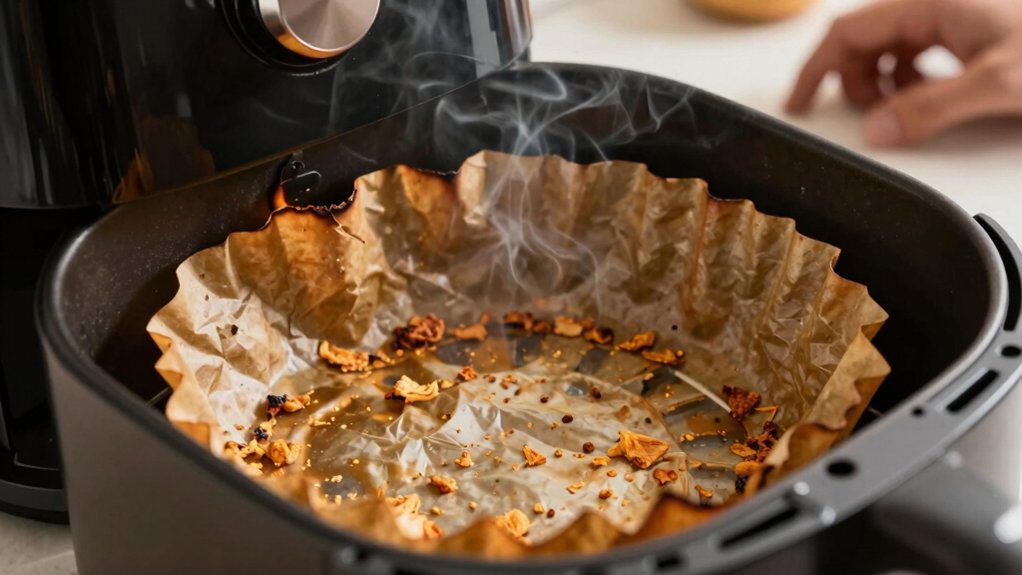
You can safely use perforated parchment liners in most air fryers if you match liner size to your basket type, keep temps at or below the liner’s rated limit (typically 420–450°F), and always secure the liner under food so it won’t lift into the heating element.
Verify compatibility with your model and trim edges so the paper doesn’t protrude past the rim. Don’t assume all liners fit; proper placement and cooldown removal prevent hazards. There’s more practical guidance ahead.
Quick Overview
- Use only parchment liners rated for air fryer temperatures, typically safe up to 420–450°F; verify your air fryer’s max temperature.
- Match liner shape and dimensions to your basket type (5–8 qt square, 8+ qt square, standard round, or round deep) to avoid gaps.
- Ensure liners have handle cutouts or trim edges so they sit flat and don’t obstruct basket handles or airflow.
- Always place food on the liner before heating so it stays weighed down and cannot lift into heating elements.
- Remove liners only after the basket cools. Fold and dispose of grease-soiled paper safely.
Perforated Liner Size Chart
How should you pick a perforated liner? You should match perforated sizing to your basket and verify liner compatibility with your model. Use correct dimensions: square 8″ for 5–8 qt, 8″×8.2″ for larger square units, and round 6.3″ or 6.25″×1.75″ for standard circular baskets. Choose perforated patterns for optimal airflow and crisping; pick non‑perforated only when you must contain small bits or liquids.
Always set food on the liner before powering the fryer. Ensure the liner lies flat without folds. Pre‑cut liners reduce sizing errors and improve safety. If a liner doesn’t list compatible brands or dimensions, do not use it. Mismatched liners can obstruct airflow or lift into heating elements, creating hazards.
| Basket Type | Recommended Size |
|---|---|
| 5–8 qt square | 8″ square |
| 8+ qt square | 8″ × 8.2″ |
| Standard round | 6.3″ diameter |
| Round deep | 6.25″ × 1.75″ |
Max Temperature Limits
Wondering what temperature limits matter for parchment liners? You should stick to manufacturer limits. Most parchment is safe to about 420–450°F (216–232°C). Air fryers usually operate at or below 400°F (204°C), so typical use stays within oven safety norms.
Treat higher temperatures as risky; paper can darken, become brittle, or ignite if it contacts heating elements. Don’t assume subtopic irrelevance; this limit directly affects whether you use parchment.
- Most parchment: safe up to 420–450°F (216–232°C).
- Typical air fryer: ~400°F (204°C) or less.
- Above ~428°F (220°C): avoid parchment use.
- Always verify the manufacturer’s label for model-specific limits.
If you follow these limits, you’ll minimize fire and material-degradation risks.
Compatibility With Basket Handles
Check that the liner fits around the basket handle cutouts so it won’t bunch or interfere when you slide the basket in and out. Use only liners you can secure under food or clips. Avoid placing loose paper near handles made of heat-conductive metal or low-melting plastics that can soften at high temperatures.
When removing the basket, let it cool briefly. Use tongs or oven mitts to lift the liner by the food, not the handle edges, to prevent burns or accidental tearing.
Handle Fit Check
Because basket handles differ in shape and clearance, you should verify that any parchment liner sits flat without interfering with the handle mechanism before you start cooking.
Check handling fit by placing the liner in the basket and closing or engaging the handle as you normally would. The liner must not bunch, fold, or extend into the handle channel.
Observe whether the handle grip compresses the liner or creates gaps that let paper flutter in airflow. If the liner deforms when the handle is operated, choose a smaller or perforated sheet, trim edges, or avoid liners for that recipe.
Confirming fit reduces the risk of paper contacting heating elements or obstructing movement. Always test fit outside of a heated cycle to prevent accidental ignition.
Secure Liner Placement
How will the liner interact with your basket handle when you slide it in and out? Check that the liner sits beneath the handle’s cutout or clear edge so the handle doesn’t pinch or lift it. You’ll want secure placement that keeps the paper flat under food weight and prevents catching on the handle lip.
If the liner tucks over or under the handle, it can wrinkle, obstruct airflow optimization, or dislodge during removal. Use a perforated liner sized to avoid contact with moving parts; trim excess so edges don’t protrude past the basket rim. Always place food immediately to weigh the liner.
Inspect placement before each cycle; a small misalignment can compromise circulation and create a safety hazard.
Heat Exposure Limits
Why should you care about heat exposure limits where the parchment meets the basket handle? You need to ensure parchment doesn’t contact hot metal near the handle, where localized temperatures can exceed the general air-fryer reading. Most parchment papers tolerate 420–450°F; however, actual hotspots and extended heat exposure matter. Thinner parchment thickness chars faster; thicker sheets resist brief spikes but still have limits.
Always trim paper so it sits under food and away from handles. Avoid preheating with unweighted paper. Check the manufacturer’s heat rating for your parchment and air fryer model. If a recipe exceeds about 428°F or you see browning at the handle junction, stop use immediately to prevent brittleness, smoking, or ignition.
Handle Material Concerns
Check the fit and materials of your basket handle before using parchment, because handle composition and surface temperature can create hotspots that exceed the paper’s heat tolerance. You should inspect whether the handle material is metal, plastic, or silicone; it contacts or overhangs the parchment. Metal handles transfer heat quickly and can locally exceed 420–450°F (216–232°C), creating compatibility concerns.
If the handle presses or rubs against the liner during cooking, parchment may darken or become brittle at that junction. Use perforated paper trimmed to avoid handle contact. Confirm the manufacturer’s guidance for your model to ensure safe handle material interactions.
Prioritize secure placement of food so the liner can’t shift toward hot handles and cause a hazard.
Removal Safety Tips
When removing parchment from your air fryer, take it out only once the basket has cooled slightly and the food’s weight secures the liner. Sudden shifting or contact with hot handles can char or ignite the paper. Always lift the basket straight up and away from the heating element, keeping your fingers clear of any metal or overhanging handles that may be hotter than the liner’s rated temperature.
After lifting, slide the liner out with tongs or heat-resistant gloves, avoiding contact with basket handles that retain heat. Inspect the liner for grease pooling; blot excess oil into a disposable container before discarding to reduce drip hazards. For parchment disposal, fold grease-soiled paper inward and place it in a sealed bag. Follow local guidelines for oily waste.
Frequently Asked Questions
Can I Use Parchment Liners With Silicone Air Fryer Racks?
Yes, you can use parchment liners with silicone air fryer racks, but check parchment silicone compatibility and safety considerations first. Ensure parchment is rated for your cooking temperature. Cut it to fit under food, not cover the rack edges, and use perforated sheets so air circulates.
Never preheat with unweighted paper. Avoid liquids or loose lightweight foods, and confirm the manufacturer’s labels for both rack and parchment to prevent fire or airflow problems.
Will Parchment Liners Affect Crispiness of Frozen Fries?
Yes, parchment liners can slightly reduce crispiness. You’ll get minimal crispiness impact because parchment is thin and won’t block heat. However, it adds a tiny barrier that can retain moisture. For best results, use perforated parchment; keep it cut to fit under the fries and avoid overcrowding.
Follow parchment safety: don’t preheat with unweighted paper and ensure food holds liner in place to prevent lifting or fire.
Can I Reuse Single-Use Parchment Liners Safely?
You can sometimes reuse single-use parchment liners, but weigh reusability concerns carefully. If the liner stayed clean, undamaged and wasn’t exposed above parchment temperature limits (around 420–450°F), you can reuse it once or twice.
Don’t reuse if it’s greasy, torn, scorched or used with liquids. Always ensure food weights it down, maintain airflow, and discard liners showing brittleness, darkening beyond normal or any sign of heat damage.
Are Parchment Liners Recyclable or Compostable?
Mostly no: single-use parchment liners often have recyclability concerns because they’re coated with silicone or other treatments that contaminate recycling streams.
You can compost uncoated, plain parchment if it’s confirmed composting viability by your local facility. However, greasy or silicone-coated liners usually aren’t compostable.
Check packaging for compostable certification and local rules. When unsure, dispose of used liners in the trash to avoid recycling or compost contamination.
Do Parchment Liners Release Odors Into Food?
Generally, you won’t notice parchment odor transferring to food if you use liners within their temperature limits; that keeps liner safety intact. Overheating paper beyond 420–450°F can darken it and produce a faint off-smell. Therefore, avoid high temps and unweighted liners.
Use perforated parchment, fit it under the food, and never preheat with loose paper. If food smells strange, discard it and check manufacturer guidelines for compatibility.
Conclusion
When using perforated parchment liners, match the liner size to your basket and never exceed the liner’s max temperature rating: most are safe up to 428–450°F (220–230°C).
Make sure the liner doesn’t block airflow or wrap around handles; test fit before heating. Keep liners secured beneath food to avoid fluttering into the heating element.
Avoid contact with plastic-coated handles and remove liners carefully with tongs once cool enough. Prioritize manufacturer guidance and caution to prevent fire risk.
Related reading: Air Fryer Accessory Materials Heat Safety Guide covers this topic in detail.