Slow Cooker Crock Care and Cleaning
You should inspect the glass lid, gasket, and rim before each use for cracks, warping, or trapped grime.
Never lock the lid while cooking.
Hand-wash seals and the glass with mild soap; avoid abrasives and sudden temperature changes.
Dry thoroughly before reassembling.
Insert temperature probes into the thickest part of food away from bone and walls.
Store lids upright or padded to prevent chips.
Follow these steps for safe use and find fuller care tips below.
Quick Overview
- Cool the crock and lid fully before cleaning to prevent thermal shock and cracking.
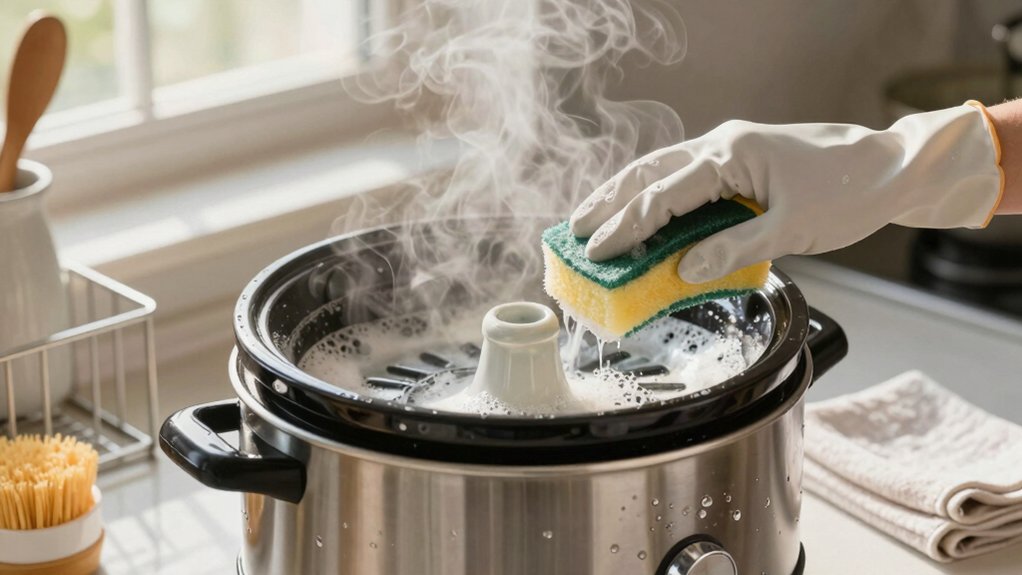
- Hand-wash the ceramic crock with warm, soapy water and a soft sponge; avoid abrasive pads.
- Soak stubborn residues in warm water to loosen food. Then gently scrub and rinse thoroughly.
- Inspect and hand-clean rubber gaskets and lid edges; dry completely before reassembling.
- Store lids upright and padded. Never plunge hot glass into cold water or harsh cleaners.
Lid Fit & Seal Guide
How well your lid fits and seals directly affects cooking performance and safety, so check it before every use. You’ll inspect the lid gasket vs glass lid seals for cracks, warping, or loose edges. Replace tabbed or full-lid gaskets if damaged. With a hinge vs locking lid, confirm hinges move freely and locking clips disengage fully. Never lock the lid during cooking; that traps steam and creates unintended pressure.
| Component | What to check |
|---|---|
| Gasket type | Tears, hardening, proper fit |
| Glass lid | Seal seating, chips, warping |
| Hinged lid | Smooth action, tab orientation |
| Locking lid | Clips unlatch, no pressure use |
| Overall | Flat surface alignment |
Always cool before cleaning. Never submerge the heating base.
Temperature Probe Placement Tips
Where should you place the probe for the most accurate reading? You should insert the temperature probe placement into the thickest part of the food, avoiding bone, fat, and the pot’s walls so the cooker measures internal doneness, not surface heat. Keep the probe cable routed so it doesn’t interfere with lid fit or seal.
- Position probe tip in center of roast, stew chunk, or poultry thigh away from bone.
- Ensure probe cable exits near the lid edge without lifting it; imperfect lid fit raises cooking time.
- Check probe placement before starting and after stirring to maintain safety and consistent readings.
Follow these steps every use to prevent undercooking. Maintain proper lid fit and reduce the risk of foodborne illness.
Glass Lid Care
Check your glass lid for cracks or chips before each use, and don’t use it if the seal or glass looks damaged.
For cleaning, soak and gently scrub stubborn stains with a mild, non‑abrasive cleaner. Always hand‑wash the rubber seals; avoid sudden temperature changes that could crack the glass.
Store lids in a padded, upright position between uses to protect seals and prevent accidental thermal shock.
Inspect For Cracks
Why inspect your glass lid before each use? You should do a quick crack inspection and stoneware checks to ensure safety and proper sealing. Hold the lid to the light and scan all edges and the central knob for hairline fractures, chips, or stress lines.
Even small cracks can worsen under heat and cause steam leakage or shattering. If you find any damage, don’t use the lid; replace it or contact the manufacturer for a compatible part. Avoid sudden temperature changes during handling. Let the lid cool fully before washing and never plunge a hot lid into cold water.
Regular inspection prevents accidents and preserves cooking performance, so make this a brief routine before every cooking session.
Remove Stubborn Stains
Got stubborn stains on your glass lid? Start by unplugging the cooker and letting everything cool completely to avoid burns or thermal shock. Remove any rubber seals per the manufacturer’s instructions before cleaning; those seals need hand washing.
For stain removal, soak the lid in warm, soapy water long enough to loosen stubborn residue. Then use a soft sponge or cloth to scrub gently. Don’t use metal scouring pads or abrasive cleaners that can scratch the glass. Rinse thoroughly and inspect seals and edges for trapped grime; use a soft brush if needed.
Dry with a soft towel to prevent water spots. Reassemble only when all parts are dry and seated correctly to maintain a safe seal during use.
Use Gentle Cleaning Agents
After you’ve removed stubborn stains and reinstalled any seals, use only gentle, non-abrasive cleaners on glass lids to protect clarity and prevent scratching. You’ll want to choose gentle cleaning products labeled safe for glass and cookware. Avoid bleach, harsh alkalis, and powdered scours that can etch the surface.
Hand wash with warm, soapy water using a soft sponge or microfibre cloth, paying attention to the seal area and steam vents. Rinse thoroughly to remove residue from any safe cleaners you used. Dry the lid with a soft towel to prevent water spots and inspect seals for proper seating. Store lids upright or flat in a padded area to maintain integrity and avoid accidental chips or cracks.
Prevent Thermal Shock
Because glass and ceramic lids can crack from sudden temperature changes, handle them slowly and avoid exposing hot lids to cold water or cold surfaces. When the cooker’s just finished, let the lid cool on a heat-resistant surface at room temperature so you limit rapid heat transfer.
Don’t place a warm lid into a cold sink or against chilled countertops; thermal expansion and contraction create stress points that cause chips or fractures. If you must speed cooling, move the lid to a slightly cooler area, not into ice or running cold water.
When washing by hand, use warm—not hot—soapy water and dry with a soft towel. Inspect seals and glass for hairline cracks before reuse to stay safe.
Store Properly Between Uses
Let the lid cool fully on a heat-resistant surface before you store it. Then keep it somewhere that protects the glass and seals from knocks and temperature swings. Once cool, remove any dampness with a soft towel and inspect silicone seals. Dry and reseat them to avoid trapping moisture.
For storage recommendations, place the lid upright on a padded shelf or hang it on a hook with a soft cover to prevent chipping. Avoid stacking heavy items on top of glass lids or near heat sources. If you take the slow cooker on trips, pack the lid separately in bubble wrap or a padded bag. Secure seals in a small container; these travel considerations prevent cracks and hygiene issues.
Frequently Asked Questions
How Do I Remove Burned-On Food From the Stoneware?
You remove burned-on food by filling the pot halfway with hot water and a cup of vinegar. Then simmer on high for an hour; this loosens residue so you can scrub gently with a soft brush or sponge.
For stubborn spots, make a baking soda paste, apply it, let it dry, then scrub and rinse. Follow stoneware care: avoid abrasives, cool before washing, and never immerse the electrical base.
Can I Use Bleach to Sanitize the Pot?
You shouldn’t sanitize with bleach in the stoneware. Harsh bleach can damage glazes and leave harmful residues. Instead, use alternative sanitizers like diluted white vinegar or a mild bleach solution applied carefully to removable lids (1 tablespoon bleach per gallon). Then rinse thoroughly.
You’ll unplug and cool the unit first. Avoid soaking the heating base, hand-wash seals, and dry everything completely to keep the cooker safe and functioning.
How Often Should I Descale the Heating Base?
You should descale the frequency for the heating base at least twice a year. You should descale more often if you see mineral buildup or live in hard-water areas.
For heating base care, unplug and let it cool completely before wiping. Never immerse the base. Use a damp cloth with mild detergent for routine cleaning, and perform a vinegar-based descale when deposits appear to protect performance and safety.
Keep it dry before reconnecting.
Is It Safe to Use Metal Utensils in the Crock?
Yes, metal is safe for occasional use, but you should prioritize utensil compatibility to protect the crock’s finish. You’ll avoid scratching ceramic or nonstick surfaces by using wooden, silicone, or plastic tools for stirring and serving.
If you do use metal, be gentle and don’t scrape. Damaged surfaces trap food and resist cleaning, which increases burn risk and reduces lifespan. Therefore, choose softer utensils for regular use.
Can Damaged Cords Be Repaired or Replaced?
No, you shouldn’t repair damaged cords yourself. Damaged cords pose shock and fire risks. For safety, stop using the appliance and contact the manufacturer or a qualified appliance repair service for cord replacement.
If the model allows user-replaceable cords, follow manufacturer instructions and use approved replacement parts. Don’t submerge electrical components or attempt makeshift fixes. Proper cord replacement keeps you safe and preserves the slow cooker’s functionality.
Conclusion
Keep your slow cooker in good shape by checking the lid fit and probe placement before each use. Inspect the glass for cracks. Clean gently with mild detergents to remove stains; avoid abrasive pads. Never subject the pot or lid to sudden temperature changes.
Store the crock and lid separately or with a soft barrier to prevent chips. These simple, safety-focused steps prevent accidents and extend your slow cooker’s life.
Related reading: Pressure Cooker covers this topic in detail.