Air Fryer Troubleshooting Uneven Cooking
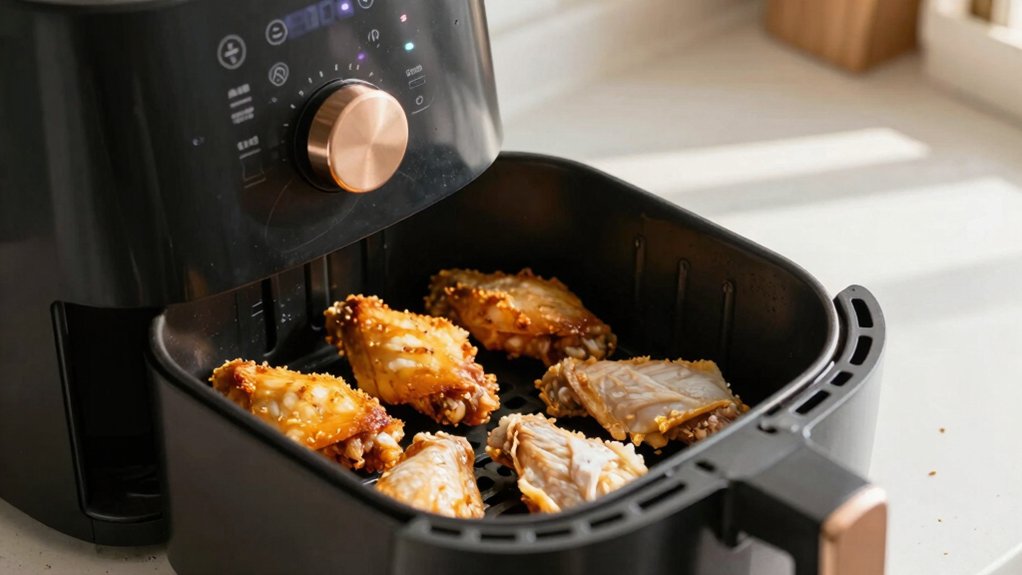
If your Air Fryer cooks unevenly, map its heat zones by running it empty at 400°F for 10 minutes and taking temps on a 9-point grid to find >10°F variance.
Check rack slots: upper positions run hotter. Rotate placement or use lower slots for gentle cooking.
Calibrate fan speed with a tachometer and measure airflow; low or fluctuating RPMs cause hotspots. Clean and re-test; replace the fan if vibrations or persistent gradients remain.
Continue for step-by-step fixes and validation.
Quick Overview
- Map internal heat with a 9-point thermometer grid (empty run at 400°F for 10 minutes) to identify temperature gradients.
- Avoid overcrowding and use single layers or center-focused bakeware to minimize edge hot spots and cool centers.
- Check rack slot differences: use upper slots for browning and lower slots for gentler, slower cooking.
- Measure fan speed/airflow (tachometer/anemometer); replace the fan if RPMs are low, noisy, or fluctuate under load.
- After cleaning or repairs, re-test and log pre/post heat maps and cook times to validate evenness improvements.
Cooking Zone Heat Map
How do heat zones form inside your air fryer, and what does that mean for cooking? You’ll see uneven heat because the fan-driven circulation creates hotter top and rear zones; cooler bottom and front areas. Use airflow mapping (a 9-point thermometer grid) to quantify gradients. Aim for
Test: empty 400°F for 10min, then map. Mitigate by using single layers, smaller batches, centering bakeware, and rotating items. Evidence shows outer edges run 10–20% hotter than centers in basket models. Compact units show steeper gradients. Apply targeted adjustments: shorten top-zone time, elevate bottoms, and shake centers.
Below table compresses those feelings into stark choices.
| Top | Middle | Bottom |
|---|---|---|
| Hot | Uneven | Cool |
| Fast | Stuck | Slow |
Rack Slot Heat Differences
Variability in rack-slot placement creates measurable temperature differences you can use to fine-tune results. Upper slots sit closer to the heating element and fan, so they run hotter and brown faster. Lower slots are shielded by trays and basket layers and stay cooler. You should map your Air Fryer by measuring temperature at each rack slot with a probe; expect 10–25°F (6–14°C) variation depending on model and load.
Use hotter slots for quick browning and lower slots for gentler cooking. Rotate placement when recipes require uniform doneness.
- Measure: record steady-state temps at each rack slot with an oven thermometer.
- Assign: place items by desired browning rate.
- Compensate: lower setpoint 10–15°F for top slots.
- Validate: repeat mapping after accessory changes.
Fan Speed Calibration
Check the fan speed first, because fan RPM directly controls airflow and any deviation will create hot spots or slow cooking. You can calibrate the motor by measuring RPM or airflow output with a tachometer or anemometer. Compare readings to the manufacturer’s spec and document performance at multiple speed settings.
If measured airflow is consistently low, noisy, or fluctuates despite calibration, replace the fan to restore even cooking.
Fan Speed Basics
Why does fan speed matter for even cooking? You need consistent airflow velocity to distribute heat uniformly. Higher RPMs increase convective heat transfer but can dry or displace lightweight items. Low RPMs reduce circulation and create hot spots.
Measure effects: note browning patterns, use a thermal probe at multiple points, and run short tests at different settings. Adjust technique: choose moderate speed for mixed loads, higher for single thin items, and lower for delicate batters. Two word ideas to test: “steady flow” and “pulse mode.”
Record results systematically: time, temperature, fan setting, load configuration. This will build an evidence base for your unit. That data tells you when fan adjustments solve uneven cooking versus when other factors are responsible.
Calibrating Fan Motor
How do you know the fan is actually running at the speed the controls display? You’ll use a simple, repeatable calibration technique that isolates fan RPM from temperature variables. First, cut power, remove food, and access the fan per the manual.
Reapply power, set a specific speed, and measure motor rotation with a non-contact tachometer or a calibrated strobe light; record multiple readings. Next, vary settings and repeat to establish a speed-to-control map. During testing power, monitor voltage and current at the motor terminals with a multimeter to confirm the control board delivers expected electrical input.
Compare electrical input to RPM readings; discrepancies indicate control, motor, or power-delivery faults. Document results and consult service guidance if values fall outside manufacturer tolerances.
Measuring Airflow Output
Want to confirm the fan’s airflow matches its RPM readings? Start by measuring airflow with an anemometer at the outlet and at several points inside the cavity, recording steady-state values at typical settings. Correlate those readings with RPM from the motor controller; consistent proportional changes indicate proper calibration.
Create a simple heat map by placing thermal sensors or an infrared camera across the cooking area to visualize flow-driven temperature gradients. If airflow is lower than expected but RPMs are normal, inspect for obstructions, dirty fan blades, or damaged housing causing slip or turbulence.
Repeat measurements after cleaning or repairs to verify improvement. Log results, note ambient conditions, and use the heat map to target corrections rather than guessing.
Impact On Cooking Evenness
Curious about how fan speed calibration alters cooking evenness? You’ll find that small fan speed changes directly affect heat distribution and uneven heating patterns. Calibrating fan speed lets you control convective strength: higher RPMs increase turbulence and surface browning, while lower RPMs reduce hot spots but slow overall cook.
Use systematic airflow measurement to quantify changes. An anemometer at multiple basket positions reveals peak flow zones and guides adjustments. When you observe consistent faster cooking near the fan, reduce speed or redistribute load. If centers remain undercooked, increase speed or space items for better circulation.
Record pre- and post-calibration cook times and internal temps to confirm improvements. This methodical, measured approach limits trial-and-error and produces repeatable, even results.
When To Replace Fan
When should you replace the Air Fryer fan? You should replace the fan when objective signs point to mechanical decline: persistent vibration, grinding noises, reduced rpm under identical settings, or consistent hot spots after ruling out placement and cleanliness.
Test systematically: clean the unit, run a water whirlpool or smoke test, and log fan speed across identical cycles. If airflow readings fall despite a clear pathway, weigh replacement fan versus fan motor wear. A full motor replacement is justified when repairs can’t restore rpm or balance.
Also consider airflow sensor versus fan speed mismatch: if the sensor reports normal airflow but speed measure falls, replace the motor. Use OEM parts, keep installation documented, and re-test to confirm corrected evenness.
Frequently Asked Questions
Why Does Food Brown Unevenly on Top but Not Underneath?
Your food browns unevenly on top but not underneath because a top heat imbalance concentrates heat above items, creating uneven browning. You’re likely getting hotter airflow or hot spots near the fan; the temperature’s too high so tops cook faster than interiors.
Fix it by lowering temperature by about 25°F (15°C), preheating, rotating, or using shallower pans. Avoid overcrowding and check placement to center bakeware for uniform airflow and consistent results.
Can Foil Cause Soggy or Undercooked Areas?
Yes, foil concerns can cause soggy or undercooked areas by blocking hot air and creating cold pockets. If you overuse foil or cover the basket fully, airflow diminishes; this produces uneven cooking.
Use foil sparingly: tent tops to protect from over-browning, perforate foil or use mesh to restore circulation, and avoid wrapping items tightly. Cook smaller batches and check midway, rotating trays to confirm even heat exposure.
How Often Should I Clean the Fan and Heating Element?
Clean the fan and heating element every 2–3 months, or monthly if you use the air fryer several times weekly. For maintenance tips, unplug and let the unit cool. Remove detachable parts and gently brush or vacuum loose debris. Wipe elements with a damp cloth and mild detergent, avoiding soaking.
Inspect for grease buildup and smoke after heavy use. Accelerate cleaning frequency when you notice odors, uneven cooking, or reduced airflow.
Why Do Edges Crisp Faster Than Centers in Baked Goods?
Edges crisp faster because hot air and radiant heat reach outer areas sooner. Therefore, edges crisp while centers remain cooler and moister. You’re creating temperature gradients from airflow patterns, proximity to the fan, and shallow pan placement.
Reduce oven temperature by approximately 25°F. Use shallower pans, center bakeware, and preheat to equalize heat. Rotate halfway and avoid overcrowding so heat penetrates centers, preventing edges-overdone and centers-undercooked outcomes.
Can Using Silicone Pans Change Cooking Results?
Yes, silicone pans can change cooking results. You’ll find silicone retains moisture and insulates; tops and edges brown less and centers can stay softer. This produces soggier areas compared with metal. To compensate, lower the temperature slightly, shorten the time, or preheat pans.
Avoid wrapping with foil; it blocks airflow. Instead, use perforated parchment or mesh racks to improve circulation and prevent soggy areas while maintaining gentle baking.
Conclusion
You’ve mapped the cooking zone, checked rack-slot differences, and tested fan speed. Now act on the data. If airflow readings and fan calibration fall within spec, rotate trays and use proven rack positions to equalize heat.
If calibration fails or motor output is weak despite cleaning and tightening, replace the fan to restore even circulation. Follow measured adjustments rather than guesswork so your air fryer cooks consistently and predictably every time.
Related reading: Electric Skillet Temperature Settings Explained covers this topic in detail.