Air Fryer Nonstick Coating Care
You should keep your air fryer’s nonstick coating below about 400–450°F. Avoid overheating, and never use metal utensils or tongs with teeth that can scratch the surface.
Use silicone, wood, or smooth nylon tools, and hand wash with a soft sponge and mild detergent to prevent gouges. Inspect for chips or flaking, and replace any damaged parts or utensils promptly.
Follow manufacturer temperature limits and care instructions to stay safe. More practical tips and troubleshooting follow.
Quick Overview
- Keep cooking temperatures at or below the manufacturer’s limit (commonly ≤400–450°F) to avoid coating breakdown and fumes.
- Use silicone, wooden, or smooth-edged nylon tools instead of metal to prevent scratching the nonstick surface.
- Hand wash baskets and trays with a soft sponge and mild detergent. Avoid abrasive pads or cleansers.
- Inspect coatings regularly for scratches, chips, or flaking. Stop using or replace parts if damage appears.
- Replace worn utensils and follow the manual’s care instructions to maintain release properties and safety.
Coating Temperature Limits
When you use an Air Fryer, keep coating temperature limits in mind: PTFE (Teflon) surfaces are safest below about 450–500°F. Ceramic coatings tolerate up to roughly 480°F. PFAS-free ceramics are best kept under 450°F. You should monitor temps to avoid irreversible degradation and toxin release from overheated coatings.
Inspect surfaces regularly; scratches plus high heat accelerate breakdown. Follow manufacturer caps (commonly ≤450°F) and never exceed 500°F. Use gentle tools and hand wash to maintain integrity.
| Coating | Safe Temp | Risk Point |
|---|---|---|
| PTFE (Teflon) | >450°F | |
| Ceramic | >480°F | |
| PFAS-free ceramic | >450°F |
Oven-safe up to 400°F
Oven-safe up to 400°F means you can confidently use the removable basket or tray at common baking and roasting temperatures without risking coating breakdown. Stick to the 400°F limit; avoid preheating to higher settings, and never expose scratched or chipped surfaces to sustained high heat. You should treat that limit as a hard cap: manufacturers set it based on color fast testing and heat shock tolerance. Exceeding it risks discoloration, loss of release properties, or fumes from degraded coatings.
- Check the manual for specific temperature ratings.
- Avoid thermal shock by not placing a hot basket on cold surfaces.
- Replace parts showing chips, flaking, or discoloration.
- Use an oven thermometer to verify actual temperatures.
Avoid Metal Utensils
Don’t use metal utensils on nonstick surfaces; they can scratch or gouge coatings and contaminate food. Use silicone, wood, or tongs without teeth. Replace any utensils that show wear or sharp edges.
Always hand-wash coated parts with soft sponges to avoid further damage.
Prevent Scratches And Gouges
Although metal utensils feel sturdy, they can quickly scratch or gouge nonstick surfaces and shorten your Air Fryer’s usable life. You should avoid metal contact to preserve durable compatibility between tools and coatings and to maximize coating longevity.
Scratches compromise the barrier, increase flaking risk, and may expose base metal to corrosion or food contamination. Inspect the basket regularly; small nicks signal immediate change in habits. When removing or turning food, lift gently and avoid scraping baked-on residue with sharp edges.
If you notice deep gouges or peeling, stop using the damaged part and replace it. Continued cooking on degraded surfaces raises safety and contamination concerns. Prioritize gentle handling and routine inspection to keep coatings effective and safe.
Use Silicone Or Wood
Why reach for silicone or wooden utensils instead of metal? You protect nonstick surfaces by choosing tools that respect coating limits. Silicone compatibility with most PTFE and ceramic finishes means you can scrape gently, flip food, and serve without scraping off coating layers.
Use high-quality, heat-resistant silicone to avoid melting or softening near hot elements. Wooden utensil impact is minimal when you stir or turn food; wood won’t chip coatings, conduct heat, or leave sharp gouges. Always inspect utensils for rough spots, cracks, or embedded debris that could abrade surfaces.
Do not use metal tools that bend or bite into the finish. Pick silicone or wood, handle items gently, and you’ll extend the life and safety of your Air Fryer’s nonstick coating.
Avoid Tongs With Teeth
If you’re already using silicone or wooden tools, steer clear of metal tongs with teeth. They concentrate force on small points and can score or chip nonstick coatings. You should pick smooth-edged tongs or dedicated silicone tools to minimize concentrated stress that leads to scratches or microscopic gouges.
Inspect your utensils for burrs or rough areas that can abrade PTFE or ceramic layers. Even minor scoring reduces coating performance and safety. When choosing accessories, look for options whose support design prioritizes rounded contact surfaces and gentle grips. That detail belongs in product specs and marketing messaging so buyers know what protects coatings.
Use and store utensils carefully, and avoid levering or scraping motions that transfer concentrated force to the coating.
Replace Damaged Utensils
When a utensil shows nicks, bent edges, or exposed metal, replace it immediately to avoid gouging your air fryer’s coating. You should inspect spatulas, spoons, and tongs before each use. Damaged tools can scrape PTFE or ceramic layers and cause flaking.
Replace damaged utensils with silicone, wood, or heat-resistant nylon rated above your unit’s coating temperature limits so they won’t deform or off-gas. Don’t improvise with metal forks or knives when turning food; small scratches accelerate wear and raise contamination risk. Keep a dedicated set for the air fryer and store them separately to prevent accidental contact with sharp edges.
If you see any coating discoloration or peeling after utensil use, stop using the part and consult replacement guidance.
Hand Wash Nonstick Surfaces
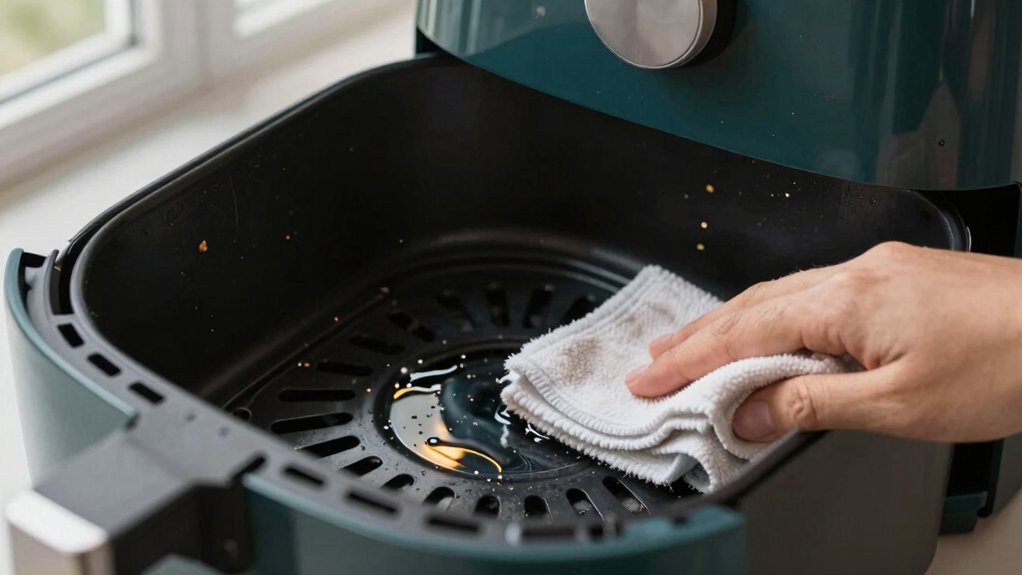
After replacing worn or damaged utensils, make hand washing your standard practice to protect nonstick coatings and avoid metal tools that can scratch surfaces. You should consult care labeling before cleaning so you follow manufacturer guidance on water temperature, detergents, and drying methods.
Use a soft cloth or non-abrasive sponge and mild detergent to remove grease; rinse thoroughly to prevent residue that degrades coating safety. Don’t use metal scrubbers, knives, or forks when scraping stuck food: soak briefly instead and lift debris with silicone or wooden implements.
Inspect surfaces each time you clean. Any chips or flaking means stop using the part and replace it. Regular gentle hand washing extends lifespan and reduces health and safety risks from damaged coatings.
Frequently Asked Questions
Can I Use Olive Oil Sprays on Ceramic-Coated Baskets?
Yes, you can use olive oil sprays on ceramic-coated baskets, but you should be careful. Some aerosol sprays contain additives that can build up and reduce nonstick longevity. Therefore, choose pure oil sprays or pump-style alternatives.
Wipe excess oil with a paper towel and follow manufacturer guidelines. For safer, longer-lasting results, consider oil spray alternatives such as brushing with a small amount of olive oil or using a refillable mist bottle.
Does Seasoning Help Ceramic or PTFE Air Fryer Surfaces?
Yes, seasoning can help, but it varies. You’ll get seasoning benefits mainly with PTFE or uncoated metal: a thin oil layer reduces sticking and protects surfaces. Ceramic needs less oil; over-seasoning can build residue and shorten coating longevity.
You should follow manufacturer guidance. Use light high-smoke-point oils sparingly. Hand-wash gently, and replace any scratched or flaking parts to maintain safety and coating longevity.
Are Replacement Baskets Available for Discontinued Models?
Yes, you can often find replacement baskets even after model discontinuation. Check the manufacturer first for official replacement availability or compatible part numbers. If unavailable, search third-party retailers, appliance parts sites, or community marketplaces using your exact model number.
Prioritize OEM or certified parts for safety and coating integrity. Avoid damaged or mismatched baskets that could flake or warp during use. Keep receipts and confirm fit before buying.
How Do I Safely Dispose of a Flaking Nonstick Basket?
You should stop using the basket immediately and avoid ingesting flakes. For disposal safety, wipe away loose particles with a damp cloth while wearing gloves and a mask to limit inhalation of flaking risks.
Seal the basket in a heavy-duty bag or box; label it as damaged nonstick. Follow local hazardous-waste or metal-recycling guidelines: some facilities accept coated metal.
Don’t compost or burn; that can release harmful fumes.
Can I Store Food in the Air Fryer Basket After Cooking?
Yes, you can store food in the air fryer basket after cooking, but prioritize food safety after air frying. Let food cool slightly, transfer it to airtight containers, and refrigerate within two hours to prevent bacterial growth.
If the basket’s coating is flaking or damaged, do not store food in it; move food to safe, non-coated containers instead. Clean and dry the basket thoroughly before next use.
Conclusion
You’ve learned the essentials for protecting your air fryer’s nonstick coating: don’t exceed 400°F, avoid metal utensils, and stop using tongs with teeth that can gouge the surface. Use silicone or wooden tools and replace any damaged utensils right away.
Always hand wash nonstick parts gently with a soft sponge and mild detergent. Follow these simple, safety-first steps and you’ll keep the coating intact, extend appliance life, and prevent health risks.
Related reading: Deep Fryer Safety Tips and Common Hazards covers this topic in detail.