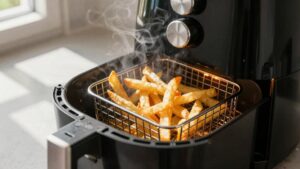
Air Fryer Smoke Causes and Fixes
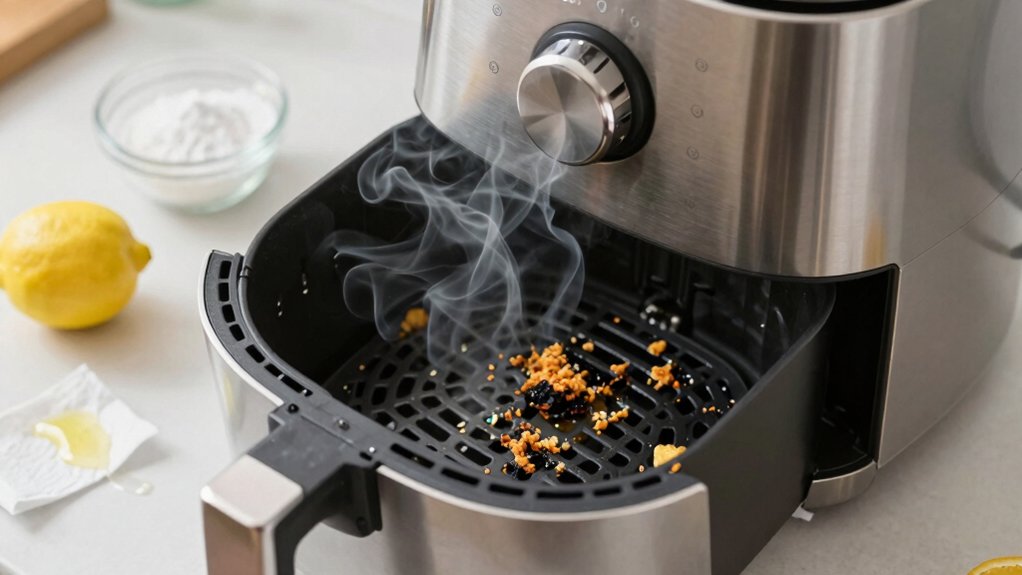
If your Air Fryer smokes, first identify the cause: excess grease, baked-on residue, overcrowding or high heat, low smoke point oil, or carbon on the heating element. Trim and drain fatty foods, lower the temperature, cook smaller batches, and use refined oils.
Deep-clean the basket, tray, and coils. Scrub carbon deposits with degreaser or baking-soda paste. Then run a short empty cycle. Inspect airflow and venting, log fixes, and follow a maintenance cadence. More detailed diagnostics and step-by-step cleaning follow.
Quick Overview
- Excess grease or oil splattering causes white smoke; trim fat, add bread or water to the pan, and increase ventilation.
- Burning crumbs and stale odors indicate residue buildup; deep-clean basket, tray, coils, and removable parts with degreaser.
- Rapid smoke and uneven browning signal overcrowding or too-high temperature; lower heat and cook in smaller batches for proper airflow.
- Using low-smoke-point or unrefined oils produces smoking during high-heat cycles; switch to refined oils like avocado or refined olive oil.
- Carbonized deposits on the heating element create hotspots and smoke. Unplug and cool, then brush off; use degreaser or baking soda paste, and run an empty cycle.
Smoke Source Comparison Chart
How do you pinpoint why your Air Fryer’s smoking? You’ll classify sources by cause, inputs, and fixes; avoiding irrelevant topic tangents or unrelated comparison noise. Inspect: fatty foods, residue, temperature, crowding, wrong oil, or damaged parts. Use the quick-reference table below to map observed smoke to likely causes and immediate actions.
| Cause category | Key indicator | Immediate fix |
|---|---|---|
| Excess grease/oil | White smoke, greasy splatters | Trim fat; add bread/water; ventilate |
| Residue buildup | Burning crumbs/old odors | Deep clean basket/tray/coils |
| High temp/overcrowd | Rapid smoke, uneven browning | Lower temp; cook in batches |
Follow diagnostics methodically: observe smoke type, check basket and coils. Then apply the targeted fix.
Oil Smoke Point Table
Why does oil choice matter for air fryer smoke and cooking control? You must match cooking oil selection to target temperature so the oil smoke point isn’t exceeded. Choose refined oils for high-temp cycles and reserve delicate oils for low-heat finishing. Measure temps, note oil labels, and log results.
- Use high-smoke point oils (avocado, refined olive) for searing to reduce smoke and odor.
- Avoid low-smoke point nut and unrefined oils during sustained high heat; they will degrade and smoke quickly.
- For sensitive recipes, lower temperature and extend time rather than switching to unstable oils.
This table-driven, procedural mindset keeps grease vapor minimal. It preserves flavor and reduces residue buildup without touching burner element residue troubleshooting.
Burner Element Residue Troubleshooting
Inspect the burner element for visible carbon buildup and patterned grease accumulation that pinpoints recurring drip paths. Note burned food particles and mineral deposits on the element; each requires a specific cleaning and inspection method to restore proper heat transfer.
You’ll use targeted removal: soft brushing, degreasing solution, and descaling. Then recheck for hotspots before returning the fryer to service.
Visible Carbon Buildup
Visible carbon buildup on the burner element shows as blackened, flaky deposits that form when grease, sauces, or food particles carbonize at high heat. You’ll see these residues reducing heat transfer, creating hotspots, and producing persistent smoke until removed.
Inspect the element visually after cooling. Visible carbon often localizes where drips contact the coil. Disconnect power; then use a soft-bristled brush and isopropyl or mild degreaser to dislodge flakes without bending the element. For stubborn carbon, apply a baking soda paste, let it sit 10–15 minutes, then scrub gently. Rinse residue with a damp microfiber, dry thoroughly, and run an empty cycle at 350°F for 5–10 minutes to burn off trace contaminants.
Repeat maintenance monthly or after cooking high-fat foods.
Grease Accumulation Patterns
After you’ve removed flaky carbon from the coil, examine common grease accumulation patterns that cause recurring residue on the burner element. You’ll inspect the coil visually for streaks, midpoint pools, and edge rings; each indicates distinct grease patterns tied to airflow and drip lines.
Map the buildup behavior: linear streaks follow convective paths, concentrated pools form beneath high-drip zones, and peripheral rings show splatter from rotating airflow. Measure thickness with a fingertip swipe test and note frequency after standard cooks.
Adjust cooking placement, reduce fatty inputs, and route drips with parchment or drip trays to interrupt the grease patterns. Schedule targeted cleanings based on observed buildup behavior rather than calendar time to prevent refractory residue and repeat smoking.
Burned Food Particles
How did burned food particles make it up onto the burner element? How do you fix them efficiently? You likely had scorched crumbs or burnt seasoning flake off during circulation. High airflow lifts loose breading and spices onto the hot element where they carbonize and smoke.
First, unplug and cool the unit fully. Remove the basket and access the element per manufacturer instructions. Use a soft brush or compressed air to dislodge dry debris. Then, wipe gently with a damp cloth and mild degreaser for oily residue.
For stubborn carbon, apply a paste of baking soda and water; let sit for 10 to 15 minutes. Then, scrub lightly with a nonmetallic pad. Rinse, dry completely, and run a short empty cycle to burn off any residue before reuse.
Mineral Deposits On Element
Why are chalky or white crusts forming on your air fryer’s heating element? Mineral deposits from hard water or saline foods vaporize during cooking and condense as element residue on the coil. You’ll notice thin, brittle crusts that flake when tapped. These crusts increase localized hot spots that promote smoke.
Diagnose by visually inspecting the element for matte, powdery films distinct from grease or char. Mineral buildup alters heat transfer; this causes uneven temperatures and burning of nearby drips. Preventive steps include minimizing direct liquid exposure to the element and avoiding cooking extremely saline items without barriers.
If residue becomes extensive, it’ll exacerbate smoking during normal cycles. This will reduce efficiency, so address mineral deposits promptly to restore consistent performance.
Cleaning And Inspection Methods
Wondering whether the burner element is the smoke source? Start by unplugging and cooling the unit. Use a flashlight and your inspection checklist: visible grease, charred particles, mineral spots, damaged insulation, loose mounts. Wear gloves and a mask.
For cleaning, follow a methodical sequence: remove basket and tray, brush loose debris with a soft nylon brush, vacuum with a crevice tool, then wipe the element gently with a damp cloth and mild degreaser. Avoid soaking electrical connections.
For stubborn residue, apply a baking soda paste, wait 10 minutes, then rinse and dry completely.
Set cleaning frequency based on use: heavy use weekly, moderate use biweekly, light use monthly. Log findings on the checklist after each service.
Frequently Asked Questions
Why Does My Air Fryer Smell Like Plastic When New?
Your new air fryer smells like plastic because manufacturing residues and protective coatings heat and off-gas: that’s the smell origin. You’ll notice a faint plastic odor during initial runs.
Run the appliance empty at 350°F for 10–15 minutes with good ventilation. Repeat once or twice, then wash removable parts with warm soapy water. If the odor persists after several cycles, contact the manufacturer for inspection or replacement.
Can I Use Cooking Spray in the Air Fryer Basket?
Yes, you can use cooking spray in the air fryer basket, but use it sparingly to protect nonstick coating care. Excessive aerosol sprays can degrade coatings over time. Instead, apply a light brush of high smoke-point oil or use a refillable spray.
Preheat briefly, mist or brush the basket, and avoid direct sprays onto heating elements. Clean regularly to remove residue and preserve surface integrity for consistent performance.
Will Foil or Aluminum Pans Cause Increased Smoke?
Yes, foil pans can increase smoke if they let grease pool or touch heating elements. You should use aluminum foil safety practices: tent foil to prevent contact with coils, poke holes for airflow, and avoid wrapping dripping fatty foods that concentrate grease underneath.
Place pans on the basket floor with space around edges; or use pre-punched parchment instead. Clean residue promptly to prevent burned drips from producing smoke in future cooks.
How Do I Stop Smoke When Cooking Frozen Foods?
You stop frozen food smoke by reducing grease contact and controlling temperature. Use preheating tips: Preheat briefly to the recommended temperature so food cooks evenly without prolonged high heat.
Arrange items with space; avoid overcrowding, and place parchment with pre-punched holes or a shallow drip tray beneath the basket. Choose lean frozen items or blot excess ice glaze.
Lower temperature slightly and extend time to prevent grease reaching its smoke point.
Is It Safe to Run the Air Fryer With Windows Closed?
Yes, it’s safe to run the air fryer with windows closed if you manage ventilation and grease properly. You’ll prevent smoke buildup by using high smoke-point oil, avoiding overcrowding, and catching drips with perforated parchment or a drip tray.
Clean heating elements and trays weekly. Remove charred residue and keep two tablespoons of water under the basket for cooling. Monitor during cooking and crack a window if you detect persistent smoke.
Conclusion
You’ve now got a clear, methodical way to stop your air fryer from smoking. Start by matching cooking oils to their smoke points and avoid overloading the basket.
Inspect the heating element for visible carbon, mineral deposits, or grease accumulation. Remove burned food particles with a soft brush and degreasing cleaner. Clean regularly and dry thoroughly.
If smoke persists after maintenance, replace the element or seek professional service to prevent damage and ensure safe operation.
Related reading: Indoor Grill Smoke and Splatter Control Tips covers this topic in detail.