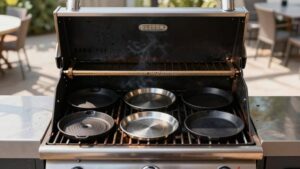
How to Clean Removable Grill Plates
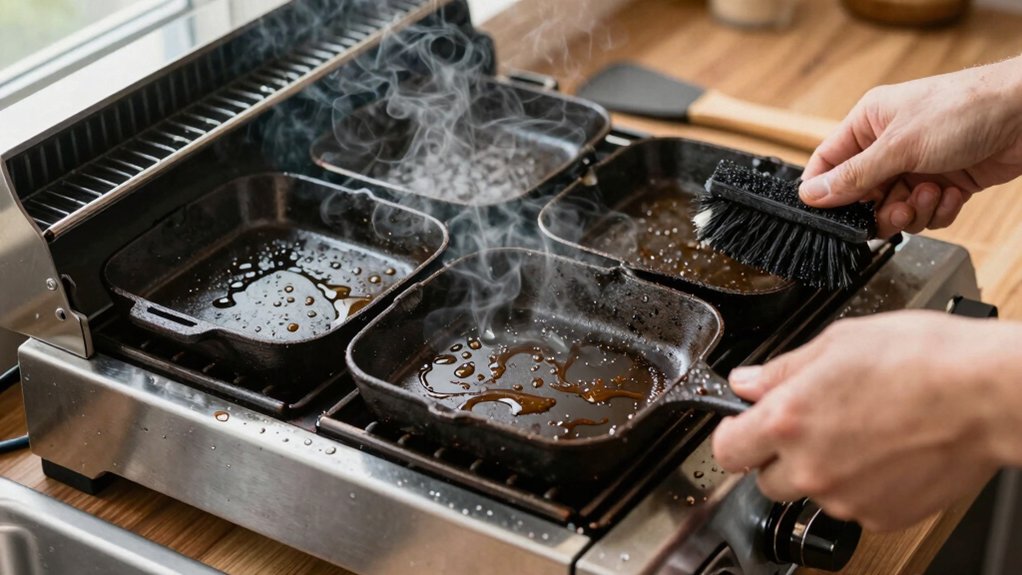
You’ll start by removing the plates and soaking them in hot water to loosen grease. Then drain and apply a concentrated degreaser. Scrub with a nylon brush or stainless scrubber for stubborn bits. Use a baking soda paste on tough spots and rinse from one end to the other until water runs clear.
Dry completely and oil lightly if the metal needs it. Reassemble only when fully dry. Keep going and you’ll find detailed tips for different finishes and stubborn residue.
Quick Overview
- Pre-soak removable plates in hot water for 15–20 minutes to loosen grease before scrubbing.
- Use a concentrated degreasing detergent on warm plates and scrub with a stiff or nylon brush.
- For stubborn residue, apply baking soda paste; let sit briefly, then scrub targeted grooves and edges.
- Rinse from one end to the other with hot running water until it runs clear. Then dry completely.
- Reassemble only when fully dry. Optionally, apply a light oil coat on raw steel plates to prevent rust.
Plate Material & Size Chart
Which plate material fits your cooking needs? You’ll choose plate material by balancing durability, corrosion resistance, and heat behavior. Stainless (304/316/430) gives reliable corrosion resistance; steel offers rugged durability and higher radiant heat. Composite plates heat fastest and smooth temperatures. Consult the size chart to match your grill: a snug fit prevents heat loss and simplifies cleaning.
| Emotion | Choice |
|---|---|
| Confidence | Type 304 stainless — versatile, moderate cost |
| Assurance | Composite — even heating for high-volume |
Refer to thickness and dimensions: residential 3/8″ works for home use; commercial needs 1/2″. Removable plate sizes (15″x20″, 18″x24″) and custom options up to 36″x24″ ensure compatibility. Pick material and size for performance and easy maintenance.
Nonstick Care & Temps
Wondering how to protect your nonstick plates while still getting great sears? You’ll preserve coating life by combining gentle cleaning with smart temps control. Don’t overheat nonstick surfaces; keep heat at medium to medium-high for searing. Avoid continuous maximum temps that degrade coatings.
Use moderate heat and preheat briefly to prevent food sticking and reduce abrasive scrubbing. Clean with a soft sponge or nylon brush after cooling; avoid metal scrapers that nick the coating. Wipe oil residue and store plates dry to prevent trapped grime from forcing harsher cleaning later.
Follow manufacturer temperature limits. Avoid thermal shock; don’t dunk hot plates in cold water. Regularly inspect for scratches. That’s solid nonstick care without sacrificing results.
Remove Stubborn Grease Buildup
Start by pre-soaking the plates in hot water to loosen grease. Then apply a concentrated degreasing detergent while they’re still warm. Scrub stubborn spots with a nylon brush. For persistent residue, work a baking soda paste into the grit before scrubbing again.
Rinse thoroughly, dry completely, and reassemble only when plates are bone-dry to prevent rust or trapped moisture.
Pre-Soak With Hot Water
A short pre-soak in very hot, soapy water will loosen baked-on grease and make scrubbing far easier. Fill a large tub or bucket with water as hot as you can safely handle and add a generous squirt of dish soap. Submerge the removable plates fully for 15–20 minutes. The pre-soak with hot water softens carbonized grease without harsh chemicals.
After soaking, lift plates and drain excess water. Then scrub with a stiff brush or stainless scrubber; apply firm, even strokes along grooves. Rinse thoroughly to remove soap and loosened debris. Inspect for remaining spots and repeat a brief soak if needed.
Dry plates completely with a towel or air dry before reassembly to prevent rust and ensure safe grilling.
Use Degreasing Detergent
When stubborn, baked-on grease won’t budge after soaking, reach for a commercial grill degreaser or a strong DIY mix of equal parts water and white vinegar to cut through the residue quickly.
Apply degreasing detergent according to the label, targeting greasy channels and corners where buildup collects. Let the product dwell the recommended time so it penetrates without you having to force it. Rinse thoroughly with hot water to remove chemical traces, especially on porous plate material like cast iron or enamel-coated plates.
For stainless surfaces, degreasers work fast but still require a full rinse to prevent taste transfer. Wear gloves, work in a ventilated area, and avoid leaving aggressive chemicals on protective coatings. Follow instructions to protect both finish and food safety.
Scrub With Nylon Brush
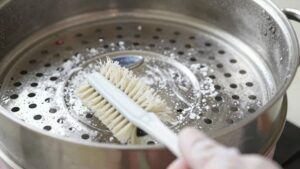
If degreasers loosen grime but some spots still cling, grab a nylon brush to aggressively scrub away the remaining buildup without damaging surfaces. You’ll want a firm scrub nylon head that won’t scratch porcelain or strip seasoning on cast iron.
Hold the plate steady, apply moderate pressure, and use short, controlled strokes so you remove grease without bending fins or gouging metal. Focus on edges and crevices where residue hides; reapply degreaser or hot water as needed to keep fibers effective. Work systematically across the plate, flipping it to reach both sides. Rinse thoroughly to remove loosened particles, then dry promptly.
Clean the brush after use so it’s ready for the next grill session.
Apply Baking Soda Paste
Because baking soda‘s mild abrasiveness and alkalinity cut through baked-on grease without harming most finishes, mix it into a thick paste and apply it directly to stubborn spots. You’ll want equal parts baking soda and water; add a drop of dish soap if grease is heavy.
For paste application, spread the mixture with a small brush or spatula so it clings to grooves and edges. Let it sit 15–20 minutes to soften carbonized residue. Then scrub with a nylon or brass-bristle brush depending on your grate material. Work methodically across the surface, reapplying where needed.
After scrubbing, remove loosened debris and repeat apply baking soda on persistent areas. This targets tough buildup without harsh chemicals; follow with a full rinse before reinstalling.
Rinse And Dry Thoroughly
How do you make sure no baking soda, degreaser, or loosened grease is left to cause off-flavors or corrosion? Rinse thoroughly with hot running water, working from one end to the other so detergent and loosened residue don’t redeposit. Use a hose or sink sprayer and a stiff brush to dislodge trapped grease in crevices. Then repeat until rinse water runs clear.
Shake off excess water and pat with a clean microfiber or lint-free towel to speed drying. Dry completely before reinstalling to prevent rust, chemical reaction, or bacterial growth. Leave plates in a warm, ventilated spot or use a low-heat oven cycle for cast iron. Once dry, apply a light coat of oil if material requires it. Then store.
Frequently Asked Questions
Can I Clean Plates in the Dishwasher Safely?
Generally, yes; you can use the dishwasher if the manufacturer states dishwasher safety and the plates have sufficient heat resistance. Porcelain-coated and most stainless plates usually tolerate dishwashers. However, cast iron and some nonstick coatings may warp, lose seasoning, or degrade.
If unsure, hand-wash with baking soda, dish soap, or a degreaser. Always dry thoroughly and re-oil cast iron to prevent rust after any cleaning.
How Often Should I Deep-Clean Removable Plates?
You should deep clean removable plates every 1–3 months depending on use. Heavy grilling means monthly; occasional use can stretch to quarterly. Follow a clear deep clean schedule and check manufacturer dishwasher safety before loading plates. Some are dishwasher-safe; others need hand-washing or baking soda/vinegar treatments.
Between deep cleans, you should rinse and brush after every use. Soak or apply degreaser when grease builds up to keep plates safe and efficient.
Can I Use Bleach on Grill Plates?
You shouldn’t use bleach on grill plates; it risks corrosion, residue, and unsafe fumes. So, prioritize bleach safety. Instead, check dishwasher compatibility: some removable plates are dishwasher-safe, which cleans effectively without harsh chemicals.
For stubborn grease, use baking soda, vinegar, or a commercial degreaser per instructions. Then rinse thoroughly. If you must disinfect, use a food-safe sanitizer recommended by the manufacturer and ensure all bleach traces are fully removed.
How Do I Store Plates to Prevent Warping?
Store plates flat and cool to prevent warping. Don’t lean them upright or stack heavy items on top. Follow storage best practices by using silicone pads or cloth between plates to avoid scratches and allow air circulation.
Consider material considerations: cast iron needs light oiling and dry storage. Porcelain and stainless prefer dry, temperature-stable areas. Keep them covered or in a ventilated case to block dust while preventing trapped moisture.
Are Replacement Plates Available From the Manufacturer?
Yes, many manufacturers offer replacement plates. Check their parts catalog or support page for replacement plates and manufacturer options.
You’ll want to follow care guidelines from the maker to avoid damage and preserve performance. Also, review warranty considerations before buying: replacements may be covered or require authorized parts to keep warranty valid.
Contact customer service with your model number to confirm fit, pricing, and any installation tips.
Conclusion
You’ve got this. Start by matching plate material and size to the care tips. Then, keep nonstick surfaces cool and avoid harsh abrasives. For grease, pre-soak plates in hot water; use a degreasing detergent and scrub gently with a nylon brush. Stubborn spots respond to a baking soda paste.
Rinse thoroughly and dry completely before reattaching. Follow these steps regularly to protect coating, maintain performance, and extend the life of your removable grill plates.
Related reading: Dishwasher Safety for Nonstick Accessories covers this topic in detail.