Contact Grill Cooking Temperature Ranges
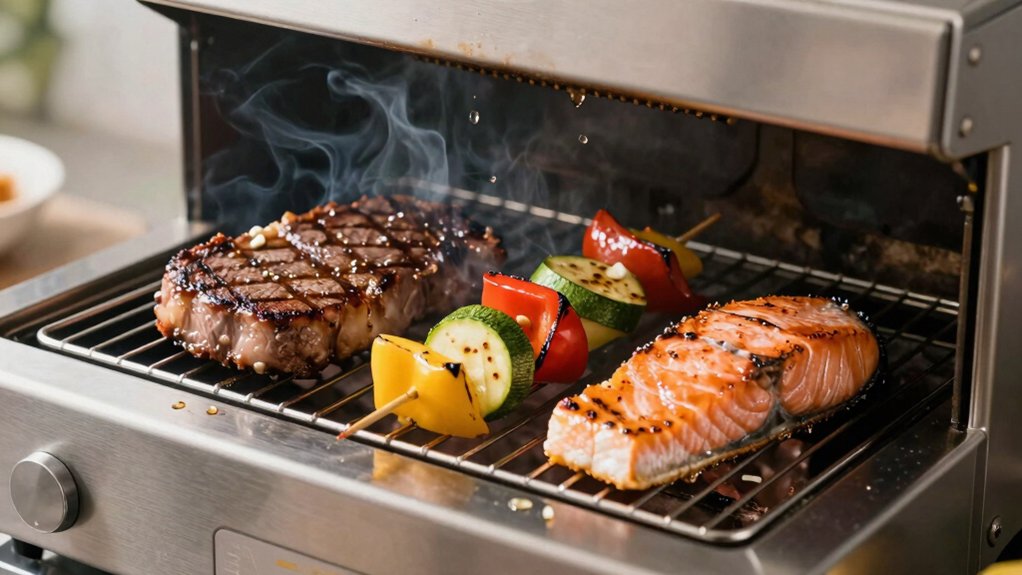
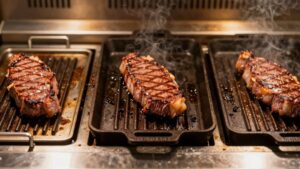
You should set plate temps between about 300–650°F depending on food and coating. Aim for lower plate temps to reduce flare and protect nonstick surfaces. Cook poultry to 165°F; cook ground beef to 160°F. Steaks should be cooked to 130–135°F for medium-rare, and fish should be cooked to 125–145°F by species.
Calibrate probes and trust numbers over color. Use heat‑safe silicone or wood utensils, and avoid abrasives. Follow seasoning and storage steps to keep plates safe; more specifics follow.
Quick Overview
- Typical contact grill plate temps range from about 300°F for gentle cooking up to 650°F for fast searing.
- Poultry should reach an internal 165°F at the thickest point, regardless of plate temperature. Ground beef needs 160°F internal; steaks cooked medium-rare target 130–135°F.
- Higher plate temperatures (above ~500°F) increase crust formation but raise the risk of flare-ups and overcooking.
- For nonstick plates, monitor and calibrate thermistors, adjust dwell time, and use heat-resistant utensils to protect surfaces.
Internal Temperature Targets
How do you know when food on a contact grill is truly safe and properly cooked? You rely on clear temperature targets and probe readings, not appearance. Set the grill plate to appropriate ranges, monitor internal temp, and use carryover adjustments for steaks.
Poultry needs 165°F at the thickest point; ground beef requires 160°F. Fish often targets 125–145°F depending on species and safety tolerance. Calibrate your thermometer and trust numbers over color. Low grill plate settings risk bacterial survival; high settings ensure sear but need internal verification.
Use this quick reference:
| Item | Internal Target (°F) |
|---|---|
| Poultry | 165 |
| Steaks (medium-rare) | 130–135 |
Grill Plate Temperature Limits
You’ve learned to trust internal probe readings over surface appearance, but the temperatures your contact grill plates can reach set the outer cooking rate and safety margins you’ll need to manage. You should know typical grill plate maximums (often 500–650°F) and how they drive crust formation, moisture loss, and flare risk.
Respecting temperature limits reduces scorching and uneven doneness. High plate temps speed surface bacteria kill; however, they can overcook interiors before safe internal targets are hit. Monitor plate thermistors, use calibrated probes, and adjust dwell time when plates exceed recommended settings for a given protein or vegetable. Also, factor manufacturer guidance on nonstick surface care to avoid degrading coatings at extreme heat.
- Visualize searing at 600°F versus gentle contact at 300°F.
- Imagine moisture loss rates rising with each 50°F step.
- Picture coating failure when limits are ignored.
Nonstick Surface Care
When you use a contact grill, choose silicone, wood, or nylon utensils to avoid scratching the nonstick coating and increasing toxin or corrosion risk.
Clean the plates after each use with warm soapy water and a soft cloth. Never use abrasive pads or harsh cleaners that degrade the surface and raise failure likelihood.
Lightly season compatible nonstick surfaces with a thin oil layer. Store plates separated or covered to prevent chips and preserve consistent heat transfer.
Choosing Safe Utensils
Want utensils that protect your grill’s nonstick surface and reduce health risks? Choose tools made from silicone, nylon, or wood to avoid scratches that compromise nonstick safety. Metal tines and thin-edged spatulas can abrade coatings; this increases particle release and potential toxicant exposure.
Inspect utensils regularly for utensil corrosion or coating wear. Corroded metal can transfer ions that accelerate coating breakdown. Use heat-resistant silicone for high-temperature work near 400°F, and opt for solid wood for pressing or turning to limit abrasion.
Replace any utensil showing chips, deep scratches, or rust immediately. Store utensils separately to prevent contact damage. These practices lower mechanical and chemical risks to the nonstick layer and reduce contamination hazards during contact-grill cooking.
Cleaning After Use
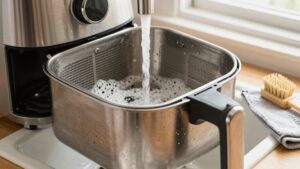
How should you clean a contact grill’s nonstick surfaces to protect both the coating and food safety? You should unplug and cool the grill. Then remove loose debris with a soft brush or damp cloth to prevent residue buildup that can harbor bacteria.
Use warm water with mild detergent; scientific guidance shows non-abrasive cleaning preserves coating integrity and reduces chemical degradation. Rinse thoroughly and dry before storage to prevent microbial growth.
Don’t rely on misleading safety claims like “self-cleaning” labels without verifying manufacturer instructions. Avoid practices that constitute irrelevant maintenance. For example, oiling nonstick surfaces routinely can attract grime and increase contamination risk.
If coating shows deep scratches or flaking, retire the plate to eliminate potential ingestion hazards and maintain food safety.
Avoiding Abrasive Cleaners
Why risk damaging a nonstick coating with harsh cleaners when mild methods protect both the surface and food safety? You should avoid abrasive cleaners because they abrade polymer layers, creating micro-scratches where food and bacteria lodge. Use soft sponges, warm soapy water, and manufacturer-recommended sprays to remove residues without disrupting the coating.
Harsh scrubs and strong solvents can trigger chemical reactions that degrade nonstick polymers, releasing contaminants and shortening plate life. After heavy use, soak plates to loosen grime rather than scouring. Inspect surfaces regularly for wear; replace plates showing pitting or flaking to eliminate contamination risk.
Prioritizing gentle cleaning preserves thermal performance, prevents uneven heating, and reduces the likelihood of compromised food safety from damaged nonstick surfaces.
Seasoning Nonstick Surfaces
Seasoning your contact grill’s nonstick plates helps maintain their release properties and reduces wear; you should do it regularly with care. To season nonstick surfaces, heat the grill to a low-medium temperature (about 300°F). Apply a thin layer of a high-smoke-point oil and wipe evenly with a paper towel. Repeat two to three cycles to build a stable protective film. This nonstick care reduces food adhesion and limits scratching from utensils.
Avoid excess oil and never use aerosol sprays or abrasive pads. Those accelerate coating breakdown and increase flaking risk. After regular seasoning, inspect plates for pitting, peeling, or discoloration. Stop use if coating integrity is compromised; degraded nonstick can release particulates and off-gas at high temperatures.
Storing To Prevent Damage
After you’ve finished the recommended seasoning routine, take care when storing the grill to preserve the nonstick coating and reduce safety risks. Store the unit dry, cool, and upright if the manufacturer advises; moisture and stacking cause abrasion and trapped humidity that accelerate coating breakdown.
Use the original cover or a breathable grill bag to block dust without trapping condensation. When you must stack plates or lids, insert a thin, non-abrasive liner to avoid scratches; this is essential for nonstick surface care and avoids creating hot spots during future use. Secure cords and accessories separately to prevent crush damage.
Inspect the surface before the next use. Any flaking or deep scratches mean you should stop using the grill until repaired or replaced to mitigate chemical and fire risks.
Frequently Asked Questions
Can I Use a Contact Grill Outdoors in Rainy Conditions?
You shouldn’t use a contact grill outdoors in rainy conditions because rain exposure creates electrical shock and fire hazards. You’ll increase risk to yourself and damage the appliance if water reaches heating elements, controls, or power cords.
If you must grill outdoors, use a shelter rated for electrical appliances. Keep cords elevated and dry, and unplug during storms. Always follow the manufacturer’s outdoor safety guidance and local electrical codes to reduce risk.
How Long Does a Contact Grill Take to Preheat?
You should expect a preheat duration of about 5–10 minutes for most contact grills to reach working temperatures. Preheat until indicator lights or digital readouts show target heat; you achieve temperature consistency across plates. Rushing risks uneven cooking and food-safety issues. Use an infrared thermometer or built-in thermostat to verify surface temps.
For thicker cuts or searing, allow extra time to stabilize before placing food on the grill.
Are There Vegetarian Recipes Specific to Contact Grills?
Yes, you can grill many vegetarian recipes using a contact grill. You’ll want evidence-based choices: firm tofu, halloumi, portobello mushrooms, vegetable kebabs, and grilled sandwiches perform reliably.
Use contact grill usage practices: preheat to appropriate temps, oil surfaces to reduce sticking, monitor internal temps for safety, and avoid cross-contamination with raw meat. These steps minimize foodborne risk and ensure consistent texture and flavor in vegetarian dishes.
Can I Cook Frozen Foods Directly on the Grill?
Yes, you can cook frozen foods directly on the grill, but you shouldn’t assume equal results. Direct grilling frozen items speeds cooking; however, it raises the risk of uneven heating and surface charring while the interior stays undercooked.
Use moderate-high grill temps, flip often, and verify internal temperatures with a probe (per product guidance). For safety and quality, thaw bulky meats first. Frozen pre-cooked foods are safer for straight direct grilling.
Do Contact Grills Affect Indoor Air Quality or Ventilation Needs?
Yes, contact grills can affect indoor air quality and create ventilation requirements. You’ll generate smoke, grease aerosols, and volatile compounds when searing or cooking fatty foods; that raises particulate and VOC levels. To reduce risk, you should use local exhaust ventilation or range hoods rated for capture. You should also increase general airflow, avoid high-fat searing indoors without ventilation, and monitor for odors or smoke to prevent prolonged exposure.
Conclusion
You’ve learned the critical temperature ranges: cook proteins to their safe internal targets and keep grill plates within manufacturer limits to avoid coating breakdown.
Treat nonstick surfaces gently, use approved heat-resistant utensils, and clean promptly with nonabrasive products to prevent damage that raises chemical and wear risks. Season per instructions when appropriate, and store grills to avoid scratches.
Following these evidence-based, risk-focused practices reduces contamination, coating degradation, and injury.
Related reading: Panini Press Temperature and Pressure Basics covers this topic in detail.